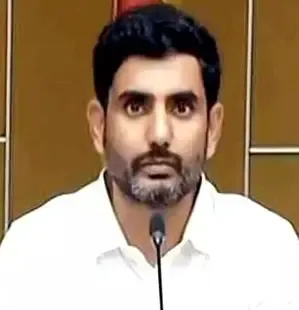
Nara Lokesh Takes Charge as National Working President of TDP
Synopsis
In a transformative shift within the TDP, Nara Lokesh has been appointed as the national Working President, paving the way for a new generational leadership. This historic decision emphasizes social justice and women’s empowerment within the party structure.
Key Takeaways
Nara Lokesh appointed as national Working President of TDP.
First-ever Working President in TDP history.
Emphasis on social justice and women's empowerment.
New organizational structure includes a 29-member Politburo .
Significant representation from marginalized communities.
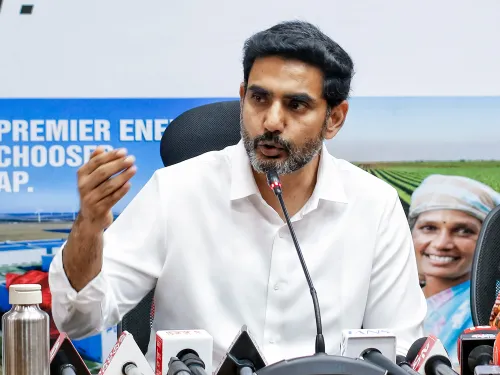
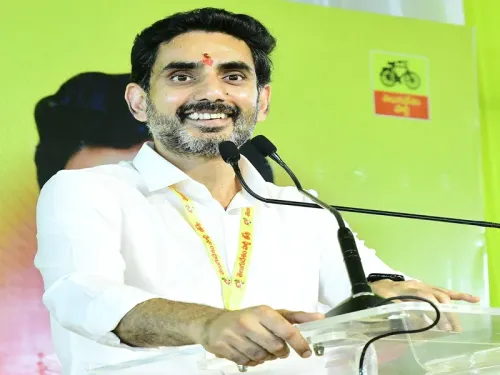
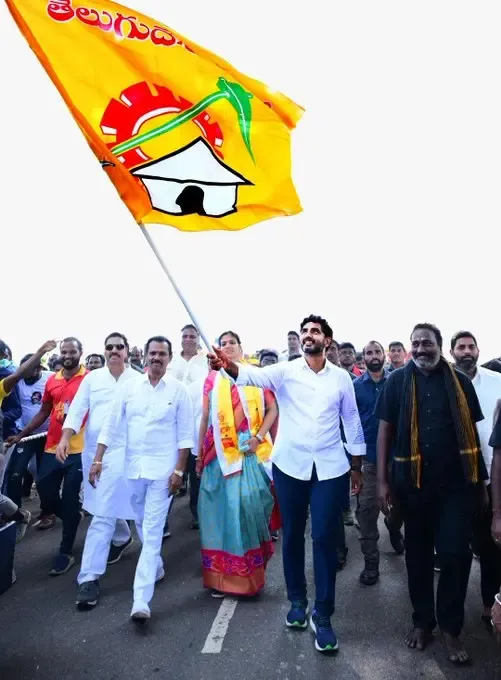
Amaravati, April 15 (NationPress) In a significant transformation within the Telugu Desam Party (TDP), Andhra Pradesh minister Nara Lokesh has been appointed as the national Working President.
On Wednesday, the TDP announced its new Politburo, National, and State Committees, indicating a pivotal shift in its future direction.
Nara Lokesh, the son of Chief Minister and TDP national President N. Chandrababu Naidu, currently serves as the national General Secretary of the party.
Having managed portfolios in human resources development, information technology, and electronics, Lokesh is increasingly viewed as the rightful successor to Chandrababu Naidu, who will celebrate his 76th birthday on April 20. His recent elevation as Working President sends a strong signal regarding his anticipated leadership role.
This marks the inaugural instance of appointing a Working President in TDP’s history.
His promotion follows nearly two years after the TDP-led National Democratic Alliance (NDA) achieved a remarkable victory in the state.
Lokesh’s rise is interpreted as recognition for his pivotal contributions to the party's electoral triumph.
This signifies a major generational shift within the TDP, placing him firmly at the forefront of party operations and outlining a clear pathway for future leadership.
Moreover, MLA Palla Srinivas has been designated as the state President, finalizing a leadership realignment aimed at fortifying the party's structure in anticipation of upcoming political challenges.
In a groundbreaking initiative highlighting its commitment to women's empowerment, the TDP has appointed its first-ever female National General Secretary, MP Dr. Byreddy Shabari. She will work alongside Union Minister Ram Mohan Naidu and Rajesh Kilaru as national General Secretaries.
The party asserted that this decision conveys a powerful political message, resonating with the broader objective of increasing women’s representation, particularly in light of the Women’s Reservation framework.
The newly formed organizational structure comprises a 29-member Politburo, a 31-member National Committee, and a 185-member State Committee. These committees were established after thorough discussions, considering social, regional, and political balances, while keeping future objectives, including the 2029 elections and potential constituency reorganization, in focus.
A key highlight of this restructuring is its robust emphasis on social justice and inclusive representation. Out of 185 members in the State Committee, 122 are from marginalized sections.
This representation includes 77 members from Backward Classes, 25 from Scheduled Castes, 7 from Scheduled Tribes, and 13 from minority communities.
The percentage-wise representation in the new committees is as follows: BC – 40 per cent, SC – 25 per cent, ST – 3.8 per cent, and minorities – 7 per cent.
The party has stated that the committees have been organized broadly in accordance with population ratios, ensuring fair participation across various social groups. Women have been given unprecedented prominence in the new structure, with 50 women included in the State Committee and significant representation across the Politburo and National Committees, which reflects the party’s alignment with the policy direction advocating for 33 per cent reservation for women in legislative bodies.
This restructuring also signifies a bold shift away from tradition by promoting grassroots leaders to the upper echelons of the party.
For the first time, Mandal Party President and Cluster In-charge, Gantyada Sridevi and Guttikonda Dhanunjay, have been directly inducted into the Politburo.
The formation of these committees reflects a distinct pivot towards a meritocratic system, prioritizing loyalty, dedication, and proven contributions to the party.
Point of View
The TDP has appointed Nara Lokesh as its national Working President, indicating a strategic shift towards modernizing leadership and enhancing representation across social segments. This move symbolizes a commitment to inclusiveness and positions Lokesh as a key figure in the party's future.
NationPress
19 Sept 2026
Frequently Asked Questions
Who is the newly appointed national Working President of TDP?
Nara Lokesh has been appointed as the national Working President of the Telugu Desam Party.
What is the significance of Lokesh's appointment?
His appointment signifies a generational shift in leadership and emphasizes the party's commitment to social justice and women's empowerment.
How many members are in the newly formed State Committee?
The newly formed State Committee consists of 185 members.
What are the key demographics represented in the new committee structure?
The new committee structure includes significant representation from Backward Classes, Scheduled Castes, Scheduled Tribes, and minority communities.
What historic first did the TDP achieve with this restructuring?
This restructuring marks the first instance of appointing a Working President in TDP’s history.