Surat Authorities Uncover Major Ghee Adulteration Scheme, Two Arrested
Synopsis
In a significant crackdown on food adulteration, Surat officials have seized over 2,000 kg of fake ghee and arrested two businessmen. This operation reveals a sophisticated network mixing pure ghee with cheaper oils, highlighting a major health risk in the region.
Key Takeaways
Over 2,000 kg of adulterated ghee seized.
Two businessmen arrested for fraudulent activities.
Adulteration involved mixing genuine ghee with cheaper oils.
Products sold under misleading names.
Authorities suspect a widespread distribution network.
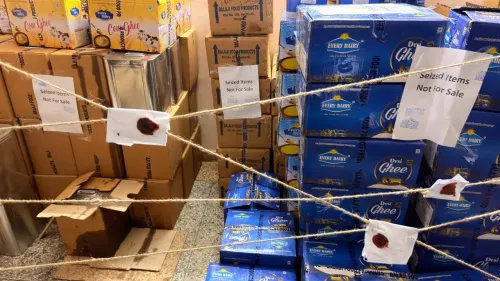
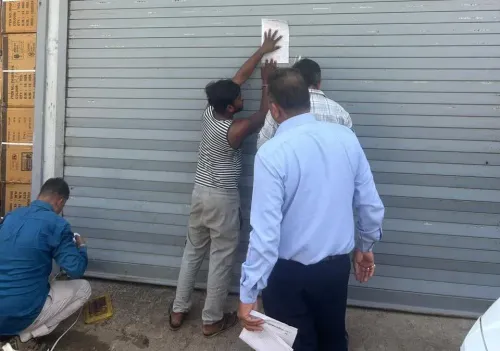
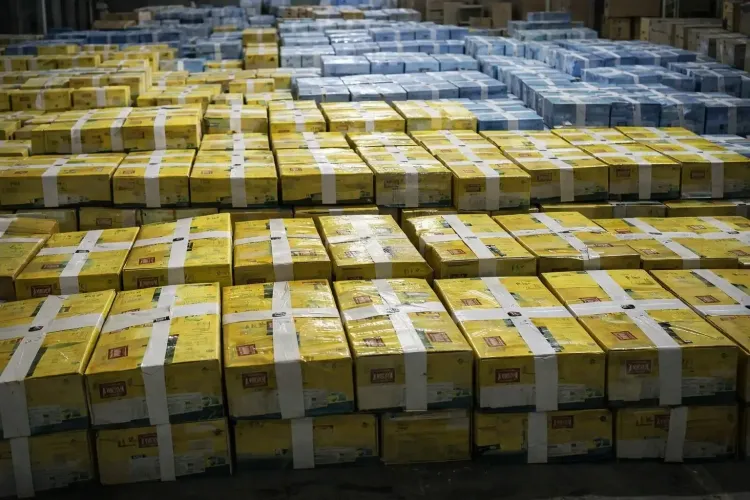
Surat, April 16 (NationPress) In a significant operation, officials in Surat have confiscated 2,029 kilograms of adulterated ghee and apprehended two individuals following a raid on a manufacturing facility located in the Sachin GIDC area. This action is part of a focused initiative against food adulteration.
The Special Operations Group (SOG) executed this operation on Thursday under the banner of "Operation Shuddhi" after obtaining credible intelligence regarding the circulation of fake ghee within the city.
In response to this intelligence, various teams were assembled and dispatched, utilizing both technical surveillance and human intelligence to pinpoint the individuals implicated.
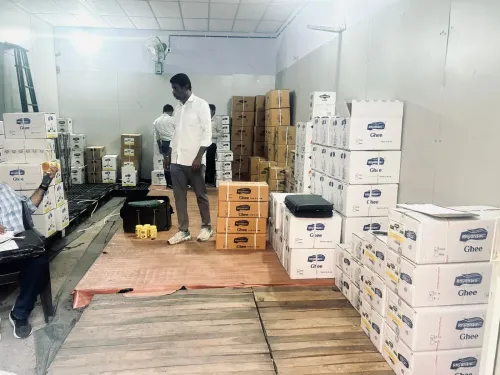
A subsequent raid was conducted at a factory operating under the name ‘Sabka Foods’ situated in the Sachin GIDC region, as well as at a storage facility in Talangpor of Choryasi taluka.
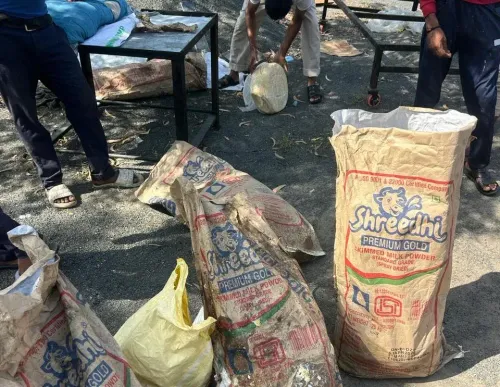
Authorities retrieved adulterated ghee valued at ₹14,19,960, along with machinery, raw materials, and other items worth ₹21,61,570, bringing the total estimated worth of the confiscated items to ₹36,36,530.
Additionally, cash and mobile devices were confiscated. The suspects, identified as Bharat Polara, 48, and Amin Vadhwaniya, 45, both engaged in business, were taken into custody at the factory.
A formal complaint has been lodged against them at the Sachin GIDC police station.
Investigators revealed that the accused had established a meticulous process for adulteration, wherein small amounts of pure ghee were blended with palm oil, vegetable ghee, and vegetable butter.
They added artificial essence to mimic the aroma of cow ghee and utilized synthetic coloring to achieve the desired yellow hue.
Law enforcement noted that the precise measurement of chemicals, including the use of syringes, made it challenging to differentiate the product from authentic ghee based solely on smell or appearance.
During questioning, the suspects indicated that production was tailored to meet demand, with various grades supplied to traders. The lower-cost variants were predominantly made from oils, while the higher-priced versions contained only a minimal amount of genuine ghee.
The products were marketed at wholesale rates between ₹600 and ₹650 per kilogram and later retailed for as much as ₹1,000.
SOG DCP Rajdeepsinh Nakum stated, “They would manufacture ghee according to buyer specifications, adulterate it, and then distribute it. The ghee was mixed with palm oil, vegetable ghee, and vegetable butter, then presented as cow ghee. They had been engaged in this operation for the past two years.”
Authorities reported that the adulterated products were packaged under labels like ‘Vidur Cow Ghee’ and ‘Desi Ghee’, available in sizes ranging from small pouches to 15 kg containers.
The accused supplied these products at competitive prices to grocery stores in slum areas, as well as to hotels and roadside eateries along highways and in adjacent districts.
Officials suspect that the distribution network may extend across South Gujarat and potentially beyond.
Ongoing investigations aim to uncover additional traders and distributors involved in this scheme.
Point of View
This incident underscores the ongoing challenges in regulating food safety and quality. The meticulous operations of these individuals demonstrate a significant threat to public health. Authorities are urged to intensify efforts to combat food adulteration and protect consumers.
NationPress
18 Sept 2026
Frequently Asked Questions
What was seized during the operation in Surat?
Authorities seized 2,029 kilograms of adulterated ghee, machinery, raw materials, and other items valued at ₹36,36,530.
Who were the arrested individuals?
The arrested individuals are Bharat Polara, 48, and Amin Vadhwaniya, 45, both businessmen.
What was the method of adulteration used?
The method involved mixing small amounts of pure ghee with palm oil, vegetable ghee, and vegetable butter, along with artificial essence and synthetic coloring.
What were the products marketed as?
The adulterated products were packaged and sold under names like 'Vidur Cow Ghee' and 'Desi Ghee'.
What are the implications of this operation?
This operation highlights significant concerns about food safety and consumer protection against fraudulent food products.