Manipur CM meets NCB chief to intensify drug crackdown along Myanmar border

Synopsis
Manipur's drug problem isn't just a law-and-order issue — it's a geopolitical one. With 398 km of unfenced Myanmar border feeding directly into the Golden Triangle supply chain, and a fresh ₹7.40 crore heroin bust spanning three states in a single week, the CM's renewed pledge to the NCB is a signal that the Northeast's narcotics crisis is forcing a shift from reactive policing to coordinated, intelligence-led strategy.
Key Takeaways
Manipur CM Yumnam Khemchand Singh met NCB Deputy Director General R.
Sudhakar on 1 July to strengthen anti-drug coordination.
Five Manipur districts share a 398-km unfenced border with Myanmar , a core node of the Golden Triangle narcotics region.
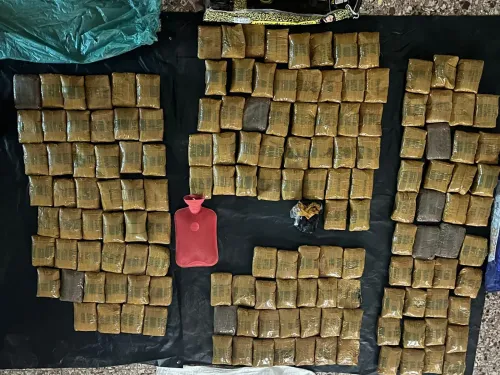
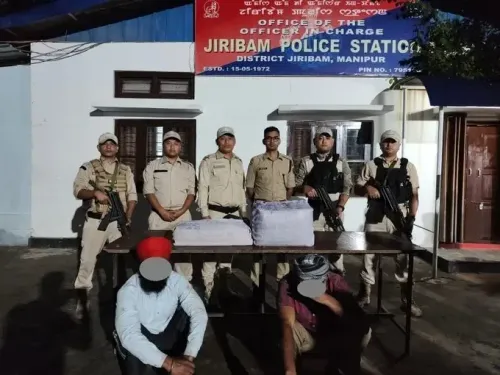
Mizoram Police arrested three alleged traffickers this week and seized heroin worth more than ₹7.40 crore .
Manipur DGP Mukesh Singh , in office since 1 June , has directed district police to intensify intelligence-based anti-narcotics operations.
CSOs across the Imphal Valley and hill districts have been asked to support public awareness campaigns against drug abuse.
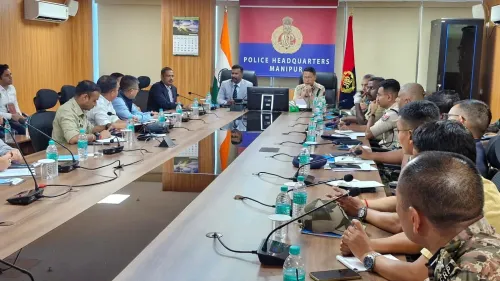
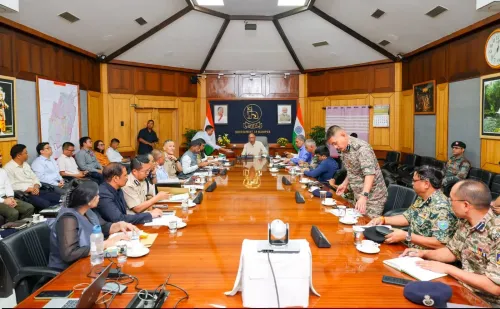
Manipur Chief Minister Yumnam Khemchand Singh on Wednesday, 1 July reaffirmed his government's commitment to eliminating the drug menace, pledging a multi-agency, intelligence-driven offensive against narcotics trafficking that has long exploited the state's porous international border. The assurance came after a high-level meeting with Narcotics Control Bureau (NCB) Deputy Director General (Northeast Region) R. Sudhakar in Imphal.
What the CM-NCB Meeting Covered
According to an official from the Chief Minister's Office (CMO), the meeting centred on three priorities: strengthening intelligence gathering, deepening coordination among state, Central, and international agencies, and ensuring more rigorous enforcement of the Narcotic Drugs and Psychotropic Substances (NDPS) Act, 1985. The goal, officials said, is to dismantle narcotics networks that have embedded themselves across the northeastern corridor.
Chief Minister Singh stated that the state is pursuing a comprehensive strategy combining enforcement operations with intelligence-based interdiction — a dual-track approach that officials argue is essential given the scale and sophistication of cross-border smuggling networks.
Why Manipur Is a Drug Trafficking Hotspot
Manipur's vulnerability is structural. Five of its districts — Churachandpur, Tengnoupal, Chandel, Kamjong, and Ukhrul — share a 398-km unfenced international border with Myanmar, a key node in the 'Golden Triangle', one of the world's largest illicit narcotics-producing regions. The absence of physical barriers along this stretch makes it a preferred corridor for traffickers moving heroin, methamphetamine, and other contraband into India.
Neighbouring Mizoram faces an even more exposed frontier, sharing a 510-km unfenced border with Myanmar and a 318-km unfenced border with Bangladesh. Law enforcement agencies have repeatedly detected trafficking networks operating across Manipur, Mizoram, and southern Assam, with smugglers using shifting routes to evade detection.
Recent Seizure Underscores the Threat
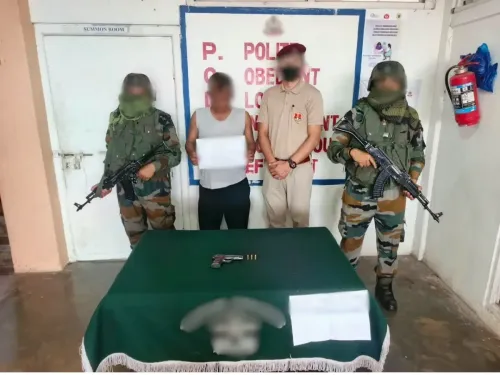
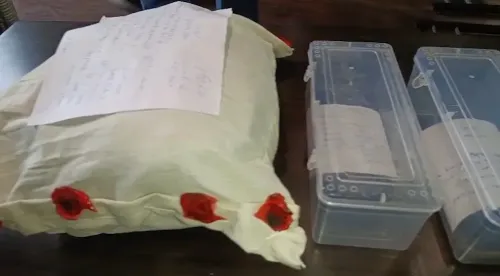
The scale of the problem was illustrated this week when Mizoram Police arrested two alleged drug peddlers from Assam's Cachar district and a woman from Manipur's Chandel district. The operation yielded a heroin consignment valued at more than ₹7.40 crore in the illegal market, according to a senior police official in Aizawl.
Notably, the arrested individuals spanned three states — a pattern that reflects the inter-state nature of trafficking networks and the difficulty of containing them within single-state enforcement frameworks.
DGP's Ground-Level Push
Manipur Director General of Police Mukesh Singh, who assumed charge as state police chief on 1 June, has since been conducting extensive district-level reviews with a specific focus on anti-narcotics operations. During interactions with district police officials, the DGP directed them to intensify intelligence-based operations, dismantle smuggling networks, and prevent the further spread of narcotics abuse.
DGP Singh also reached out to Civil Society Organisations (CSOs) across both the Imphal Valley and the hill districts, urging them to support the state's anti-drug campaign through public awareness drives and coordinated community initiatives.
What Comes Next
The renewed Centre-state coordination signals that the fight against narcotics in the Northeast is being elevated beyond routine policing to a strategic, multi-agency priority. With the Golden Triangle supply chain showing no signs of contraction, the effectiveness of this push will depend on sustained intelligence sharing and cross-border diplomatic pressure — neither of which has a quick fix.
Point of View
Transnational character of the threat. Pledges of 'enhanced coordination' are a necessary first step, but the Northeast's narcotics crisis has heard such pledges before — the test is whether intelligence sharing between state police, the NCB, and central agencies translates into sustained network dismantlement rather than episodic seizures.
NationPress
30 Sept 2026
Frequently Asked Questions
Why is Manipur considered a major drug trafficking corridor?
Manipur shares a 398-km unfenced international border with Myanmar across five districts — Churachandpur, Tengnoupal, Chandel, Kamjong, and Ukhrul. Myanmar is part of the Golden Triangle, one of the world's largest illicit narcotics-producing regions, making Manipur a primary entry point for heroin and other contraband into India.
What was decided at the Manipur CM's meeting with the NCB?
The meeting on 1 July focused on strengthening intelligence gathering, enhancing coordination among state, Central, and international agencies, and ensuring tighter enforcement of the NDPS Act, 1985. Chief Minister Yumnam Khemchand Singh reaffirmed a dual-track strategy combining enforcement and intelligence-based operations.
What was the recent drug seizure in the Northeast?
Mizoram Police this week arrested two alleged drug peddlers from Assam's Cachar district and a woman from Manipur's Chandel district, recovering a heroin consignment valued at more than ₹7.40 crore in the illegal market.
What is Manipur's DGP doing to tackle the drug menace?
DGP Mukesh Singh, who took charge on 1 June, has been conducting district-level reviews focused on anti-narcotics operations. He has directed district police to intensify intelligence-based operations and has urged Civil Society Organisations to support public awareness campaigns against drug abuse.
How does Mizoram's border vulnerability compare to Manipur's?
Mizoram shares a 510-km unfenced border with Myanmar and a 318-km unfenced border with Bangladesh, making it equally — if not more — exposed to transnational drug trafficking. Together with Manipur, it forms the primary northeastern corridor through which Golden Triangle narcotics enter India.