NCB crackdown pushes Myanmar drug cartels into forests and river routes
Synopsis
Myanmar drug cartels are retreating deeper into forests and rivers as NCB pressure mounts — but the supply chain feeding heroin and methamphetamine into Assam and Manipur remains a multi-layered, well-funded machine. The arrest of key international supplier Tuanpi from Chin State could be the breakthrough agencies have been waiting for.
Key Takeaways
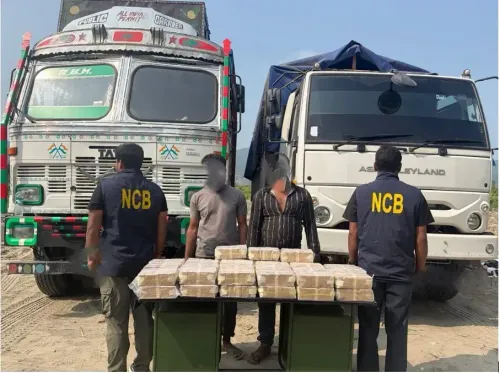
NCB 's Guwahati and Imphal zonal units have intensified operations against Myanmar-based drug cartels through 2025 and 2026 .
Cartels have shifted from conventional routes to dense forests and riverine corridors along the India-Myanmar border to evade detection.
Primary narcotics smuggled include heroin and methamphetamine , with supply chains feeding into Assam and Manipur .
The trafficking network uses multiple layers: cross-border couriers, transport coordinators, local facilitators, consignment receivers, and a separate illicit finance chain.
Key international supplier Nengzatuan alias Tuanpi , from Myanmar's Chin State , was arrested in Manipur and is being interrogated for network intelligence.
Unlike the Punjab corridor where drones are used, Myanmar-based cartels rely primarily on human couriers with limited technology use.
The Narcotics Control Bureau (NCB)'s Guwahati and Imphal zonal units have intensified operations against Myanmar-based drug cartels, forcing trafficking networks to abandon conventional smuggling corridors in favour of dense forests and riverine stretches along the India-Myanmar border. The shift, observed across 2025 and 2026, signals both the growing pressure on cartels and the mounting challenge for enforcement agencies operating in some of India's most difficult terrain.
How the Smuggling Routes Have Shifted
According to officials, traffickers primarily move heroin and methamphetamine into India. 'Earlier, when surveillance and scrutiny were less stringent, traffickers used conventional routes and operated with relative ease. However, they have now shifted to dense forests and riverine stretches to evade detection,' an official said.
Consignments are typically moved under the cover of darkness. Traffickers are also reported to exploit adverse weather — particularly heavy rain — knowing that surveillance and personnel movement are curtailed during such periods.
A Multi-Layered Supply Chain
An Intelligence Bureau (IB) official described the supply chain as exceptionally complex. Drugs originating in Myanmar are handed to cross-border couriers, who pass them to transport coordinators, then to local facilitators, and finally to consignment receivers who push the narcotics into the market.
A parallel financial chain operates alongside the logistics network. Those handling illicit finances — often individuals not on any agency's radar — collect proceeds from receivers and route the money back to the cartels through several illicit channels. 'As compared to the narcotic smuggling that one witnesses along the India-Pakistan border in Punjab, this one is a much more complex one,' an official noted.
In contrast to the Punjab corridor, where Pakistan-based smugglers now rely heavily on drones to drop contraband across the border, Myanmar-based cartels continue to depend primarily on human couriers and traditional smuggling networks, with comparatively limited use of technology.
Key Arrest: Nengzatuan alias Tuanpi
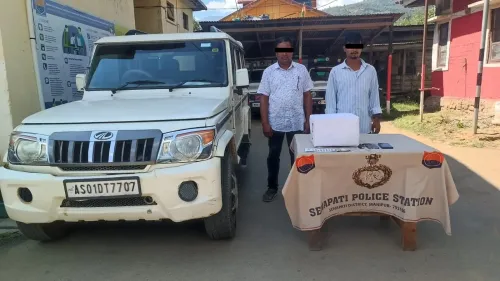
A significant development in the NCB's operations came with the arrest of Nengzatuan, alias Tuanpi, a resident of Haichin in Myanmar's Chin State. Wanted in multiple narcotics cases, Tuanpi was apprehended in Manipur. Officials described him not as a small-time operative but as one of the main international suppliers working out of Chin State.
Investigators believe his interrogation will yield critical intelligence on the logistics networks used by Myanmar-based cartels. The details he provides are expected to help the NCB dismantle supply chains and also shed light on how drugs trafficked into India are subsequently routed to international markets.
What Enforcement Agencies Face Next
Officials acknowledge that a complete crackdown will take time. 'Multiple layers need to be monitored, and since it is a well-oiled mechanism, it would take some time before a complete crackdown takes place,' one official said. The NCB's Guwahati and Imphal units are expected to use intelligence from Tuanpi's questioning to map and disrupt the broader network feeding narcotics into Assam and Manipur. How quickly that intelligence translates into further arrests will be a key measure of the operation's success.
Point of View
Not a retreat — and that distinction matters for policy. Enforcement pressure has raised operational costs for traffickers but has not broken the supply chain, which remains structurally intact with its parallel finance layer largely invisible to agencies. The arrest of Tuanpi is genuinely significant, but single arrests in multi-tier networks rarely collapse the whole system; they tend to produce intelligence that, if acted on swiftly, can disrupt a tier or two. The deeper problem is structural: the India-Myanmar border's difficult terrain and the absence of a fenced boundary give cartels a near-permanent geographic advantage that surveillance alone cannot overcome.
NationPress
21 Oct 2026
Frequently Asked Questions
Why have Myanmar drug cartels shifted to forest and river routes?
Increased surveillance and tightened enforcement by the NCB's Guwahati and Imphal units have made conventional smuggling corridors riskier, pushing cartels into dense forests and riverine stretches along the India-Myanmar border. Traffickers also move consignments at night and exploit heavy rain when security movement is restricted.
What drugs are being smuggled from Myanmar into India?
Myanmar-based cartels primarily smuggle heroin and methamphetamine into India, with supply chains directed mainly into Assam and Manipur. These narcotics are then distributed into domestic markets and, according to officials, also routed onward to international markets.
Who is Nengzatuan alias Tuanpi and why is his arrest significant?
Nengzatuan, alias Tuanpi, is a resident of Haichin in Myanmar's Chin State and is described by officials as one of the main international drug suppliers operating out of that region. His arrest in Manipur is considered significant because his interrogation is expected to reveal critical details about the logistics networks and smuggling routes used by Myanmar-based cartels.
How does Myanmar drug trafficking differ from the Punjab drug corridor?
While Pakistan-based smugglers on the Punjab border now rely heavily on drones to drop contraband, Myanmar-based cartels depend primarily on human couriers and traditional smuggling networks with comparatively limited use of technology. Officials also describe the Myanmar supply chain as significantly more complex, involving multiple layers of couriers, coordinators, facilitators, and a separate illicit finance network.
How complex is the Myanmar drug supply chain into India?
According to Intelligence Bureau officials, the supply chain involves at least four operational layers — cross-border couriers, transport coordinators, local facilitators, and consignment receivers — plus a parallel financial network of money handlers who route proceeds back to the cartels through illicit channels. This layered structure makes detection and investigation considerably more difficult than single-tier trafficking operations.