MHA Releases Rs 947 Crore for Manipur Violence Victims' Relief
Synopsis
The MHA has sanctioned over Rs 947 crore for Manipur's ethnic violence victims — Rs 424 crore for 174 active relief camps and Rs 523 crore for IDP rehabilitation. With 58,881 displaced, 217 dead, and nearly 10,540 homes destroyed since May 2023, a further Rs 734 crore has been budgeted for 2026-27 recovery efforts.
Key Takeaways
MHA sanctioned Rs 947.36 crore total — Rs 424.36 crore for relief camp operations and Rs 523 crore for IDP rehabilitation in Manipur.
58,881 people have been displaced since the ethnic violence began on May 3, 2023 , with 174 relief camps still active as of March 2026.
217 deaths have been officially recorded based on ex gratia payments; 7,894 homes were completely destroyed and 2,646 partially damaged .
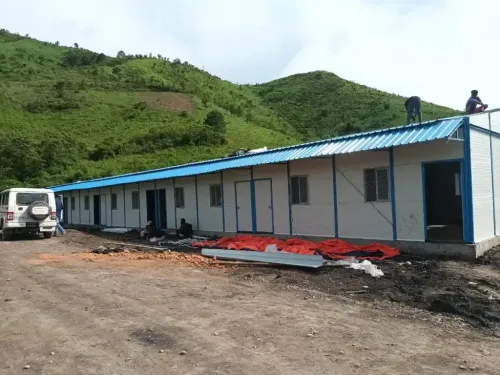
The Manipur Police Housing Corporation Ltd constructed 3,000 pre-fabricated houses for temporary shelter of displaced persons.
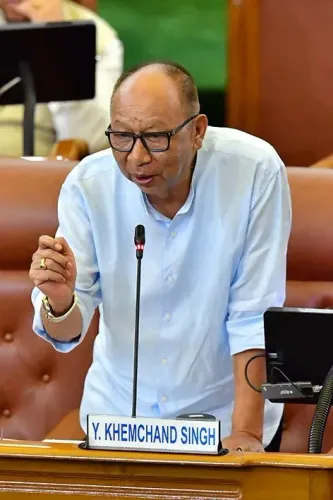
Chief Minister Yumnam Khemchand Singh has prioritised IDP rehabilitation, backed by a Rs 734 crore allocation in the 2026-27 State Budget .
Key data was revealed through an RTI query by Manipur Congress leader Hareshwar Goshwami , raising questions about proactive government transparency.
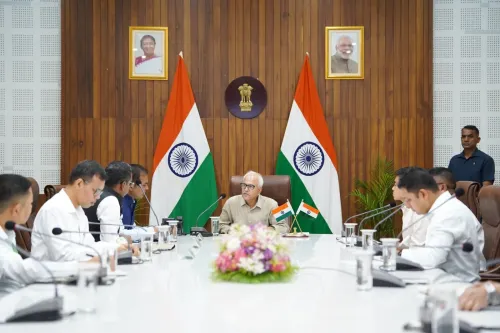
The Union Ministry of Home Affairs (MHA) has sanctioned a combined Rs 947.36 crore for the relief and rehabilitation of victims displaced by Manipur's ethnic violence, with Rs 424.36 crore allocated for running state-operated relief camps and Rs 523 crore earmarked for the rehabilitation of Internally Displaced Persons (IDPs), according to officials in Imphal on April 26, 2025. The disclosures emerged through an RTI (Right to Information) response filed by senior Manipur Congress leader Hareshwar Goshwami.
Scale of Displacement and Casualties
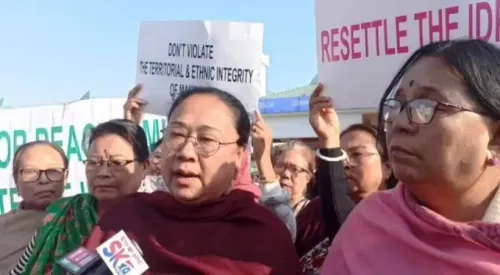
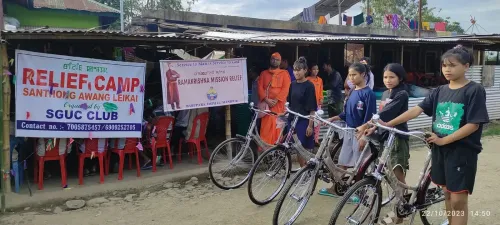
The Manipur Home Department confirmed that 58,881 people have been uprooted from their homes and villages since the violence erupted on May 3, 2023, through March 30, 2026. As of March 10, 2026, 174 relief camps remained operational across the state, a significant reduction from the initial 300-plus camps that sheltered nearly 60,000 displaced men, women, and children in the early months of the conflict.
The human toll has been severe. The department recorded 217 deaths linked to the violence, a figure derived from ex gratia payments made to the next of kin. This number, however, reflects only officially compensated fatalities and may not capture the full extent of lives lost.
Property destruction has been equally devastating. Since May 3, 2023, 7,894 permanent houses have been completely razed, while an additional 2,646 homes sustained partial damage — a combined blow to thousands of families already stripped of their livelihoods and sense of security.
Temporary Housing and Infrastructure Response
To address the immediate shelter crisis, the Manipur Police Housing Corporation Ltd has constructed 3,000 pre-fabricated houses as transitional accommodation for displaced residents. While this represents a tangible step, the gap between 58,881 displaced persons and 3,000 temporary units underscores the magnitude of the humanitarian challenge still unfolding in the state.
The gradual improvement in ground conditions has allowed a portion of displaced residents to return to their villages. However, thousands remain in relief camps, dependent on state and central government support for basic sustenance, healthcare, and security.
Government Priorities and Budget Allocations
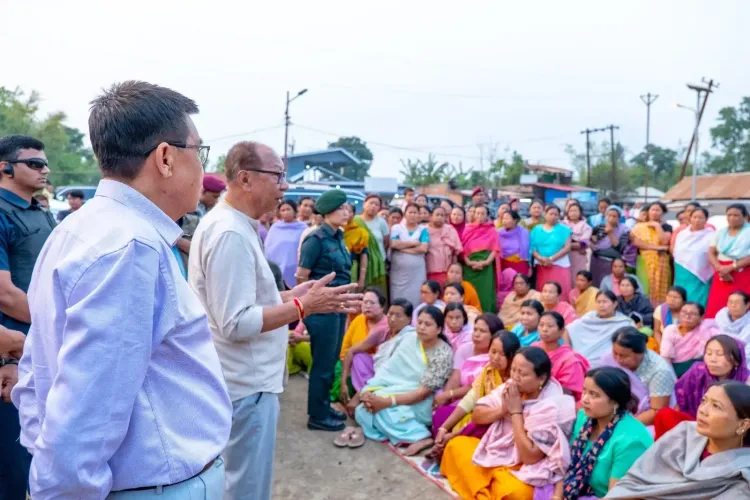
Chief Minister Yumnam Khemchand Singh has publicly committed to making the rehabilitation and resettlement of IDPs a top government priority. He acknowledged the Centre's substantial support in constructing permanent housing, compensating losses of personal belongings and movable assets, and aiding in the repair of partially damaged homes.
Reinforcing this commitment, the 2026-27 State Budget includes a dedicated allocation of Rs 734 crore to accelerate rehabilitation and resettlement efforts — signalling that the government anticipates the recovery process will extend well into the next fiscal year.
Roots of the Conflict and Community Fault Lines
The ethnic violence was triggered on May 3, 2023, when a 'Tribal Solidarity March' in the hill districts turned violent. The march was organised to oppose the Meitei community's demand for Scheduled Tribe (ST) status — a demand that hill-based tribal groups feared would erode their constitutional protections and land rights.
The Meitei community constitutes approximately 53 per cent of Manipur's population and predominantly inhabits the Imphal Valley across five to six districts. In contrast, tribal communities — including Nagas and Kuki-Zo groups — account for roughly 40 per cent of the population and are concentrated across the state's eleven hill districts. This geographic and demographic divide has deepened the complexity of achieving a lasting peace.
Deeper Implications: What the Numbers Don't Fully Reveal
The RTI-driven disclosure is itself significant. The fact that critical humanitarian data — including the number of displaced persons, deaths, and central funding — had to be extracted through a formal information request rather than proactive government communication raises accountability questions. Hareshwar Goshwami's RTI query has effectively placed on public record figures that the government had not voluntarily published in consolidated form.
Notably, the combined central and state financial commitment now exceeds Rs 1,681 crore when the Rs 734 crore budget allocation is factored in alongside the Rs 947 crore MHA sanction. Yet critics argue that financial outlays alone cannot substitute for a durable political solution to the underlying ethnic grievances that ignited the crisis nearly two years ago.
With the 2026-27 rehabilitation budget now in place and the MHA funds disbursed, the focus will sharpen on whether displaced families can actually return to their original villages — or whether the de facto territorial separation between communities becomes a permanent reality on the ground.
Point of View
Nearly two years on, the state still has 174 operational relief camps, suggesting that financial outlays are not translating into actual community reconciliation or safe returns. Without a political resolution to the Meitei ST demand that ignited the conflict, rehabilitation funds risk becoming a permanent subsidy for a divided state.
NationPress
7 Oct 2026
Frequently Asked Questions
How much has the Centre sanctioned for Manipur ethnic violence victims?
The MHA has sanctioned a total of over Rs 947 crore — Rs 424.36 crore for operating relief camps and Rs 523 crore for rehabilitating Internally Displaced Persons (IDPs). An additional Rs 734 crore has been allocated in the 2026-27 State Budget for rehabilitation.
How many people have been displaced by the Manipur ethnic violence?
58,881 people have been displaced from their homes since the violence began on May 3, 2023 , according to the Manipur Home Department's RTI response. As of March 2026, 174 relief camps remain operational.
What caused the ethnic violence in Manipur in 2023?
The violence erupted on May 3, 2023 , following a 'Tribal Solidarity March' in hill districts protesting the Meitei community's demand for Scheduled Tribe status . The conflict pitted the Meitei community against Kuki-Zo and other tribal groups, resulting in widespread deaths and displacement.
How many deaths have been recorded in the Manipur violence?
217 deaths have been officially recorded in connection with the Manipur ethnic violence, based on ex gratia payments made to next of kin. This figure reflects compensated fatalities and may not represent the total number of lives lost.
What is the current status of relief camps in Manipur?
As of March 10, 2026 , 174 relief camps remain active in Manipur. The Manipur Police Housing Corporation Ltd has also built 3,000 pre-fabricated houses as temporary accommodation for displaced persons.