PM Modi Asserts 'All Women Stand United' Despite LS Bill Setback
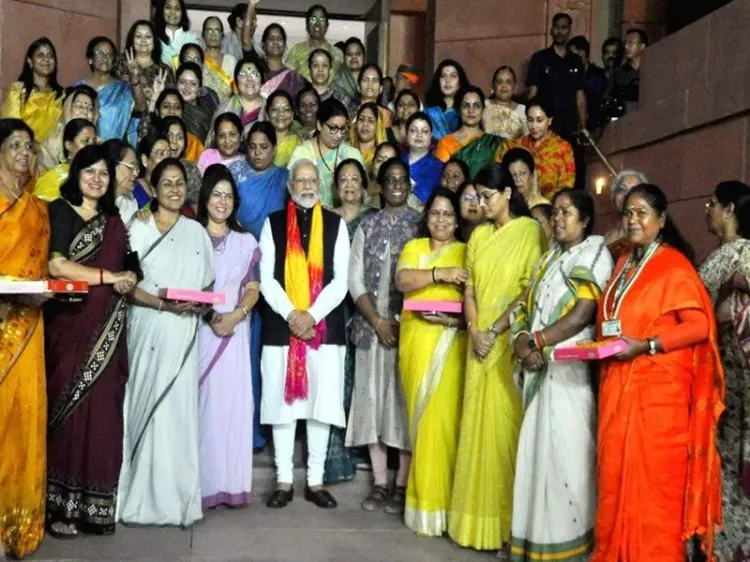
Synopsis
In a powerful address, Prime Minister Modi champions the 'Nari Shakti Vandan' Act, asserting strong public support for women's reservation, even as opposition parties block key reforms. His commitment to women's empowerment remains unshaken amidst political challenges.
Key Takeaways
Modi's Commitment: Prime Minister Modi firmly supports the 'Nari Shakti Vandan' Act.
Public Support: He believes all women stand united behind this initiative.
Political Opposition: Modi criticizes the opposition for blocking women's empowerment efforts.
Inclusivity: The proposed amendments aim for balanced representation across regions.
Empowerment Vision: Modi envisions greater leadership roles for women in India.
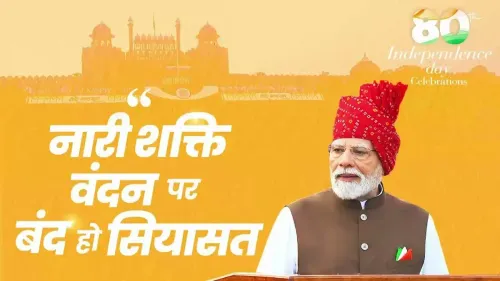
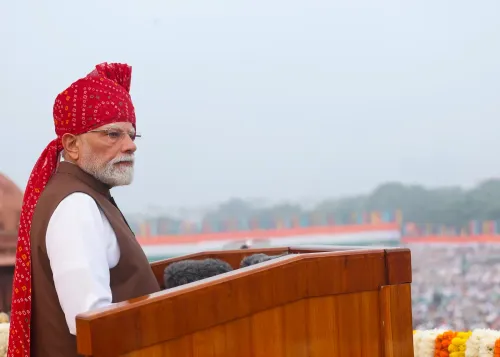
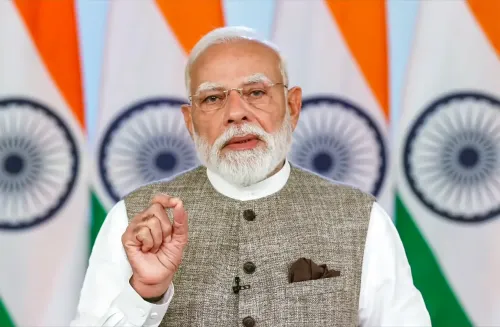
New Delhi, April 18 (NationPress) Prime Minister Narendra Modi on Saturday stood firm in his support for the proposed changes to the 'Nari Shakti Vandan' Act while launching a pointed critique against opposition parties for obstructing what he termed a monumental advancement in women’s empowerment.
In his address to the nation, Modi recognized that the government was unable to achieve the constitutionally required two-thirds majority in Parliament to pass the Constitution Amendment Bill related to women’s reservation, yet he remained optimistic about the backing from the public.
He noted that although the numbers in the Lok Sabha were insufficient, he was confident that “100 percent of the nation’s women” were in favor of this initiative.
Modi committed to eliminating all hindrances to women’s reservation and cautioned that those opposing this measure were underestimating the determination and strength of Indian women.
He condemned the behavior of opposition members during the debate, claiming they celebrated the denial of women’s rights.
According to him, their actions transcended mere political opposition, constituting an insult to women’s dignity and self-respect.
He emphasized the emotional aspect, stating that while women might overlook many things, they do not forget insults.
Highlighting the necessity behind the legislation, Modi asserted that the amendment was timely and aimed at promoting balanced development across all regions—north, south, east, and west.
He stressed that the proposal was crafted as an inclusive reform intended to bolster representation without disadvantaging any state or demographic.
Nonetheless, he accused the Congress and its allies of “sabotaging” the Bill in Parliament, using strong language to characterize their opposition as akin to the “foeticide” of a transformative reform.
Modi also attributed the resistance to what he referred to as “family-run parties”, suggesting these political entities feared losing power if women gained enhanced representation and leadership roles.
He claimed that these parties perceived empowered women as a threat to their established interests.
Reassuring the states, Modi reiterated that the proposed alterations would not change the representation ratio for any region.
Instead, he stated, the number of seats would increase proportionately, ensuring fairness across the nation.
He further accused the Congress of being an “anti-reform” entity, alleging that their political strategy had consistently been to delay, divert, and obstruct essential initiatives.
At the same time, he clarified that the issue was not about political accolades, expressing his willingness to let the Opposition take credit if it meant achieving justice for women.
Point of View
I view Prime Minister Modi's remarks as a strong commitment to women's empowerment, despite the political hurdles faced in Parliament. His emphasis on public support and the importance of the 'Nari Shakti Vandan' Act highlights the ongoing struggle for gender equality in India.
NationPress
18 Sept 2026
Frequently Asked Questions
What is the 'Nari Shakti Vandan' Act?
The 'Nari Shakti Vandan' Act aims to enhance women's representation in legislative bodies in India through a constitutional amendment for women's reservation.
Why did the Bill not pass in the Lok Sabha?
The Bill did not secure the constitutionally required two-thirds majority in Parliament due to opposition from various political parties.
What are the implications of the proposed amendments?
The amendments are designed to promote equal representation for women across all regions in India, ensuring balanced development.
How did Prime Minister Modi respond to the opposition?
Modi criticized the opposition for blocking the Bill and described their actions as an affront to women's dignity and self-respect.
What is Modi's vision for women's empowerment?
Modi envisions a future where women have equal representation and leadership roles, which he believes is essential for India's progress.