Kargil Vijay Diwas: Modi honours 1999 war heroes in Mann Ki Baat episode 136
Synopsis
Modi's 136th Mann Ki Baat was equal parts remembrance and defence showcase — honouring Kargil's martyrs while flagging INS Mahendragiri's induction, DRDO's 120-km Pinaka rocket, and the Khusha Missile's flight test. The episode crystallises the government's dual message: India remembers its fallen soldiers, and it is arming itself so future soldiers face better odds.
Key Takeaways
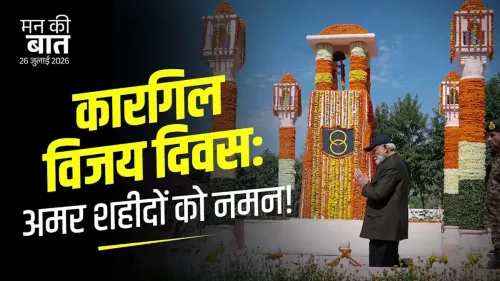
PM Modi paid tribute to Kargil War martyrs on Kargil Vijay Diwas, 26 July , during the 136th episode of Mann Ki Baat .
The Saurya Vijay Yatra motorcycle expedition, launched on 14 July from the National War Memorial, New Delhi , is en route to the Kargil War Memorial in Drass .
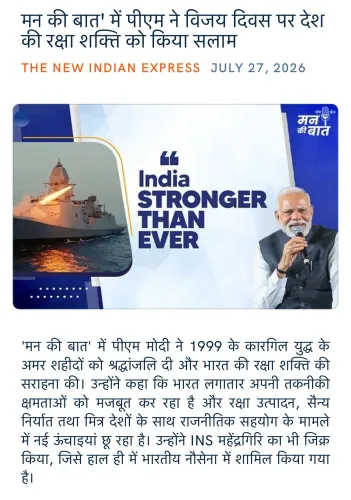
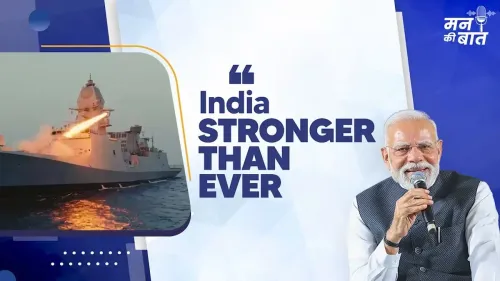
INS Mahendragiri has been inducted into the Indian Navy with more than 75 per cent indigenous content, under the Project 17A stealth frigate programme.
DRDO 's Pinaka LRGR-120 rocket system offers a maximum range of 120 km and a validated minimum range of 60 km .
The successful flight test of the Khusha Missile was also highlighted by the Prime Minister.
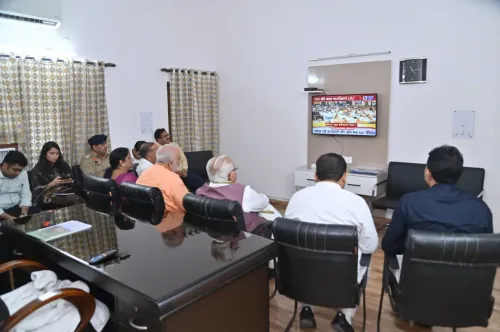
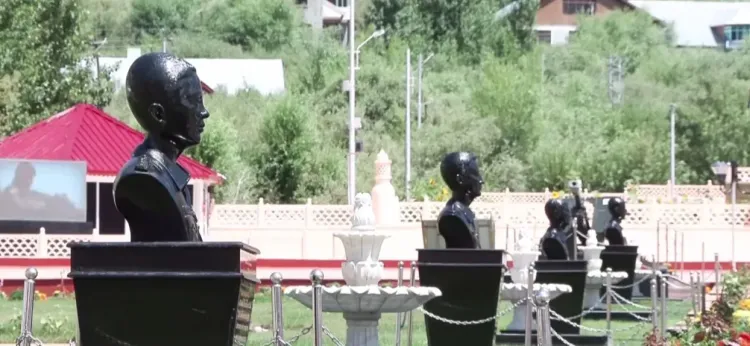
Prime Minister Narendra Modi on Sunday, 26 July paid solemn tribute to the martyrs and soldiers of the 1999 Kargil War during the 136th episode of his monthly radio programme 'Mann Ki Baat', saying Kargil Vijay Diwas fills the nation with pride and stands as a permanent reminder of the 'extraordinary courage' of the Indian Armed Forces. Modi also highlighted India's growing defence self-reliance, citing the induction of a new warship and two indigenous weapons systems.
Modi's Tribute to Kargil Martyrs
'There are certain dates in our lives for which we do not need to look at the calendar. Today, July 26, is one such date,' Modi said during the broadcast. 'This day fills us with pride and reminds us of the extraordinary courage of our brave soldiers.'
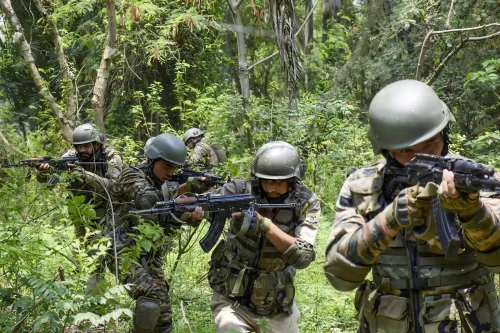
He invoked the conditions faced by Indian troops — towering peaks, harsh weather, and a determined enemy — and underlined that their morale surpassed every challenge. 'They sacrificed everything for protecting the motherland. Today, on Kargil Vijay Diwas, I pay homage to all the brave martyrs and soldiers,' he said.
Saurya Vijay Yatra: Keeping the Memory Alive
Modi said today's India not only remembers its heroes but actively 'ensures that their stories reach the new generations.' He pointed to the Saurya Vijay Yatra, a motorcycle expedition that began on 14 July from the National War Memorial in New Delhi and is set to conclude at the Kargil War Memorial in Drass. The rally carries the message: 'One ride, one nation, one salute.'
This comes amid a broader government effort to institutionalise war remembrance — from digitising gallantry records to establishing dedicated Sainik Schools in border districts. The Saurya Vijay Yatra is among the more visible public-facing components of that push.
INS Mahendragiri and the Atmanirbhar Defence Push
Modi used the occasion to underscore India's expanding indigenous defence capabilities. He highlighted the induction of INS Mahendragiri into the Indian Navy, describing it as a modern warship designed and built in India with more than 75 per cent indigenous content. 'This is a symbol of the growing strength of Atmanirbhar Bharat,' he said.
Notably, INS Mahendragiri belongs to the Project 17A stealth frigate programme — one of the most ambitious shipbuilding efforts undertaken by Indian yards. Its induction marks a significant step in reducing the Navy's dependence on foreign platforms.
Pinaka Rocket System and Khusha Missile
The Prime Minister also drew attention to two weapons milestones. He cited the Pinaka Long Range Guided Rocket (LRGR-120), an advanced, precision-guided artillery rocket system developed indigenously by the Defence Research and Development Organisation (DRDO), with a maximum strike range of approximately 120 kilometres and a validated minimum range of 60 kilometres. 'Behind this success, it is the collective hard work of our scientists and engineers,' Modi said.
He also highlighted the successful flight test of the Khusha Missile, adding to a string of recent DRDO milestones that have drawn attention to India's accelerating domestic weapons development pipeline.
What This Signals
The pairing of Kargil remembrance with defence-technology announcements in a single Mann Ki Baat episode reflects a deliberate government narrative: that honouring past sacrifices and building future military strength are two sides of the same commitment. With India's defence exports crossing record levels in recent years and the government pushing for greater private-sector participation in defence manufacturing, Modi's remarks land in a context where Atmanirbhar Bharat is increasingly measured in hardware — not just policy intent.
Point of View
But India's overall defence import bill remains among the world's highest. The gap between headline milestones and systemic import dependence is where the real story lies — and where the Atmanirbhar Bharat promise will ultimately be judged.
NationPress
24 Oct 2026
Frequently Asked Questions
What did PM Modi say on Kargil Vijay Diwas in Mann Ki Baat?
PM Modi paid tribute to the martyrs and soldiers of the 1999 Kargil War during the 136th episode of Mann Ki Baat on 26 July, calling the day a reminder of the 'extraordinary courage' of the Indian Armed Forces. He also highlighted the Saurya Vijay Yatra expedition and India's latest indigenous defence achievements.
What is the Saurya Vijay Yatra?
The Saurya Vijay Yatra is a motorcycle expedition that began on 14 July from the National War Memorial in New Delhi and is travelling to the Kargil War Memorial in Drass. It carries the message 'One ride, one nation, one salute' and is aimed at keeping the memory of Kargil's sacrifices alive for younger generations.
What is the Pinaka LRGR-120 rocket system?
The Pinaka Long Range Guided Rocket (LRGR-120) is an advanced, precision-guided artillery rocket system developed indigenously by DRDO, with a maximum strike range of approximately 120 kilometres and a validated minimum range of 60 kilometres. PM Modi cited it as an example of India's growing indigenous defence capability.
What is INS Mahendragiri and why is it significant?
INS Mahendragiri is a modern warship designed and built in India, inducted into the Indian Navy with more than 75 per cent indigenous content. It is part of the Project 17A stealth frigate programme and is seen as a key marker of India's Atmanirbhar Bharat push in naval defence.
What is the Khusha Missile?
The Khusha Missile is an indigenously developed Indian missile whose successful flight test was highlighted by PM Modi during the 136th Mann Ki Baat episode on 26 July. It is among the recent DRDO milestones underscoring India's accelerating domestic weapons development.