PM Modi praises Tamil professor's Veerakkal find on Mann Ki Baat
Synopsis
A tip from a student led a Tamil college professor to a hero stone — and straight onto Prime Minister Modi's Mann Ki Baat. Professor Selvaraj's grassroots approach to heritage discovery, which puts students at the centre of field research, has now received national recognition, spotlighting Tamil Nadu's largely undocumented cultural landscape.
Key Takeaways
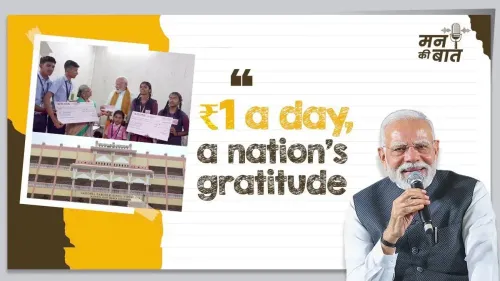
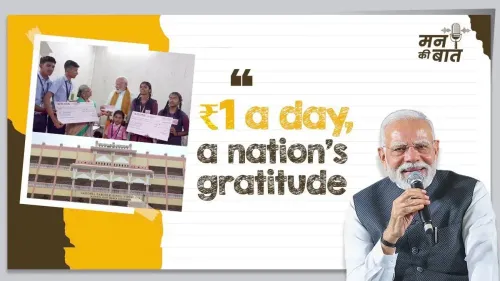
PM Narendra Modi praised Professor Selvaraj's discovery of a Veerakkal (hero stone) on his monthly radio programme Mann Ki Baat on 27 September 2026 .
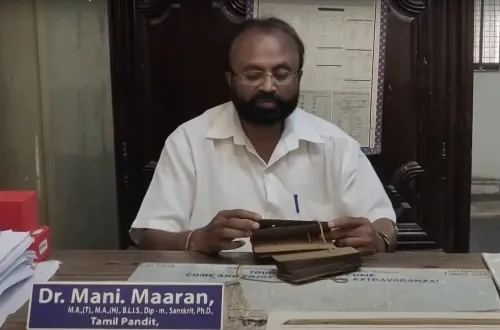
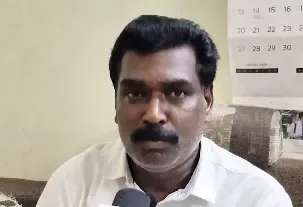
Selvaraj is the Head of the Tamil Department at Manapparai Government Arts and Science College in Trichy, Tamil Nadu .
He had previously discovered a Chola inscription near Trichy and a Jain rock inscription , both published in academic journals.
The Veerakkal find in Manapparai came after a student provided a lead; Selvaraj took students to the site to explain its historical significance.
His wife, Professor Sharmila , also expressed happiness at the national recognition, praising Modi's focus on ordinary citizens' contributions.
Tamil scholar Professor Selvaraj, Head of the Tamil Department at Manapparai Government Arts and Science College in Trichy, Tamil Nadu, on Sunday, 27 September 2026, expressed deep satisfaction after Prime Minister Narendra Modi spotlighted his discovery of a Veerakkal (hero stone) on the monthly radio programme Mann Ki Baat. The public recognition, broadcast to millions of listeners nationwide, has brought fresh attention to grassroots heritage conservation efforts in Tamil Nadu.
The Discovery That Caught the PM's Attention
Professor Selvaraj's journey into historical research began close to home. He had earlier unearthed a Chola inscription in the Thalikaipatharpet area near Trichy, his native region. In the course of that research, he also identified a Jain rock inscription, the findings of which he published in academic journals.
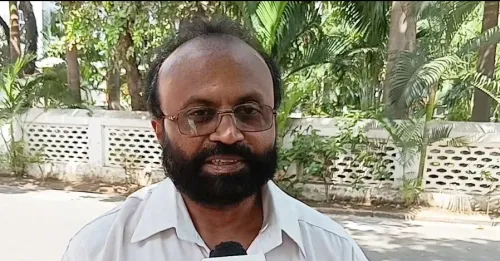
His interest in historical inscriptions then drew him to the Manapparai region, where a student's tip led to his most recent discovery — the Veerakkal, a traditional hero stone commemorating warriors. 'Based on information given by a student, I discovered a Veerakkal. I took students to the site and explained its significance to them. The Hon'ble Prime Minister has appreciated this work. I thank Prime Minister Narendra Modi,' Selvaraj said.
What the PM Said on Mann Ki Baat
Prime Minister Modi's mention of Selvaraj's work during Mann Ki Baat is consistent with the programme's recurring theme of amplifying ordinary citizens doing extraordinary work. The radio broadcast, which airs monthly, has previously been used to highlight stories of community-level innovation, environmental conservation, and cultural preservation across India. Selvaraj described the recognition as particularly meaningful because it brought national visibility to efforts undertaken at the grassroots level.
A Call to Take Heritage into Classrooms
For Selvaraj, the Prime Minister's appreciation is both an honour and a responsibility. He stressed that cultural heritage sites are embedded in the everyday landscapes where people live, yet remain largely invisible to younger generations. 'We need to take this information to students. Only then will they understand its true significance,' he said, underlining his belief that academic discovery must translate into public education.
His approach — involving students directly in field visits to heritage sites — reflects a pedagogical philosophy that links classroom learning to lived history. Notably, it was a student who first pointed him toward the Veerakkal site in Manapparai, illustrating that community participation can itself be a discovery mechanism.
Family Shares in the Recognition
Professor Selvaraj's wife, Professor Sharmila, also shared her reaction to Prime Minister Modi's mention of her husband's work. 'It is surprising to hear Prime Minister Modi speak about this. I am very happy. The Prime Minister has been continuously speaking through this programme. Despite his heavy workload, he gives importance to and speaks about the small things done by ordinary people. I once again express my heartfelt thanks to Prime Minister Narendra Modi,' she said.
The recognition is likely to encourage more teachers and researchers in Tamil Nadu to document and share heritage findings, bringing sustained focus to the state's layered archaeological and cultural legacy.
Point of View
Undercatalogued archaeological record. Tamil Nadu alone has thousands of uninvestigated inscriptions; one professor and his students cannot cover them all. The real question is whether this moment of national recognition translates into institutional support — research grants, university partnerships, state archaeology department involvement — or remains a feel-good radio segment.
NationPress
28 Sept 2026
Frequently Asked Questions
Who is Professor Selvaraj and what did he discover?
Professor Selvaraj is the Head of the Tamil Department at Manapparai Government Arts and Science College in Trichy, Tamil Nadu. He discovered a Veerakkal (hero stone) in the Manapparai region after receiving a tip from a student, and had previously found a Chola inscription and a Jain rock inscription near Trichy.
Why did PM Modi mention Professor Selvaraj on Mann Ki Baat?
PM Modi highlighted Selvaraj's discovery of the Veerakkal on his monthly radio programme Mann Ki Baat, which regularly features stories of ordinary citizens doing notable work at the community level. The mention brought national attention to grassroots heritage conservation in Tamil Nadu.
What is a Veerakkal or hero stone?
A Veerakkal is a traditional South Indian commemorative stone erected to honour warriors who died in battle or while protecting their community. Such stones are significant historical artefacts, particularly across Tamil Nadu, and often carry inscriptions that provide insights into local history and society.
What is Professor Selvaraj's approach to heritage education?
Selvaraj takes students directly to heritage sites discovered through his research, explaining the historical significance of each find on location. He believes that cultural heritage can only be truly appreciated when it is brought into direct contact with younger generations, and notably, it was a student who first alerted him to the Veerakkal site.
How did Professor Selvaraj's family react to the recognition?
His wife, Professor Sharmila, said she was surprised and very happy to hear PM Modi speak about her husband's work. She praised the Prime Minister for giving importance to contributions made by ordinary people despite his heavy schedule, and expressed heartfelt thanks.