PM Modi releases Ram Nath Kovind autobiography, calls it a democratic heritage
Synopsis
PM Modi called Ram Nath Kovind's newly released autobiography a 'heritage for India's democracy' — a striking elevation for a memoir that traces the 14th President's journey from a thatched-roof home in rural Uttar Pradesh, where he lost his mother to a fire at age five, to the highest constitutional office in the land.
Key Takeaways
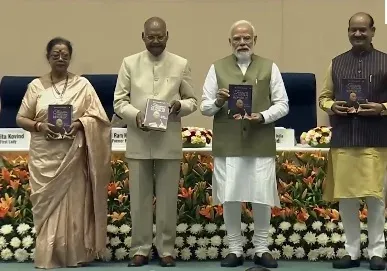
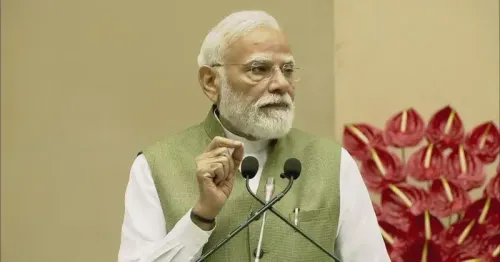
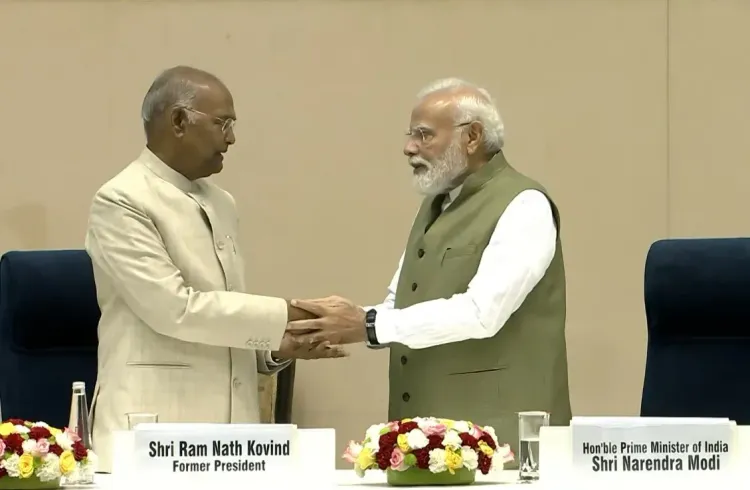
PM Modi released Ram Nath Kovind's autobiography titled 'Triumph of the Indian Republic: My Life, My Struggles' at Vigyan Bhavan, New Delhi on 12 August .
The memoir covers Kovind's journey from Paraunkh village, Kanpur Dehat, Uttar Pradesh to his tenure as the 14th President of India (2017–2022) .
Modi described the book as a 'heritage for India's democracy and society' and urged the younger generation to read it.
Kovind lost his mother Kalavati around 1950 , aged approximately five , when their thatched home caught fire — an episode Modi highlighted as formative to Kovind's resilience.
Kovind was the first person from Uttar Pradesh and the first from the BJP to serve as President of India.
Before the presidency, Kovind served as Governor of Bihar (2015–2017) and as a Rajya Sabha MP for two terms.
Prime Minister Narendra Modi on Wednesday, 12 August released the autobiography of former President Ram Nath Kovind, titled 'Triumph of the Indian Republic: My Life, My Struggles', at a function held at Vigyan Bhavan, New Delhi. The memoir traces Kovind's journey from a modest upbringing in rural Uttar Pradesh to his tenure as the 14th President of India, and is being positioned as a document of both personal resilience and democratic values.
What the Book Covers
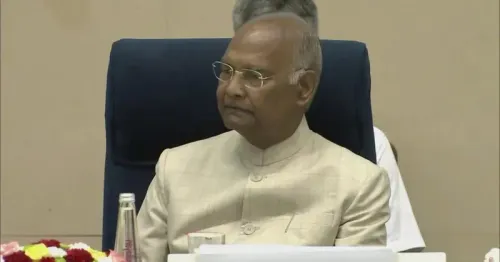
The autobiography offers a candid account of Kovind's early years, struggles, and eventual rise through public life. It details the values and circumstances that shaped his approach to governance and service. Kovind, born on 1 October 1945 in Paraunkh village, Kanpur Dehat district, Uttar Pradesh, into a Koli family, served as President of India from 2017 to 2022. He was the first person from Uttar Pradesh and the first from the Bharatiya Janata Party (BJP) to hold the country's highest constitutional post.
What Prime Minister Modi Said
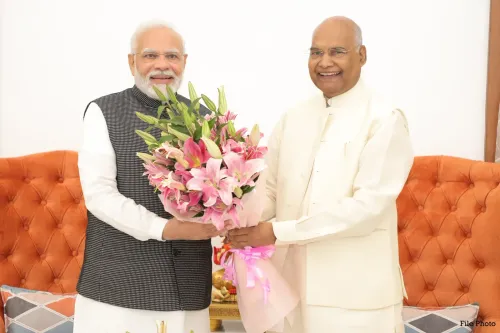
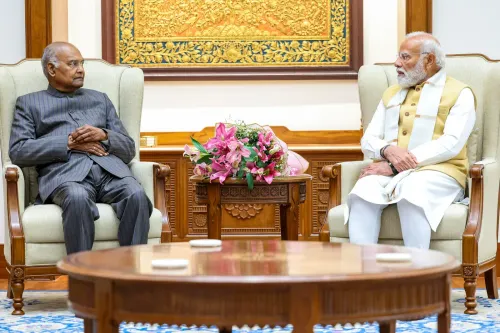
Addressing the gathering, Modi described the event as a family occasion and spoke warmly of his long association with Kovind. 'This feels like a family event. Today, we got an opportunity to get a glimpse of the life story of Ram Nath Kovind ji,' he said. Modi added that Kovind's 'guidance as President and above all his special affection' had been a source of personal strength.
On the book's significance, Modi said: 'I can confidently say that Kovind Ji's autobiography will become a heritage for India's democracy and society.' He urged the younger generation to read it, saying the launch was only a 'curtain-raiser' for what the full memoir contained.
Modi also interpreted the book's title as a statement of character: 'The name of the autobiography is on point — Triumph of the Indian Republic: My Life, My Struggles — this means that life and the struggles were personal; however, the result of these struggles was a win for India's democracy and republic.'
Personal Tragedy and Resilience
Modi recalled one of the most painful episodes of Kovind's early life — the loss of his mother, Kalavati, around 1950, when Kovind was approximately five years old, after she suffered fatal burns when their thatched house caught fire. 'To experience such an incident at such a young age, to lose someone, is so painful,' Modi said, adding that Kovind became stronger through those hardships and came to regard his father as his hero.
A Legacy of Humility
Modi recounted Kovind's conduct during their interactions at Rashtrapati Bhavan, noting that the former President would walk up to the car door to see off the Prime Minister — a gesture that went beyond protocol. 'I used to request him in the beginning, 'Please don't do this.' But until the end of his life, he never gave up that humility,' Modi said.
He also recalled how, after assuming the presidency, Kovind returned to his village, touched the feet of his mentors, and bowed to the soil — a moment Modi described as a living example of Indian values. Addressing the gathering earlier, Kovind himself said the occasion was 'different' for him because it centred on his private life, and expressed gratitude to all present.
Kovind's Public Career at a Glance
Before the presidency, Ram Nath Kovind served as Governor of Bihar from 2015 to 2017 and as a Member of the Rajya Sabha from Uttar Pradesh for two successive terms. His career arc — from a village in Kanpur Dehat to the highest constitutional office — forms the backbone of the memoir. The book is expected to draw wide readership among students of Indian democracy and public administration.
Point of View
Framing the book as a 'heritage for India's democracy', aligns the BJP's narrative with Dalit representation at the highest constitutional level. Kovind's story — first BJP president, first from Uttar Pradesh to hold the office — carries symbolic weight the party has consistently leveraged. What the mainstream coverage underplays is how rarely sitting or former heads of state publish candid personal memoirs in India; if the book delivers on its promise of unfiltered personal account, it could set a new standard for political autobiography in the country.
NationPress
26 Sept 2026
Frequently Asked Questions
What is Ram Nath Kovind's autobiography about?
'Triumph of the Indian Republic: My Life, My Struggles' is a personal memoir by former President Ram Nath Kovind, tracing his journey from a Koli family in Paraunkh village, Kanpur Dehat, Uttar Pradesh, to his tenure as the 14th President of India from 2017 to 2022. The book covers his early hardships, public service, and the values that shaped his life.
When and where was Kovind's autobiography launched?
The autobiography was released on Wednesday, 12 August, at Vigyan Bhavan in New Delhi. Prime Minister Narendra Modi presided over the launch event.
What did PM Modi say about the book?
Modi called the autobiography a 'heritage for India's democracy and society' and urged the younger generation to read it. He also praised Kovind's humility, generosity, and adherence to Indian values, recounting personal anecdotes from their interactions during Kovind's presidential tenure.
Who is Ram Nath Kovind and what is his significance?
Ram Nath Kovind, born on 1 October 1945, served as the 14th President of India from 2017 to 2022. He was the first person from Uttar Pradesh and the first from the BJP to hold the country's highest constitutional office, having earlier served as Governor of Bihar and as a Rajya Sabha MP.
What personal tragedy does the book reference?
Kovind lost his mother, Kalavati, around 1950 when he was approximately five years old, after she suffered fatal burns in a fire that destroyed their thatched home. PM Modi highlighted this episode at the launch as a defining moment in Kovind's journey toward resilience.