Modi becomes India's longest-serving elected PM: 12 years of reactions
Synopsis
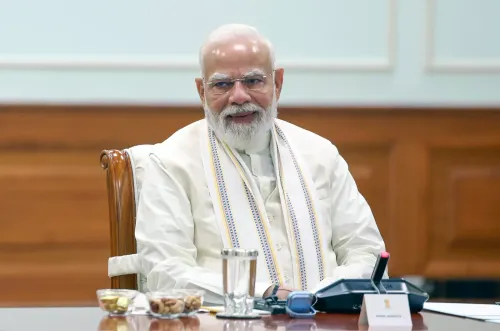
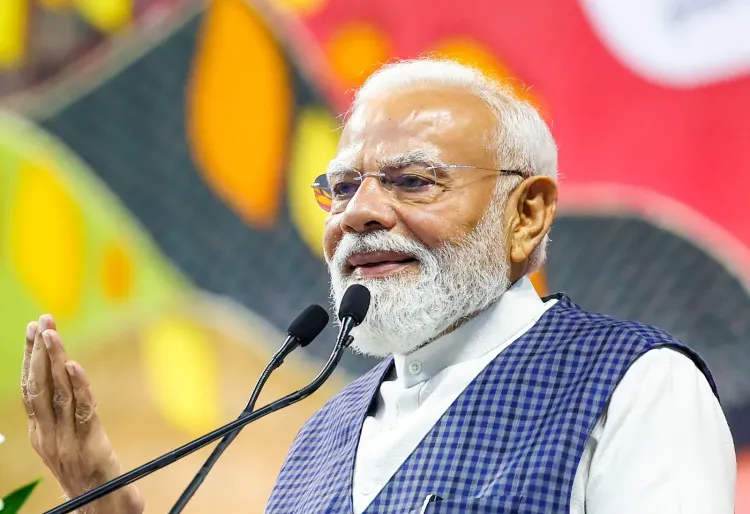
Narendra Modi has crossed into uncharted territory — 12 years as India's Prime Minister, a record no elected head of government in the country has held. The milestone drew praise from religious leaders across faiths and NDA-ruled states, though the record is as contested as the man himself.
Key Takeaways
Prime Minister Narendra Modi became India's longest-serving head of an elected government on 9 June 2025 , surpassing all predecessors.
Swami Chidanand Saraswati of Parmarth Niketan Ashram called it 'a symbol of putting the nation first and visionary leadership.' All India Shia Personal Law Board General Secretary Maulana Yasoob Abbas expressed hope the PM will 'keep working for humanity, society and the country.' Chhattisgarh CM Vishnu Deo Sai , Uttarakhand CM Pushkar Singh Dhami , and Maharashtra Deputy CM Eknath Shinde all offered congratulations and credited Modi with raising India's global profile.
Delhi BJP President Harsh Malhotra recalled Modi's 2014 oath-day pledge to dedicate his government to the poor.
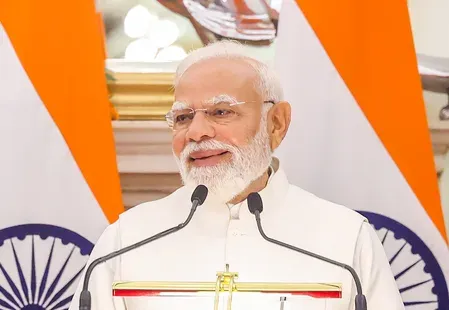
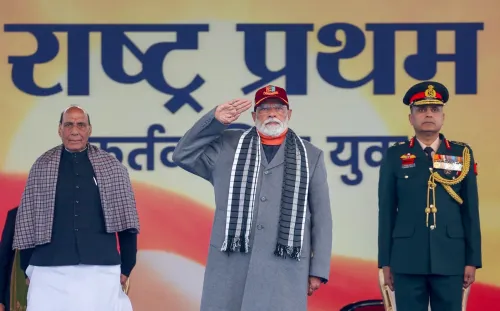
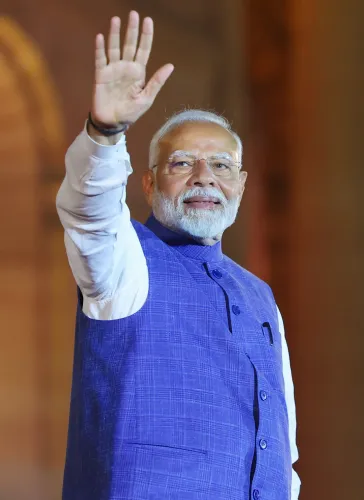
Prime Minister Narendra Modi on 9 June 2025 crossed the milestone of becoming India's longest-serving head of an elected government, surpassing all predecessors in continuous tenure. The landmark prompted an outpouring of tributes from religious leaders, NDA-allied Chief Ministers, and political figures, who credited his 12-year tenure with steering the country toward development and public welfare.
Religious Leaders Weigh In
Spiritual head of Parmarth Niketan Ashram, Swami Chidanand Saraswati, called the occasion 'a symbol of the spirit of putting the nation first, visionary leadership, and dedication to public service.' He drew a historical arc, noting that while India witnessed the eras of Jawaharlal Nehru and Indira Gandhi, the current phase represents 'a new phase — one in which the world sees India not merely as a country, but as a nation advancing with its own vision, identity, and self-confidence.'
All India Shia Personal Law Board General Secretary Maulana Yasoob Abbas described the milestone as 'a matter of great joy,' while expressing the hope that the Prime Minister 'will keep working for humanity, society and the country.' He acknowledged the challenge of governing a vast and diverse nation, saying it is 'a big thing to satisfy everyone in a huge country like India.'
NDA Chief Ministers Offer Congratulations
Chhattisgarh Chief Minister Vishnu Deo Sai said the state has received more from the Centre than it had anticipated. 'He has done a lot for Chhattisgarh. We have got more than what we expected from the Centre,' Sai said.
Uttarakhand Chief Minister Pushkar Singh Dhami described the 12-year period as the journey of 'a karmayogi, a tapasvi, and a dedicated practitioner who has continuously worked without pause to take India to greater heights.' Dhami added that India's global standing has risen considerably during this period.
Maharashtra Deputy Chief Minister and Shiv Sena supremo Eknath Shinde said Modi 'has created a distinct identity for himself in India's history,' calling him 'one of the most successful Prime Ministers' who 'has left a lasting mark through his tenure and leadership.'
BJP's Political Reading
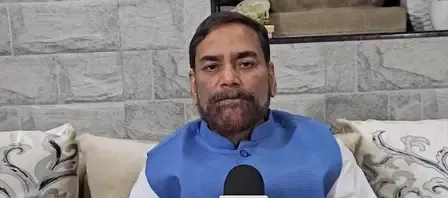
Delhi Bharatiya Janata Party (BJP) President Harsh Malhotra characterised the 12-year tenure as one of 'development, trust, and public welfare.' He recalled that on the day Modi was sworn in during 2014, the Prime Minister pledged in his very first address that his government would be 'dedicated to the poor.'
Context and Significance
Modi first assumed office on 26 May 2014, and has since led the government through three consecutive terms, a feat unmatched in the post-Emergency democratic era. The milestone arrives as India continues to assert a stronger presence on the global stage, from G20 hosting duties to rising foreign direct investment inflows. Critics, however, have noted that the record is not without controversy, with opposition parties contesting the government's record on economic inequality, institutional autonomy, and press freedom. The tributes pouring in on 9 June 2025 largely reflect the perspective of allies and supporters rather than a cross-partisan consensus.
Point of View
And the BJP's machinery has clearly mobilised around it. What the congratulations do not address is the harder question: whether 12 years of incumbency have translated into structural improvements in employment, institutional independence, and economic equity — areas where the opposition, and some independent assessments, point to a more complicated picture. Longevity in office is a democratic fact; its meaning depends entirely on what was done with the time.
NationPress
26 Oct 2026
Frequently Asked Questions
How did Narendra Modi become India's longest-serving elected Prime Minister?
Narendra Modi first took office on 26 May 2014 and has since completed three consecutive terms, crossing 12 years in office by 9 June 2025 — a tenure longer than any other head of an elected government in India's post-Independence history. Previous records were held by Jawaharlal Nehru and Indira Gandhi, though Gandhi's longest continuous stretch included the Emergency period.
Who congratulated PM Modi on this milestone?
Tributes came from religious leaders including Swami Chidanand Saraswati of Parmarth Niketan Ashram and All India Shia Personal Law Board General Secretary Maulana Yasoob Abbas, as well as NDA Chief Ministers including Chhattisgarh's Vishnu Deo Sai, Uttarakhand's Pushkar Singh Dhami, and Maharashtra Deputy CM Eknath Shinde.
What did Swami Chidanand Saraswati say about Modi's tenure?
Swami Chidanand Saraswati called the milestone 'a symbol of the spirit of putting the nation first, visionary leadership, and dedication to public service.' He also said the world now sees India as 'a nation advancing with its own vision, identity, and self-confidence.'
What did Chief Ministers say about Modi's 12 years in office?
Chhattisgarh CM Vishnu Deo Sai said his state received more from the Centre than expected. Uttarakhand CM Pushkar Singh Dhami described Modi as a 'karmayogi' who worked without pause. Maharashtra Deputy CM Eknath Shinde called him 'one of the most successful Prime Ministers' who left a lasting mark on India's history.
Why does Modi's record matter in India's political history?
The record is significant because it marks the first time in the post-Emergency democratic era that a single leader has governed India continuously for over 12 years across three electoral mandates. It places Modi alongside — and now beyond — foundational figures like Nehru and Indira Gandhi in terms of duration in office, making it a landmark in Indian political history.