MP Expands Medical Colleges to Fix Doctor Shortage: Dy CM Devda
Synopsis
Madhya Pradesh Deputy CM Jagdish Devda unveiled plans on April 24 to open medical colleges in every district of the state to address a chronic doctor shortage. With 21 government colleges already operational and PPP-model institutions planned in Dhar, Betul, Panna, and Katni, MP is betting big on decentralised medical education to fix rural healthcare gaps.
Key Takeaways
Deputy CM Jagdish Devda announced on April 24 that Madhya Pradesh will establish medical colleges in every district to combat the doctor shortage.
Madhya Pradesh currently has around 21 government medical colleges , including AIIMS Bhopal , with recent additions in Sheopur and Singrauli .
New medical colleges are planned under the PPP model in Dhar, Betul, Panna, and Katni by upgrading existing district hospitals.
A 100-bed general ward (Rs 7.50 crore ) and a 100-bed Maternal and Child Health building (Rs 17.29 crore ) were inaugurated at Indira Gandhi District Hospital, Mandsaur .
Foundation stone laid for the Chandakhedi Fanta–Khajuriya road project worth Rs 4.73 crore to improve regional connectivity.
The expansion aims to retain medical graduates within the state to serve local and rural communities after graduation.
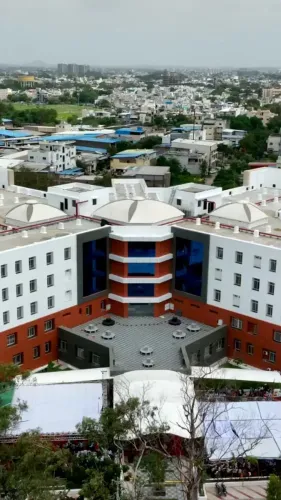
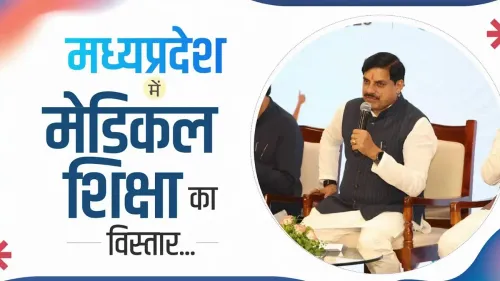
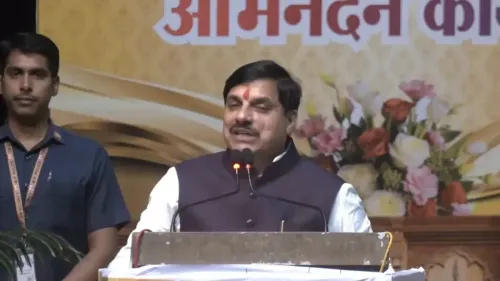
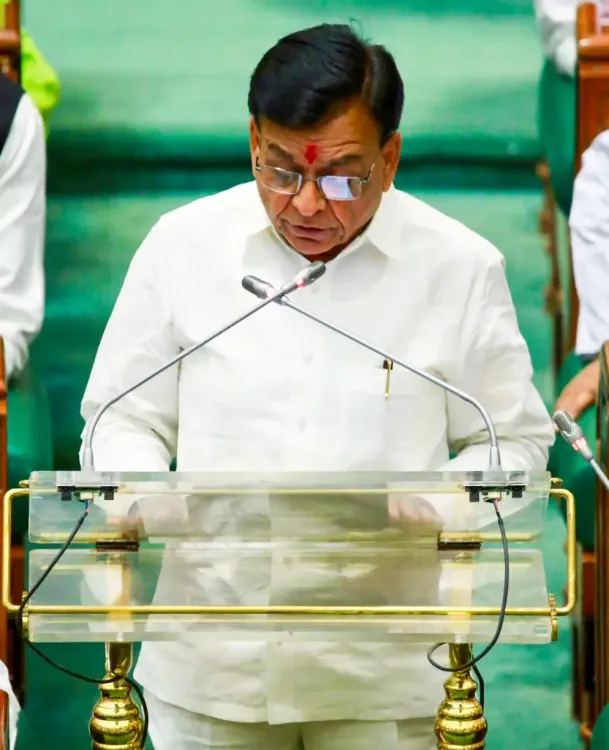
Mandsaur, April 24: Madhya Pradesh Deputy Chief Minister Jagdish Devda announced on Friday that the state government is aggressively expanding medical education infrastructure to combat a persistent doctor shortage, particularly in rural and semi-urban regions. Speaking at the Indira Gandhi District Hospital, Mandsaur, Devda outlined plans to establish medical colleges across all districts, ensuring that local students can train and serve within the state.
What the Government Said
Addressing the gathering, Deputy CM Devda acknowledged that inadequate doctor availability — especially at primary and community health centres — remains one of Madhya Pradesh's most pressing healthcare challenges. He stated that the government is committed to resolving this gap systematically.
"The state government is continuously working to strengthen healthcare facilities. The shortage of doctors in health centres will gradually be reduced through the establishment of more medical colleges," Devda said.
He further emphasized that the goal is to place a medical college in every district, enabling students to pursue MBBS and postgraduate medical education without leaving the state — and subsequently return to serve their local communities.
Current State of Medical Education in MP
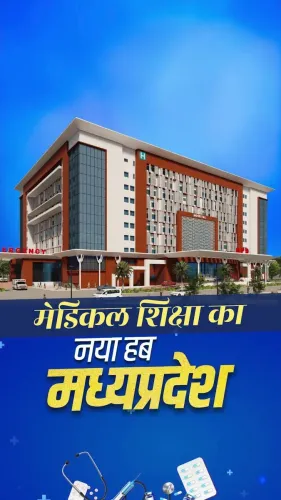
Madhya Pradesh currently operates approximately 21 government medical colleges, including the prestigious All India Institute of Medical Sciences (AIIMS), Bhopal. Recent years have seen new institutions open in districts such as Sheopur and Singrauli, reflecting a broader push to decentralise medical education.
The state is also pursuing expansion through the Public-Private Partnership (PPP) model. Under this framework, new medical colleges are proposed in districts including Dhar, Betul, Panna, and Katni by upgrading existing district hospitals into full-fledged teaching institutions.
This model, if executed effectively, could significantly increase MBBS seat availability in MP — a state that, according to health ministry data, faces one of the higher doctor-to-population ratios in central India.
New Infrastructure Inaugurated at Mandsaur
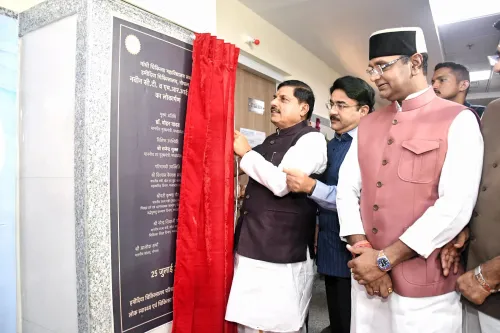
During the event, Deputy CM Devda inaugurated two major facilities at the Indira Gandhi District Hospital. The first is a newly constructed 100-bed general ward, built at a cost of Rs 7.50 crore. The second is a 100-bed Maternal and Child Health (MCH) building, developed at a cost of Rs 17.29 crore.
He also laid the foundation stone for the Chandakhedi Fanta–Khajuriya road project, valued at Rs 4.73 crore, which will improve connectivity in the region.
Devda noted that the new hospital facilities will directly benefit women and children in the Mandsaur district and help ease the patient load on tertiary-level hospitals in larger cities.
Political and Policy Context
Public Works Department Minister Rakesh Singh, also present at the event, underscored the social importance of healthcare infrastructure, stating that the new MCH building would be a critical resource for mothers in the district.
Notably, Madhya Pradesh's healthcare expansion push comes amid broader national concerns about the doctor shortage in India. According to World Health Organization (WHO) benchmarks, India requires at least 1 doctor per 1,000 people — a target that several central Indian states, including MP, are still working to meet.
Critics have long pointed out that merely building medical colleges does not automatically translate to doctors serving in rural areas, as many graduates migrate to urban centres or abroad. The PPP model and district-level placement policies will be crucial in determining whether this initiative delivers on its promise.
What to Expect Next
The Madhya Pradesh government is expected to fast-track approvals for new medical colleges in Dhar, Betul, Panna, and Katni under the PPP framework in the coming months. The success of this initiative will depend on regulatory clearances from the National Medical Commission (NMC) and the pace of infrastructure upgrades at existing district hospitals. As the state heads toward future electoral cycles, healthcare delivery — particularly in rural MP — will remain a key benchmark of governance performance.
Point of View
As graduates consistently gravitate toward urban postings or private practice. The PPP model, while fiscally pragmatic, introduces accountability gaps that regulators have struggled to manage nationally. Unless MP pairs this expansion with mandatory rural service bonds and competitive rural incentives, this announcement risks becoming another infrastructure headline without a healthcare outcome.
NationPress
19 Sept 2026
Frequently Asked Questions
What is Madhya Pradesh's plan to address the doctor shortage?
Madhya Pradesh plans to establish medical colleges in every district of the state to increase doctor availability, especially in rural areas. The government is also pursuing the Public-Private Partnership model to set up new colleges in districts like Dhar, Betul, Panna, and Katni by upgrading existing district hospitals.
How many government medical colleges does Madhya Pradesh have?
Madhya Pradesh currently has approximately 21 government medical colleges, including AIIMS Bhopal. New institutions have recently been established in districts such as Sheopur and Singrauli.
What did Deputy CM Jagdish Devda inaugurate in Mandsaur?
Deputy CM Jagdish Devda inaugurated a 100-bed general ward costing Rs 7.50 crore and a 100-bed Maternal and Child Health building costing Rs 17.29 crore at Indira Gandhi District Hospital in Mandsaur. He also laid the foundation stone for the Chandakhedi Fanta–Khajuriya road project worth Rs 4.73 crore.
What is the PPP model for medical colleges in Madhya Pradesh?
The Public-Private Partnership (PPP) model in Madhya Pradesh involves upgrading existing government district hospitals into medical colleges with private sector participation. Districts like Dhar, Betul, Panna, and Katni are proposed locations under this initiative.
Why is there a doctor shortage in Madhya Pradesh?
Madhya Pradesh faces a doctor shortage primarily because medical education infrastructure has historically been concentrated in larger cities, leaving rural and semi-urban health centres understaffed. Additionally, many medical graduates prefer urban postings or migrate out of state, further widening the gap in rural healthcare access.