Madhya Pradesh repeals 900+ obsolete laws, some dating to 1812: CM Yadav
Synopsis
Madhya Pradesh has quietly wiped more than 900 laws off its statute books — some drafted when the East India Company still ran India. CM Mohan Yadav's announcement in Jabalpur signals one of the most aggressive state-level legal clean-ups in recent memory, framed as a Modi-backed push to finally shed colonial-era governance baggage.
Key Takeaways
Madhya Pradesh has repealed more than 900 obsolete laws , announced CM Mohan Yadav on 30 October 2026 .
Some repealed statutes date back to 1812 and 1817 — over 200 years old .
The announcement was made at a meeting with MP High Court Chief Justice Alpesh Yashwant Kogje in Jabalpur .
Yadav credited PM Narendra Modi's national legal reform push as the catalyst for the state-level exercise.
The CM underscored judicial independence and contrasted India's democratic stability with turmoil in Nepal , Bangladesh , and Pakistan .
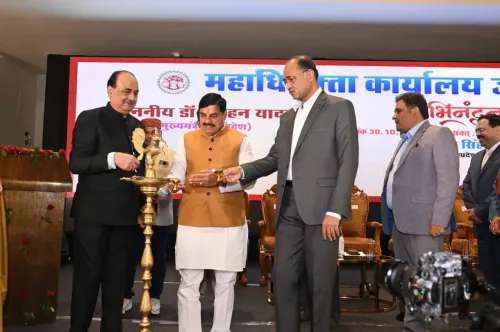
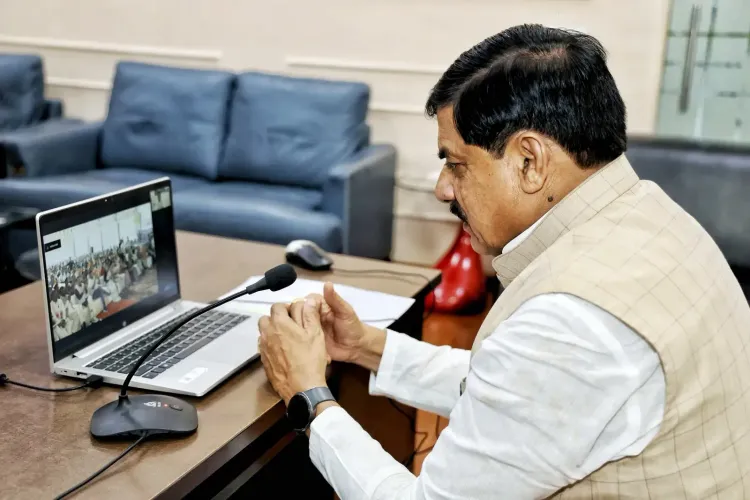
Madhya Pradesh Chief Minister Mohan Yadav on Friday, 30 October 2026, announced that the state government has repealed more than 900 obsolete laws — including statutes dating as far back as 1812 and 1817 — as part of a broader push to align the state's legal framework with present-day governance needs. The announcement was made during a programme in Jabalpur at a meeting with Madhya Pradesh High Court Chief Justice Alpesh Yashwant Kogje.
Scale of the Legal Overhaul
The 900-plus laws identified for repeal had, according to Yadav, lost all practical relevance due to changing times, social circumstances, and governance priorities. Many were colonial-era statutes that had remained on the books long after independence. The Chief Minister framed this exercise as essential to ensuring the legal system serves contemporary public interest rather than functioning as a repository of redundant mandates.
Yadav credited Prime Minister Narendra Modi's national reform agenda with providing the impetus for this state-level exercise, citing the Centre's own drive to purge outdated laws from the Union statute book.
What CM Yadav Said
'I wish to express my gratitude to Prime Minister Narendra Modi for his leadership in freeing the Indian judicial system from outdated and irrelevant colonial-era laws and providing it with a new direction in keeping with the needs of the present times,' Yadav said at the event.
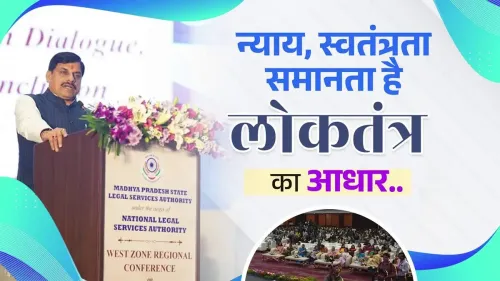
He also underscored the importance of institutional independence, stating: 'The greatest strength of our democracy lies in the fact that the judiciary functions independently in discharging its responsibilities, while elected governments perform their duties within the constitutional framework.'
Judiciary, Democracy and Regional Context
Yadav drew a pointed contrast between India's constitutional resilience and the political turbulence in neighbouring countries. Referring to the situations in Nepal, Bangladesh, and Pakistan, he said India's democratic values and constitutional architecture reflected the strength of the world's largest democracy. He added that the contribution of judges and the country's judicial tradition had been central to preserving India's democratic dignity.
The Chief Minister also congratulated Chief Justice Kogje and highlighted Jabalpur's significance — noting the Narmada River and the marble rocks of Bhedaghat as symbols of the city's natural and cultural heritage within Madhya Pradesh.
Programme Details
The event was part of Yadav's scheduled visit to Jabalpur on Friday. He met the Chief Justice at Circuit House No. 1, followed by a dinner hosted by the Advocate General's office at Hotel Shawn Elize. The occasion provided a rare platform for a sitting Chief Minister to address judicial leaders directly on the intersection of legislative reform and judicial independence.
This is not the first time Madhya Pradesh has undertaken a legal rationalisation drive, but the scale — over 900 statutes, some more than 200 years old — marks it as one of the most sweeping in the state's post-independence history. How quickly the repeals translate into simplified compliance for citizens and businesses will be closely watched.
Point of View
But the more important question is what practical relief it delivers — to litigants burdened by archaic provisions, to businesses navigating redundant compliance layers, and to lower courts still citing legislation drafted under a different sovereign. Madhya Pradesh's exercise fits a broader BJP-governed-states pattern of legislative rationalisation tied to the Modi brand, which carries a political framing risk: if the repealed statutes were already dead letters, the reform is largely cosmetic. The real test is whether the state follows up with corresponding simplifications in subordinate rules and administrative procedures where the actual compliance burden lives.
NationPress
30 Oct 2026
Frequently Asked Questions
How many obsolete laws has Madhya Pradesh repealed?
Madhya Pradesh has repealed more than 900 obsolete laws, according to Chief Minister Mohan Yadav's announcement on 30 October 2026. Some of the repealed statutes date as far back as 1812 and 1817, making them over 200 years old.
Why did Madhya Pradesh repeal these laws?
The state government said these laws had lost their relevance due to changing times and circumstances and were no longer in the public interest. CM Yadav framed the exercise as part of a broader national push, credited to PM Modi, to free India's legal system from outdated colonial-era statutes.
Where did CM Mohan Yadav make this announcement?
The announcement was made during a programme in Jabalpur on 30 October 2026, at a meeting with Madhya Pradesh High Court Chief Justice Alpesh Yashwant Kogje. The event was held at Circuit House No. 1 in Jabalpur.
What did CM Yadav say about judicial independence?
Yadav stated that the greatest strength of Indian democracy lies in the judiciary functioning independently while elected governments operate within the constitutional framework. He also contrasted India's democratic stability with the political situations in Nepal, Bangladesh, and Pakistan.
How does this fit into the broader national legal reform drive?
The Madhya Pradesh repeal exercise is part of a wider trend of state governments rationalising their statute books in alignment with the Centre's own drive to remove colonial-era laws from the Union statute book — an initiative associated with PM Modi's governance agenda. Madhya Pradesh's repeal of 900-plus statutes is among the largest such exercises at the state level.