Mumbai manhole death: Elderly man falls into open drain in Sakinaka, body recovered
Synopsis
A 60-year-old man died after falling into an open manhole on Khairani Road in Sakinaka — the second such incident in Mumbai in under a week, and the latest casualty in a monsoon season already marked by a schoolboy's death and a sanitation worker's fall in front of the city's own Mayor. Mumbai's BMC has yet to act publicly against the private contractor who left the drain uncovered.
Key Takeaways
Aslam Isak Shaikh , 60 , died after falling into an open drain on Khairani Road, Sakinaka , on 3 July 2025 .
The manhole had reportedly been left uncovered by a private contractor during ongoing drainage maintenance.
His body was recovered by the Mumbai Fire Brigade and sent to Rajawadi Hospital for legal formalities.
This is the second open-manhole incident in Mumbai within a week; a sanitation worker fell into a drain at Gandhi Market, Sion on 26 June in the presence of Mayor Ritu Tawde .
Mumbai's eastern suburbs recorded 164 mm of rainfall in the preceding 24 hours , with Mitha Municipal School, Mulund topping individual stations at 218.6 mm .
The BMC has not issued a formal statement on the incident or on contractor accountability.
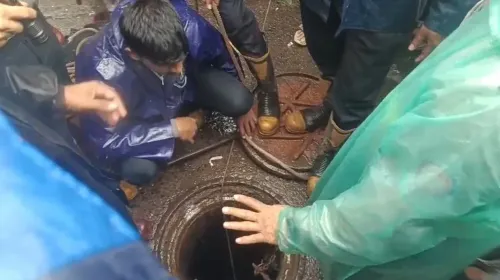
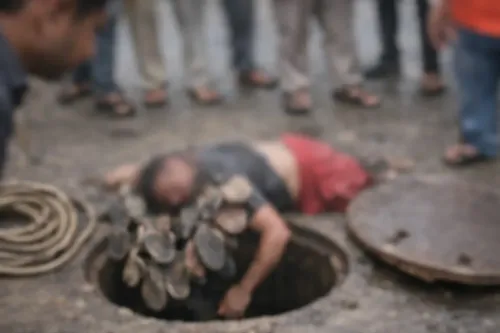
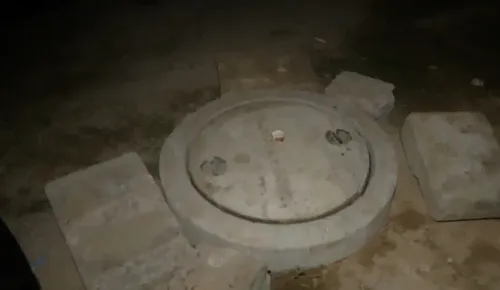
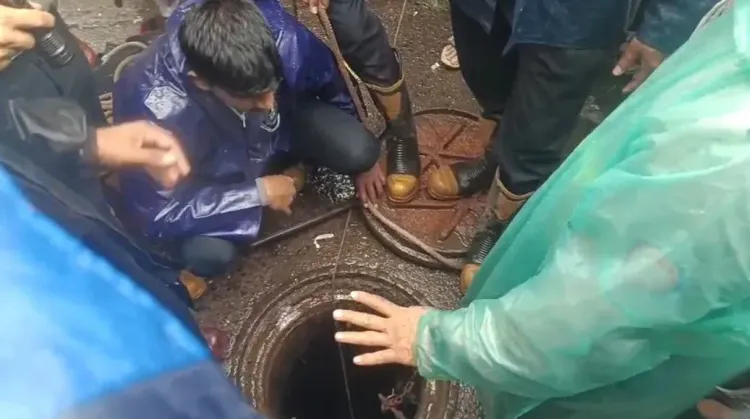
A 60-year-old pedestrian, Aslam Isak Shaikh, died on Thursday, 3 July 2025 after falling into an open water drainage channel through an uncovered manhole on Khairani Road in Mumbai's Sakinaka area, while maintenance work on a drainage grill was underway. The Mumbai Fire Brigade launched a search operation and recovered his body, which was subsequently sent to Rajawadi Hospital for legal formalities.
How the Incident Unfolded
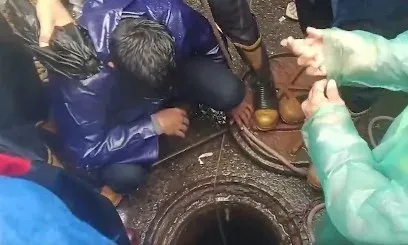
Shaikh's umbrella and slippers found near the open manhole alerted passersby and prompted an immediate emergency response. The Mumbai Fire Brigade, Mumbai Police, and the 108 emergency ambulance service were all deployed in the search operation. According to a police officer from Sakinaka Police Station, the body was recovered and handed over for post-mortem procedures at Rajawadi Hospital.
The manhole cover had reportedly been removed by a private contractor carrying out drainage maintenance at the site — a detail that raises urgent questions about safety protocols during monsoon-season repair work.
A Pattern of Monsoon Safety Failures
This is at least the second open-manhole incident in Mumbai within a week. On 26 June, a sanitation worker fell into an open drain during a cleaning operation at Gandhi Market in Sion — an incident that occurred in the presence of Mumbai Mayor Ritu Tawde, who was on an inspection of rain-affected areas at the time.
The fatality also follows a separate monsoon tragedy just two days earlier, when an 11-year-old boy was killed and four others were injured after a tree was uprooted by rain and fell on a moving school bus in Mumbai's Chembur area. Taken together, the incidents underscore the recurring toll that Mumbai's monsoon season extracts on its residents — and the city administration's persistent gaps in public safety preparedness.
Rainfall Data: Eastern Suburbs Bear the Brunt
Mumbai recorded relentless rainfall in the 24 hours ending 6:00 am on 3 July, according to the Brihanmumbai Municipal Corporation (BMC). Eastern suburbs logged the highest precipitation at 164 mm, followed by the western suburbs at 149 mm and Mumbai City at 134 mm.
Among individual stations, Mitha Municipal School in Mulund recorded the highest rainfall at 218.6 mm, followed by the S Ward Office at 212 mm and Paspoli Municipal School in Powai at 208.4 mm. Gavanpada Fire Station and Mankhurd Fire Station registered 205.8 mm and 200 mm respectively.
In the western suburbs, the SWM Santacruz Workshop recorded 216 mm and Narialwadi School in Santacruz logged 214.4 mm. Andheri Fire Station received 204 mm, Cooper Hospital recorded 193.2 mm, and the K-West Ward Office registered 192.6 mm.
Within Mumbai City, the G-South Ward Office led with 187.8 mm, followed by the F-South Ward Office at 179 mm and the F-North Ward Office at 175 mm. B-Nadkarni Park Municipal School in Wadala received 173.6 mm, while Adarsh Nagar School in Worli recorded 172.8 mm.
What Authorities Must Address
The Sakinaka fatality will likely intensify scrutiny of the BMC's contractor oversight framework, particularly the requirement to barricade or cover open manholes during active maintenance. Civic safety advocates have long argued that monsoon-season road work demands stricter site-safety enforcement — a demand that has gone unmet across multiple administrations. The BMC has not yet issued a formal statement on the Sakinaka incident or on action taken against the private contractor involved.
Point of View
These deaths will recur with the same seasonal regularity as the rains themselves.
NationPress
1 Oct 2026
Frequently Asked Questions
Who died in the Mumbai Sakinaka manhole incident?
Aslam Isak Shaikh, a 60-year-old pedestrian, died after falling into an open water drainage channel through an uncovered manhole on Khairani Road in Sakinaka, Mumbai, on 3 July 2025. His body was recovered by the Mumbai Fire Brigade and sent to Rajawadi Hospital.
Why was the manhole left open in Sakinaka?
According to reports, the manhole cover had been removed by a private contractor carrying out maintenance work on a drainage grill at the site. No barricading or warning signs were reportedly in place at the time of the accident.
Has this kind of incident happened before in Mumbai recently?
Yes. On 26 June 2025, a sanitation worker fell into an open drain during a cleaning operation at Gandhi Market in Sion — an incident that occurred while Mumbai Mayor Ritu Tawde was inspecting rain-affected areas nearby. The Sakinaka death is the second such incident within a week.
How much rainfall did Mumbai record around the time of the incident?
Between 8:00 am on 1 July and 6:00 am on 3 July 2025, Mumbai's eastern suburbs recorded 164 mm of rainfall, the western suburbs recorded 149 mm, and Mumbai City recorded 134 mm, according to BMC data. Mitha Municipal School in Mulund topped individual stations at 218.6 mm.
What action has the BMC taken after the Sakinaka manhole death?
As of the time of reporting, the BMC had not issued a formal public statement on the Sakinaka incident or announced any action against the private contractor responsible for the uncovered manhole. The matter is under police jurisdiction, with the case registered at Sakinaka Police Station.