Is the Murder of a 1971 Liberation War Veteran a Sign of Systematic Targeting of Bangladesh’s Minorities?
Synopsis
The brutal murder of a 1971 Liberation War veteran and his wife in Bangladesh raises alarms about the safety of minorities in the country. As election tensions rise, experts fear a systematic targeting of minority communities, reflecting a troubling trend of violence and radicalization.
Key Takeaways
Minorities in Bangladesh face escalating violence.
The murder of Jogesh Chandra Roy raises alarms.
Radicalization is a growing concern as elections approach.
Government inaction is exacerbating the situation.
Systematic targeting of minorities is evident.
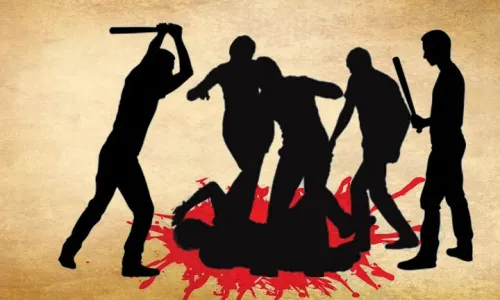
New Delhi, Dec 8 (NationPress) The tragic killing of Jogesh Chandra Roy, a veteran of the 1971 Liberation War, and his spouse Suborna Roy in Rangpur, Bangladesh, underscores the perilous situation for minorities in the nation. On Sunday morning, their neighbors discovered the couple’s lifeless bodies after repeated attempts to reach them went unanswered.
As of 2 PM that day, no formal complaint had been lodged, despite the couple's two sons being active members of the Bangladesh police.
Their sons, Shoven Chandra Roy and Rajesh Khanna Chandra Roy, serve in the police forces in Joypurhat and Dhaka respectively. Following this dreadful occurrence, officers from the Taraganj Police Station, led by the Officer-in-Charge (OC), visited the site.
A forensic team was dispatched, and an autopsy was requested. However, no clear motive has been identified, and the police have found no prior conflicts concerning the family.
According to officials from the Intelligence Bureau, such incidents targeting minority groups are expected to escalate as elections approach. The ISI-supported Jamaat-e-Islami has been pushing for radicalization and complete Islamization in Bangladesh, which raises concerns of increasing violence against minorities as voting day nears.
The elderly couple was found slain with their throats cut, inciting outrage within the local community, who have called for arrests. They have warned of protests if no action is taken.
Since the ousting of Sheikh Hasina in August 2024, reports of violence against minority groups have surged.
The interim government, led by caretaker Muhammad Yunus, has been criticized for inaction, labeling reports of violence as exaggerated.
Another official indicated that radical elements released after being charged with murder and terrorism have been advised to focus on minority communities. A systematic plan seems to be in execution by these factions.
Directed by the ISI, these radicals aim to eliminate all traces of minority presence. The strategy in Bangladesh mirrors tactics long observed in Pakistan.
In December 2024, a mob attacked at least 20 homes and a temple in the Sunamganj district following a viral blasphemy allegation.
Data from the Bangladesh Hindu Buddhist Christian Unity Council indicates that there were 2,000 incidents of communal violence against minorities between August 2 and 20, 2024. This included nine Hindu fatalities, 69 attacks on places of worship, and numerous assaults on other minorities such as Buddhists and Christians.
In October, Islamists rallied nationwide, demanding a ban on ISKCON, labeling it as extremist.
Observers of Bangladeshi affairs assert that the couple's murder signals a dire reality for minorities in the country. Experts argue that this assassination bears the hallmarks of a targeted killing, with the victim’s status as a freedom fighter complicating matters further.
Pakistan has expressed a desire to revert Bangladesh to its pre-1971 state, seeking to erase the memories of the Liberation War and inciting radicals to target minority populations.
Radicals are systematically attempting to obliterate any connection to the 1971 War and have even destroyed memorials associated with it. Individuals who opposed Pakistan during that conflict, along with their families, are now under constant threat.
This situation is likely to escalate as elections approach, with minority groups increasingly at risk as a means to appease radical factions, according to intelligence sources.
Point of View
It is crucial to highlight that the safety and rights of minorities must be upheld in Bangladesh. The tragic events surrounding the murder of Jogesh Chandra Roy and his wife signal a pressing need for action. It is the responsibility of the authorities to address these systemic issues and safeguard the vulnerable populations in the country. Our focus should remain on advocating for justice and accountability.
NationPress
20 Sept 2026
Frequently Asked Questions
What happened to Jogesh Chandra Roy and his wife?
Jogesh Chandra Roy, a 1971 Liberation War veteran, and his wife were tragically murdered in their home in Rangpur, Bangladesh.
Why is this incident significant?
This murder highlights the ongoing violence against minority communities in Bangladesh, especially as elections approach.
What do experts say about the situation in Bangladesh?
Experts believe that the systematic targeting of minorities is increasing, fueled by radical elements aligned with the ISI.
How has the government responded to such incidents?
The interim government has been criticized for its lack of action and has downplayed the severity of violence against minorities.
What is the broader context of violence against minorities in Bangladesh?
There has been a significant rise in attacks against minorities since the ousting of Sheikh Hasina, indicating a troubling trend.