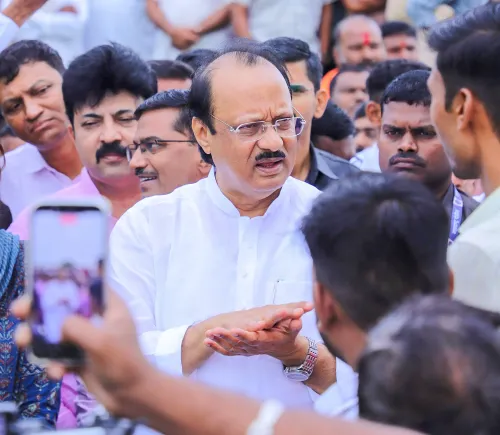
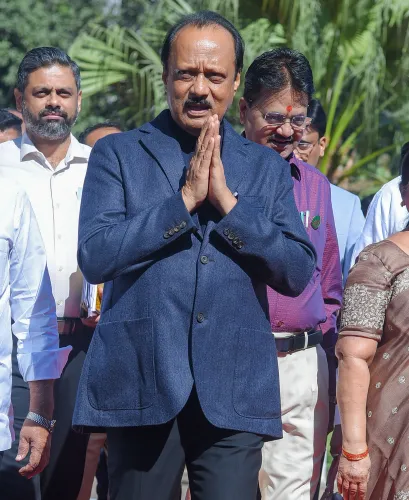
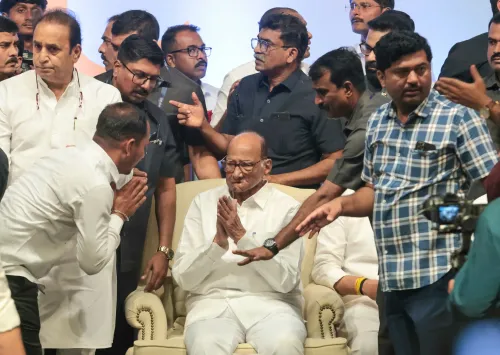
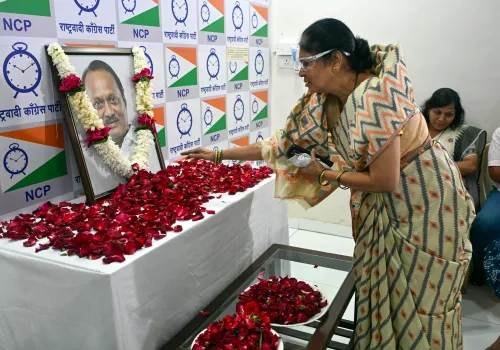
Is the Merger Off the Table After Ajit Pawar's Death?
Synopsis
Shashikant Shinde of the NCP declares the merger discussions closed following Ajit Pawar's death. As political tensions rise, the future of party unity hangs in the balance. Explore the implications of this pivotal moment in Maharashtra politics.
Key Takeaways
Shashikant Shinde declared merger talks closed after Ajit Pawar's death.
Focus shifts towards rebuilding party unity.
Speculation over merger discussions deemed pointless without Ajit Pawar.
Sunil Tatkare rejects Shinde's statements as incorrect.
Party aims to strengthen its organization moving forward.
Mumbai, Feb 14 (NationPress) The Maharashtra unit president of the Nationalist Congress Party (NCP), led by Sharad Pawar, Shashikant Shinde, declared on Saturday that the merger is now a closed chapter for the party following the death of Ajit Pawar, who was instrumental in negotiating it.
“The decision concerning the merger of both parties was finalized while Ajit Dada was alive. Many members of his party are discussing this matter. However, we have now put this chapter behind us. A narrative is being spun that we are advocating for this merger, but there has been no urgency or desperation from our end. Discussions gained traction only after the passing of Ajit Dada. Since then, we have spoken only the truth, and we did so with conviction. We have refrained from further comments. We merely stated that it was Ajit Dada’s wish, which we aimed to honor. But now, we have opted not to discuss it further,” said Shinde.
He added, “Those who opposed the merger discussions should be scrutinized. We simply shared our feelings; many have voiced their sentiments. A final decision was to be made following the local body elections, with a merger formula to be established through dialogue. However, the leader who pioneered those discussions is no longer with us, thus rendering hypothetical discussions pointless. We wish to refrain from further comments,” Shinde announced.
He emphasized that discussions about unifying the two factions had begun while Ajit Dada was still present. Although many within that party are now expressing their views, he made it clear that his faction has closed the chapter.
When questioned about whether senior leaders like Praful Patel and Sunil Tatkare from the Ajit Pawar-led NCP opposed the merger, Shinde remained tight-lipped, stating, “I will not comment on that; they should express their own views. Our focus is on rejuvenating the party. It wouldn't be appropriate for me to comment on their positions.”
Shinde adopted a conciliatory tone regarding past disagreements, saying, “If I claimed Ajit Dada erred, I take that back. He sought to mend the rift that had occurred in the party. He was emotional. Even during meetings with Sharad Pawar Saheb, he struggled to meet his gaze. The final decision was to be made after the Zilla Parishad election results. It is inappropriate to speculate on what was in his heart or mine now that he has passed.”
He stressed that the NCP (Sharadchandra Pawar) is now entirely dedicated to fortifying the party organization and moving beyond the merger discussions, as the principal mediator in those talks is no longer present.
Shinde’s remarks come a day after he claimed in the party magazine that the late former deputy chief minister Ajit Pawar was compelled to leave the original NCP due to threats and conspiracies by “invisible powers.”
He further asserted that a final decision regarding the merger of the two parties was reached on February 12 in the presence of Sharad Pawar.
In a significant revelation, Shinde declared that Sharad Pawar and other senior leaders had agreed to transfer full command of the unified party to Ajit Pawar after the merger.
“Bringing this merger to fruition and revitalizing the party with strength would be the only genuine tribute to Ajit Dada,” he wrote.
However, Shinde faced pushback from the state NCP (Ajit Pawar) chief Sunil Tatkare, who termed Shinde’s article as irrelevant and factually inaccurate.
Tatkare issued a stern warning, stating, “If Shinde persists in claiming that Ajit Dada made decisions due to allegations or pressure, I will respond appropriately as the Party President.”
Tatkare dismissed Shinde's assertion that Ajit Pawar viewed his exit as a “mistake” and was working to amend it in recent months. He clarified that any proposal or thought regarding a merger must be discussed within the party's Core Group.
He stated that making claims about discussions held in private meetings after the tragic death of Ajit Pawar is an injustice to the late leader himself. He emphasized that everyone must maintain decorum regarding “what to say and when to say it.”
Point of View
The recent statements by Shashikant Shinde reflect a significant shift in Maharashtra's political dynamics following Ajit Pawar's death. While the NCP seems to be distancing itself from the merger talks, the implications for party unity and future electoral strategies remain uncertain. As the nation watches closely, it is essential to maintain a balanced view on the evolving political scenario.
NationPress
24 Aug 2026
Frequently Asked Questions
What was the status of the merger discussions?
The discussions regarding the merger have been declared closed by Shashikant Shinde, following the death of Ajit Pawar, who was leading negotiations.
Who announced the closure of the merger talks?
Shashikant Shinde, the Maharashtra unit president of the NCP, announced that the merger is a closed chapter for the party.
What was Ajit Pawar's role in the merger discussions?
Ajit Pawar was the primary negotiator for the merger discussions, and his passing has led to the cessation of these talks.
How did the NCP leadership respond to Shinde's claims?
Sunil Tatkare, the state NCP chief, refuted Shinde's claims, suggesting they are factually incorrect and reiterating that any merger discussions should occur within the party's Core Group.
What is the NCP's focus after the merger discussions?
The NCP is now concentrating on strengthening the party organization and moving beyond the merger debate.