NEET paper leak protest: Thousands march in Munger, demand minister's resignation
Synopsis
Bihar's Munger became the latest flashpoint in India's NEET paper leak crisis on 23 July, as thousands of students marched from DJ College to Munger Fort demanding a transparent probe, punitive action against the accused, and the resignation of Union Education Minister Dharmendra Pradhan — with student bodies warning of an intensified agitation if demands go unmet.
Key Takeaways
Thousands of students marched in Munger, Bihar on 23 July over the alleged NEET paper leak .
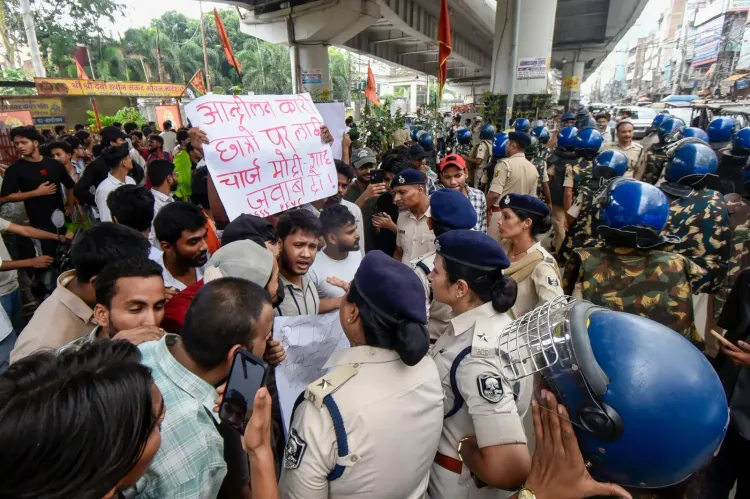
The protest, organised by multiple student organisations, began at DJ College and ended at Munger Fort — concluding peacefully under heavy police deployment.
Protesters demanded the resignation of Union Education Minister Dharmendra Pradhan and a time-bound, transparent investigation into the leak.
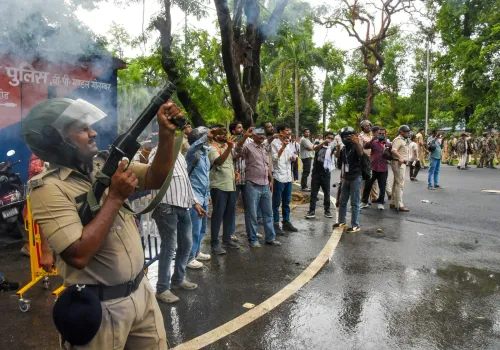
Demonstrators also condemned the alleged lathi-charge on students during earlier protests in Delhi and Patna .
Student organisations warned of an expanded agitation across Bihar if their demands are not addressed promptly.
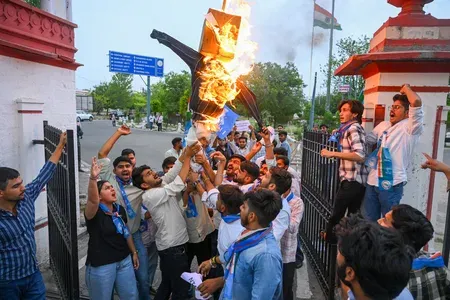
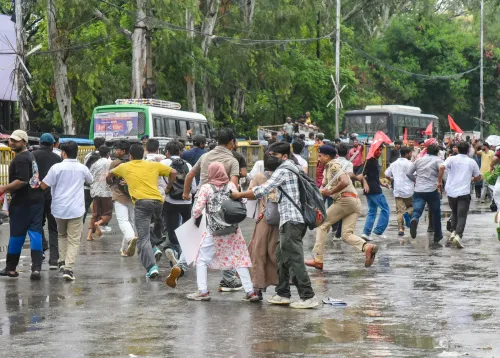
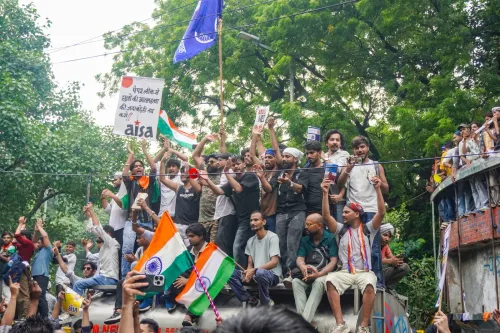
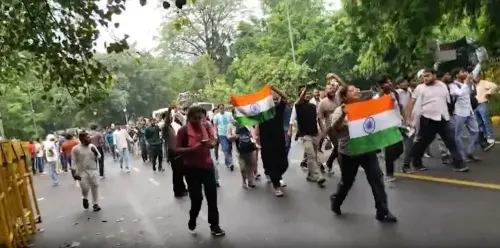
Thousands of students took to the streets of Munger, Bihar, on Thursday, 23 July, rallying under the banners of multiple student organisations to condemn the alleged NEET paper leak and the reported use of police force against demonstrators in Delhi and Patna. The large-scale march marked one of the most significant student mobilisations in the district in recent memory over the examination controversy.
How the Protest Unfolded
The procession began near DJ College, where more than a thousand students assembled carrying placards and raising slogans against the Central Government. The march wound through Munger's main roads before concluding at the historic Munger Fort. Despite the scale of the demonstration and the intensity of the slogans, the protest ended peacefully, with no reports of violence or damage to public property.
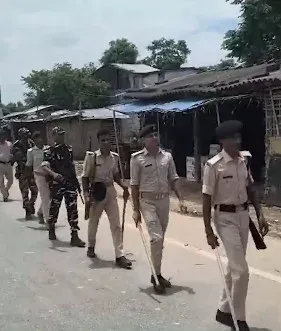
Anticipating a large turnout, the district administration deployed a substantial contingent of police personnel across the entire protest route, with senior officers monitoring the situation closely. The heavy security presence did not deter the demonstrators, whose numbers swelled throughout the march.
Key Demands of the Protesters
Addressing the gathering, student leaders outlined a clear set of demands: a transparent and time-bound investigation into the alleged NEET paper leak, strict punitive action against those found responsible, and systemic reforms to protect the integrity of competitive examinations. Protesters also called for the resignation of Union Education Minister Dharmendra Pradhan, holding the Centre accountable for what they described as a failure to safeguard a high-stakes national examination.
The demonstrators further condemned the alleged lathi-charge on students during earlier protests in Delhi and Patna, framing Thursday's march as a solidarity action as much as a demand for examination justice.
Broader Context: The NEET Controversy
The alleged NEET paper leak has triggered a wave of student unrest across India, with agitations reported in multiple states. Critics argue that repeated irregularities in high-stakes entrance examinations — including NEET and other competitive tests — point to systemic vulnerabilities in how the Centre administers them. This comes amid mounting pressure on the National Testing Agency (NTA), which conducts NEET, to overhaul its processes. The Munger march is among the latest in a series of protests that have drawn students from Bihar, a state that sends a disproportionately large number of NEET aspirants every year.
What Student Organisations Said
Speakers at the rally warned that if their demands are not addressed promptly, the agitation would be expanded and intensified in the coming days. Student organisations indicated that further protests are being planned across Bihar, signalling that the movement is unlikely to subside without concrete government action or a credible investigation update.
With student bodies consolidating across the state, the pressure on both the Bihar administration and the Centre is set to grow in the days ahead.
Point of View
Making the alleged paper leak acutely personal for students here — many of whom have spent years and significant family resources preparing. The demand for Dharmendra Pradhan's resignation is politically pointed, but the more consequential ask is structural: independent oversight of the NTA and verifiable chain-of-custody for examination papers. Without that, each new controversy will produce another round of protests, and the government's reassurances will carry diminishing weight.
NationPress
22 Oct 2026
Frequently Asked Questions
Why are students protesting in Munger, Bihar?
Students in Munger are protesting over the alleged NEET paper leak and the reported police lathi-charge on demonstrators in Delhi and Patna. Thousands marched on 23 July demanding a transparent investigation, accountability for those responsible, and the resignation of Union Education Minister Dharmendra Pradhan.
What are the key demands of the NEET protesters in Bihar?
Protesters are demanding a time-bound and transparent investigation into the alleged NEET paper leak, strict action against those found responsible, systemic reforms to protect competitive examination integrity, and the resignation of Union Education Minister Dharmendra Pradhan.
Did the Munger NEET protest turn violent?
No. Despite thousands of students participating and a heavy police presence deployed along the entire route, the march from DJ College to Munger Fort concluded peacefully with no reports of violence or damage to public property.
What is the NEET paper leak controversy?
The alleged NEET paper leak refers to claims that question papers for the National Eligibility cum Entrance Test — conducted by the National Testing Agency (NTA) — were leaked ahead of the examination, compromising its fairness for hundreds of thousands of medical aspirants across India. The controversy has triggered widespread student protests in multiple states.
What happens next if student demands are not met?
Student organisations participating in the Munger march have warned that the agitation will be expanded and intensified across Bihar if the government does not respond with concrete action. Further protests in the state are reportedly being planned.