NEET-UG 2026 qualifiers slam 'politicisation' of CJP-led protest at Jantar Mantar
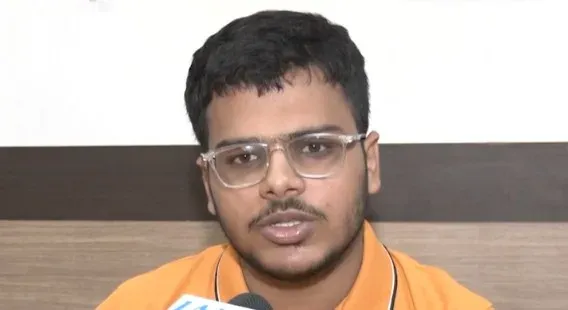
Synopsis
Students who cleared NEET-UG 2026 are now the loudest critics of the protest held in their name. While they condemn the May 3 paper leak, several top-ranked qualifiers say the CJP-led agitation at Jantar Mantar has been hijacked by political parties — and that demanding a minister's resignation misses the real fix India's broken exam system needs.
Key Takeaways
NEET-UG 2026 qualifiers, including AIR 294 holder Shivam Tripathi and AIR 4591 holder Akshay Anand , have called out the politicisation of the CJP -led protest.
The protest at Jantar Mantar, New Delhi demands the resignation of Union Education Minister Dharmendra Pradhan over the May 3 NEET paper leak .
Students say political parties joining the agitation have shifted focus away from education reform.
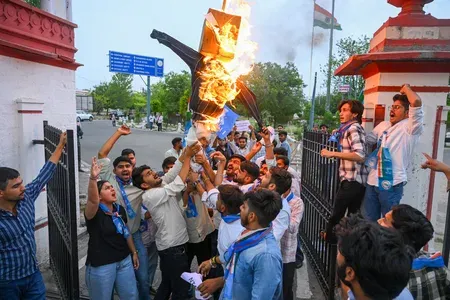
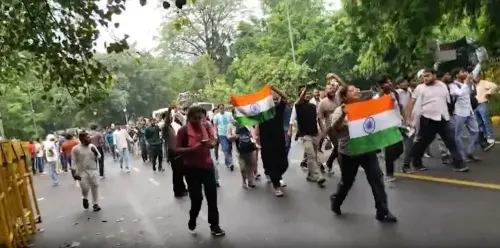
On 20 July , CJP-led protesters who marched toward Parliament allegedly faced police brutality.
Qualified candidates argue that a ministerial resignation alone will not prevent future paper leaks; systemic reform is the priority.
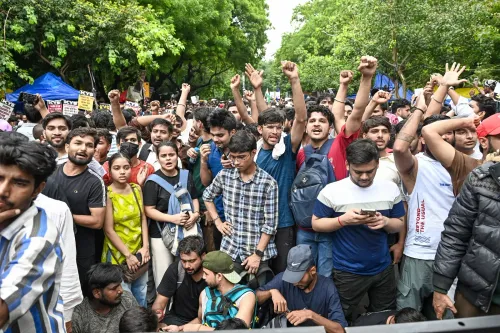
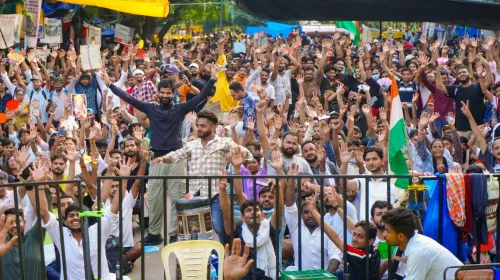
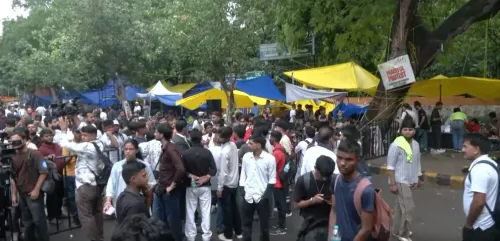
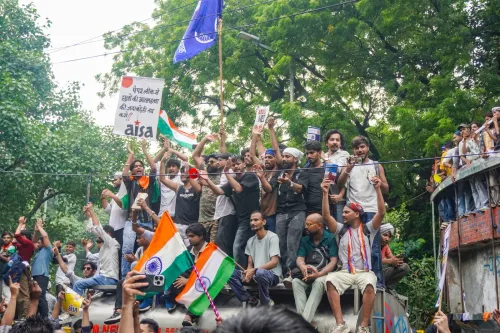
Several students who cleared the NEET-UG 2026 examination — conducted on 21 June — have spoken out against what they describe as the growing politicisation of the protest led by the Cockroach Janta Party (CJP) at Jantar Mantar, New Delhi, which demands the resignation of Union Education Minister Dharmendra Pradhan over the May 3 NEET paper leak. The students, who qualified the exam, say the agitation has drifted away from its core concern — systemic education reform — and is now being co-opted by political parties for electoral gain.
What Qualified Students Are Saying
Akshay Anand, who secured an All India Rank (AIR) of 4591 in NEET-UG, drew a clear line between the cause and the politics surrounding it. 'The protest being in Delhi for students is justified because papers should not be leaked and education reforms are needed. But I do not support the politics surrounding it. I support the cause, not the politics,' he said.
Anubhav Krishna, another qualified candidate, echoed the concern. 'The protest in Delhi now seems to be turning into a political issue. Leaders from different political parties are joining it and trying to gain political support. Earlier, it was entirely about education,' he said.
Krishna also referenced activist Sonam Wangchuk's involvement in raising the paper-leak issue, saying that while speaking out against annual exam irregularities was justified, the movement's current trajectory was not. 'It is gradually becoming political, which is not right, and so I will not support this politicisation,' he added.
Protest at Jantar Mantar Called 'Wrong' by Some Aspirants
Siddhi Ishwar Singh Thakur, while firmly condemning the NEET paper leak, described the ongoing strike at Jantar Mantar as being held 'in the name of students' in a manner she found deeply problematic. 'It has turned into a political event which is completely wrong,' she stated.
Shivam Tripathi, who ranked AIR 294 in NEET-UG, praised the government for conducting the re-examination in what he called 'record time', while stressing that preventing future leaks was the priority. On calls for Pradhan's resignation, Tripathi said: 'Resignation will not make much of a difference; what matters is to ensure that such instances are not repeated.'
Tripathi also flagged security concerns over the 20 July march toward Parliament, calling it potentially a 'national security issue'.
Background: The CJP Protest and Alleged Police Action
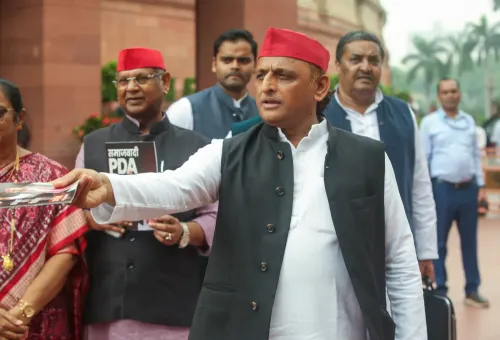
The CJP-led demonstration has been centred on accountability for the May 3 NEET paper leak, with protesters demanding Pradhan's resignation. On 20 July, demonstrators who marched toward Parliament reportedly faced alleged police brutality, a claim that has added a fresh layer of controversy to the already charged standoff.
This comes amid a broader pattern of student unrest over exam integrity in India, where paper leaks have recurred across competitive examinations in recent years, fuelling demands for structural reform in the testing ecosystem.
The Larger Question on Education Reform
The students' pushback underscores a tension that has defined many protest movements in India: when political actors enter a student-led agitation, the original demand risks being overshadowed. Notably, the NEET-UG 2026 re-examination has already been held, but the question of accountability — and of preventing future leaks — remains unresolved. As political parties continue to rally around the protest, qualified students are increasingly vocal that the focus must return to systemic fixes rather than ministerial scalps.
Point of View
More consequential one. India has seen this pattern before — student agitations absorbed by party machinery, with the original grievance unresolved. If the CJP and allied political actors cannot hold the line between accountability and opportunism, they risk handing the government a narrative gift: that the protest was never really about students at all.
NationPress
21 Oct 2026
Frequently Asked Questions
Why are NEET-UG 2026 qualifiers criticising the CJP-led protest?
Several students who cleared NEET-UG 2026 say the protest at Jantar Mantar, originally centred on the May 3 paper leak, has been taken over by political parties seeking electoral advantage. They support the cause of education reform but oppose the politicisation of the agitation.
What is the CJP-led protest demanding?
The Cockroach Janta Party (CJP)-led protest is demanding the resignation of Union Education Minister Dharmendra Pradhan over the May 3 NEET paper leak. Protesters also marched toward Parliament on 20 July and reportedly faced police action.
What happened during the 20 July march to Parliament?
CJP-led protesters who marched toward Parliament on 20 July reportedly faced alleged police brutality, according to reports. The incident has added to tensions surrounding the ongoing agitation at Jantar Mantar.
Do qualified NEET students support the demand for Dharmendra Pradhan's resignation?
Not all. AIR 294 holder Shivam Tripathi said a resignation 'will not make much of a difference' and that preventing future paper leaks is what truly matters. Other students said they support education reform but not the political direction the protest has taken.
When was the NEET-UG 2026 examination held?
The NEET-UG 2026 examination was held on 21 June. A re-examination was subsequently conducted by the government, which some students, including Shivam Tripathi, praised as having been organised in 'record time'.