Is the Agreement to Build New Cross-Border Power Lines a Significant Milestone in Nepal-India Electricity Trade?
Synopsis
A new agreement between Nepal and India marks a transformative moment in electricity trade, underlining shared commitment to energy cooperation. With plans for high-capacity cross-border transmission lines, both countries aim to revitalize their energy markets and enhance economic growth. Dive into the implications of this landmark agreement and how it could reshape the energy landscape.
Key Takeaways
Joint Venture Agreement signed between NEA and PGCIL Construction of two high-capacity transmission lines Investment structure: 80% debt , 20% equity Enhanced electricity exports from Nepal to India Strengthening of regional energy cooperation
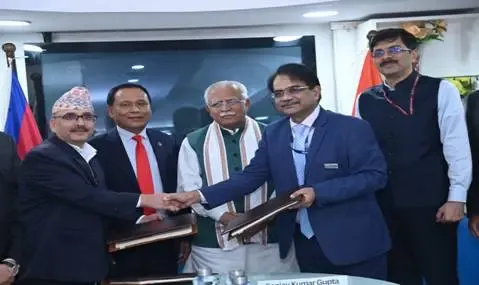
Kathmandu, Oct 29 (NationPress) In a momentous development, two government-owned organizations from Nepal and India have officially signed a Joint Venture (JV) and Shareholders’ Agreement aimed at constructing two high-capacity cross-border transmission lines, signaling a progressive leap in collaborative power infrastructure development.
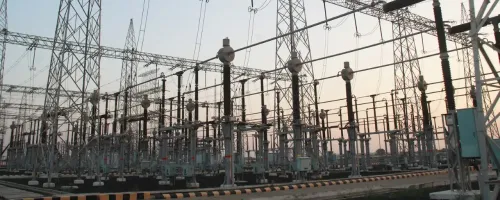
The agreements were inked by the Nepal Electricity Authority (NEA) and the Power Grid Corporation of India Limited (PGCIL) in New Delhi. These new 400 kV cross-border transmission lines will connect Inaruwa (Nepal) to Purnia (India) and Lamki (Dododhara, Nepal) to Bareilly (India), as reported by Nepal’s Ministry of Energy, Water Resources, and Irrigation.
As both nations strive to enhance energy collaboration, the absence of sufficient high-capacity cross-border transmission infrastructure has been a significant hurdle. To overcome this challenge, Nepal and India are committed to developing multiple new high-capacity transmission lines, with these two projects being part of a larger initiative.
Subash Kumar Mishra, the Deputy Executive Director of the NEA, and Sanjay Kumar Gupta, the Chief Operating Officer (International Business) at PGCIL, were the signatories of the agreement.
“The signing of this joint investment agreement has laid the groundwork for establishing joint venture companies to build both transmission lines, funded by investments from NEA and PGCIL,” stated Nepal's ministry.
According to the agreement, the joint venture company in India will handle the construction of the Indian segments of both transmission lines, with Power Grid owning 51 percent and NEA possessing 49 percent of the shares. Conversely, the joint venture in Nepal will oversee the Nepali sections, with NEA holding 51 percent and Power Grid 49 percent ownership.
The financing structure for these projects will consist of 80 percent debt and 20 percent equity capital. The Inaruwa–Purnia transmission line will extend approximately 26 km in Nepal and 109 km in India, while the Lamki–Bareilly transmission line will cover around 33 km in Nepal and 185 km in India.
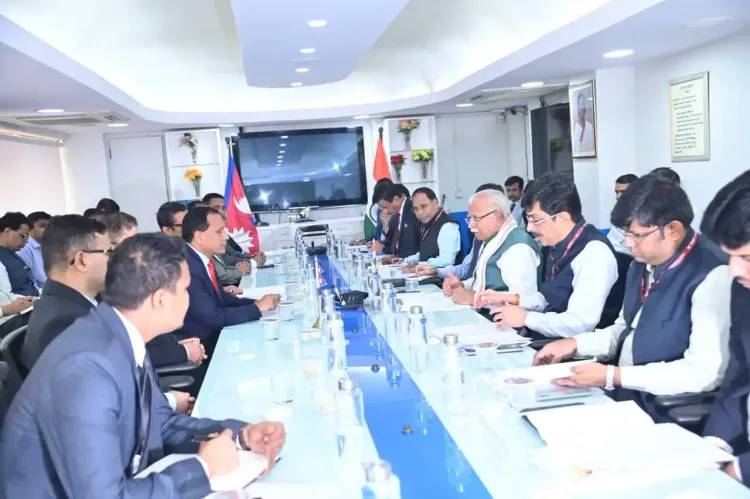
The agreements were finalized during Energy Minister Kulman Ghising's ongoing visit to India, where he is attending the eighth General Assembly of the International Solar Alliance (ISA), a project initiated by India to foster solar energy collaboration.
During the signing event, Minister Ghising remarked that these agreements signify another substantial milestone in bilateral and regional electricity trade. He emphasized that these projects will enable the export of surplus electricity generated in Nepal to India and beyond, thereby expanding Nepal's access to international energy markets and attracting both domestic and foreign investments in Nepal's hydropower sector.
Indian Power Minister Manohar Lal Khattar, also present at the signing, stated that upon completion, the new cross-border transmission lines will further bolster electricity exchange between Nepal and India, enhance regional energy security, and contribute to the economic development of both nations by improving grid stability.
Currently, the only high-capacity cross-border line in operation is the 400 kV Dhalkebar–Muzaffarpur transmission line, capable of transmitting around 1,000 MW of electricity. Most electricity trade between the two countries occurs through this line.
In addition, Nepal has about a dozen 132 kV, 33 kV, and 11 kV cross-border transmission lines that connect with the Indian states of Bihar, Uttar Pradesh, and Uttarakhand. As per the Energy Ministry's reports, NEA is presently exporting approximately 1,000 MW of electricity daily to India and Bangladesh via 400 kV and 132 kV transmission infrastructures.
Another significant project, the 400 kV Butwal–Gorakhpur cross-border transmission line, is also currently under construction. The Dhalkebar–Sitamarhi cross-border transmission line is being developed by the SJVN Arun-3 Power Development Company, with investments from India’s SJVN Limited.
With India committing to purchase 10,000 MW of electricity from Nepal over the next decade, the enhancement of cross-border transmission infrastructure is essential to meet this objective.
Earlier reports from the ministry indicated that Nepal exported electricity worth NPR 15 billion (approximately INR 9.37 billion) by early October since the start of the fiscal year 2025–26 in mid-July, as electricity continues to be a vital export commodity for the country.
The two nations have also reached an agreement to construct a 220 kV Chameliya–Jauljibi transmission line, linking Nepal’s far-western region with India’s Uttarakhand state.
Point of View
This agreement represents a crucial step towards strengthening Nepal's energy sector and enhancing regional cooperation with India. The commitment to develop high-capacity cross-border transmission lines not only opens new avenues for electricity exports but also positions Nepal as a key player in the energy market. This collaboration is a testament to the growing interdependence between neighboring nations and highlights the importance of addressing infrastructure challenges to realize the full potential of energy trade.
NationPress
30 Sept 2026
Frequently Asked Questions
What is the significance of the new cross-border power lines?
The new cross-border power lines between Nepal and India are significant as they facilitate greater electricity exchange, enhance energy security, and attract investments in Nepal's hydropower sector.
Who signed the Joint Venture Agreement?
The Joint Venture Agreement was signed by Subash Kumar Mishra from the NEA and Sanjay Kumar Gupta from PGCIL.
How will the projects be financed?
The projects will be financed through 80 percent debt and 20 percent equity capital.
What are the expected benefits of these projects?
The expected benefits include improved electricity exports, enhanced regional energy security, and increased economic growth for both countries.
What other projects are in the pipeline?
In addition to the two new lines, ongoing projects include the 400 kV Butwal–Gorakhpur line and the Dhalkebar–Sitamarhi line.