NHRC Responds to Allegations of DPDP Act Violations by AI and Digital Platforms
Synopsis
In a significant move, the NHRC has addressed potential violations of the DPDP Act, raising alarms over children's data safety and inadequate grievance systems in major digital platforms. This action could reshape the landscape of data protection in India.
Key Takeaways
NHRC addresses DPDP Act violations.
Concerns over children's data protection.
Major platforms under scrutiny for compliance.
Government agencies notified for further action.
Compliance reports required within 15 days.
New Delhi, March 25 (NationPress) The National Human Rights Commission (NHRC) has recognized potential breaches of the Digital Personal Data Protection (DPDP) Act, particularly highlighting the lack of systems to monitor the transfer of children's data and insufficient grievance resolution frameworks across prominent digital platforms.
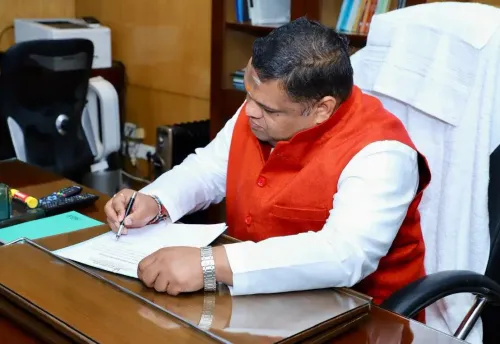
A panel led by NHRC member Priyank Kanoongo commenced action following a complaint based on findings from the think tank ASIA.
The Commission has dispatched notices to essential government agencies, including the Union Ministry of Electronics and Information Technology (MeitY), the Ministry of Education, and the Ministry of Communications. Notices have also been sent to the Ministry of Home Affairs.
The NHRC has requested clarifications from the Ministry of Communications regarding the procedure for issuing SIM cards to children for Internet and mobile access. Authorities acknowledged the absence of clear guidelines concerning the registration of SIM cards under minors' names in India, raising significant regulatory concerns.
Enacted in 2023 and made operational through rules announced in late 2025, the DPDP Act is viewed as a critical advancement in enhancing India’s data protection landscape. The legislation aims to protect vulnerable populations, including children, women, and the elderly, from potential cyber threats and the misuse of personal information.
While specific provisions, such as obtaining verified parental consent, have been allotted an 18-month compliance period, numerous essential requirements—such as data tracking systems, server security measures, and effective grievance redressal processes—are required to be implemented immediately.
The report indicates that several major platforms, including Meta Platforms, Khan Academy, WhatsApp, Grok, Gemini, Perplexity AI, and Microsoft Math Solver, have not yet fully adhered to these stipulations.
Expressing considerable concern, the Commission noted that such oversights could significantly jeopardize children’s online safety. It has mandated that all relevant entities submit comprehensive compliance reports within a 15-day timeframe.
The NHRC, an independent statutory body entrusted with safeguarding human rights in India, possesses powers akin to those of a civil court, and its members hold a status comparable to that of a Supreme Court judge.
The Commission also signaled that similar actions may be undertaken in the future to ensure the protection of other vulnerable demographics, including senior citizens.
Point of View
The NHRC's proactive measures reflect a growing recognition of the critical need for robust data protection frameworks, especially for vulnerable groups such as children. This response not only highlights existing gaps in compliance among major digital platforms but also sets the stage for future regulatory scrutiny to safeguard human rights in the digital age.
NationPress
24 Sept 2026
Frequently Asked Questions
What is the DPDP Act?
The Digital Personal Data Protection (DPDP) Act is a legislation aimed at strengthening data protection in India, especially for vulnerable groups.
What concerns did the NHRC raise?
The NHRC raised concerns about the absence of mechanisms to track children's data and the lack of effective grievance redressal systems.
Which platforms are being scrutinized?
Major platforms under scrutiny include Meta Platforms, Khan Academy, WhatsApp, Grok, Gemini, Perplexity AI, and Microsoft Math Solver.
What actions has the NHRC taken?
The NHRC has issued notices to several government bodies and requested compliance reports from concerned entities.
What is the deadline for compliance reports?
The NHRC has mandated that all relevant entities submit their compliance reports within 15 days.