NHRC issues notices to Rajasthan Chief Secy, DGP over RSS pracharak custodial torture
Synopsis
India's apex human rights body has stepped into an explosive custodial torture case — an RSS district functionary allegedly stripped, restrained and repeatedly assaulted inside a Rajasthan police station until he lost consciousness. With six cops already suspended, the NHRC has now told the state's top bureaucrat and police chief to answer within two weeks, and has made clear that suspension alone cannot replace criminal accountability.
Key Takeaways
The NHRC took cognisance of alleged custodial torture against RSS Sambhar district pracharak Krishna Avtar at Naraina police station , Jaipur Rural, Rajasthan .
NHRC member Priyank Kanoongo issued notices to Chief Secretary V.
Srinivas and DGP Rajeev Kumar Sharma , seeking ATRs within two weeks .
The complaint, filed by Vinay Joshi of the Legal Rights Observatory (LRO) , names SHO Umrav Singh , Sub-Inspector Onkar Singh and five other personnel as allegedly involved.
The victim was allegedly stripped, restrained, assaulted on private parts and lost consciousness; he was later shifted to SMS Hospital, Jaipur in a critical condition.
Six police personnel have reportedly been suspended, but the NHRC stated that suspension cannot substitute criminal investigation into cognisable offences.
The NHRC has directed immediate securing of CCTV footage and preservation of all station records, with accountability sought for any missing footage.
The National Human Rights Commission (NHRC) has taken cognisance of a complaint alleging custodial torture and police brutality against Krishna Avtar, the Rashtriya Swayamsevak Sangh (RSS)'s Sambhar district pracharak, reportedly assaulted inside Naraina police station in Jaipur Rural district, Rajasthan. An NHRC bench headed by member Priyank Kanoongo on 13 October issued notices to Rajasthan Chief Secretary V. Srinivas and Director General of Police (DGP) Rajeev Kumar Sharma, directing them to submit their respective Action Taken Reports (ATRs) within two weeks.
What the Complaint Alleges
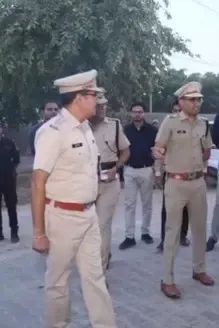
The complaint was filed by Vinay Joshi, convener of the Legal Rights Observatory (LRO), under Section 12 of the Protection of Human Rights Act, 1993. It alleged that Krishna Avtar was forcibly apprehended by police while travelling towards Phulera on Saturday night and subsequently subjected to severe physical assault inside the police station. The alleged assault reportedly took place on the directions of Station House Officer (SHO) Umrav Singh, with the involvement of Sub-Inspector Onkar Singh and personnel identified as Ajay, Ramesh, Kuldeep, Mahipal and Vinod.
According to the complaint, the police personnel allegedly forcibly stripped Krishna Avtar, restrained his hands and feet, and repeatedly assaulted him, including targeting his private parts. He reportedly lost consciousness during the assault and was subjected to further violence after regaining consciousness. He was initially taken to a local health centre before being shifted to Sawai Man Singh (SMS) Hospital in Jaipur in a critical condition.
NHRC's Assessment and Directions
The NHRC observed that the allegations, if established, would disclose a grave instance of custodial violence involving physical torture, forced stripping, humiliation and deliberate infliction of injuries upon a person under police control. The Commission noted that the reported involvement of multiple police officials, the severity of the alleged assault, the loss of consciousness and subsequent hospitalisation warranted an independent, impartial and time-bound examination.
The apex human rights body stated that such conduct, if proven, would constitute a serious infringement of the right to life, personal liberty and human dignity guaranteed under Article 21 of the Constitution, and could attract criminal liability under applicable laws. Crucially, the Commission clarified that custodial violence could not be treated as mere departmental misconduct.
On the Suspension of Six Police Personnel
The NHRC took note of the reported suspension of six police personnel in connection with the incident. However, it made clear that departmental suspension cannot substitute criminal investigation and accountability where the allegations disclose cognisable offences. 'The Commission makes it clear that departmental suspension cannot substitute criminal investigation and accountability where the allegations disclose the commission of cognisable offences,' the order stated.
This is a significant assertion — it signals that administrative action already taken by the state government does not insulate the accused officials from criminal proceedings.
Key Directives to DGP and Chief Secretary
DGP Rajeev Kumar Sharma has been directed to furnish details of the circumstances, date, time, grounds and legal authority under which Krishna Avtar was apprehended, including compliance with mandatory arrest and detention safeguards. He has been asked to submit details of any FIR registered, the offences invoked and the status of the investigation, and to explain the absence of an FIR if none has been filed. The DGP has also been directed to ensure the immediate securing of CCTV footage from police station entry and exit points, corridors and lock-up areas — and to account for any missing or deleted footage.
Chief Secretary V. Srinivas has been separately directed to ensure immediate and appropriate medical treatment, specialised care and rehabilitation for the victim, along with continuous monitoring of his condition. The Chief Secretary must also examine and fix administrative accountability, including supervisory negligence, and ensure adequate protection for Krishna Avtar, his family and witnesses from any intimidation or interference by the accused personnel. The state government has been asked to examine the possibility of interim compensation in accordance with law.
Broader Significance
This comes amid sustained scrutiny of custodial violence across India, with the NHRC having repeatedly flagged that police stations remain the most common site of human rights violations. The involvement of an RSS functionary lends political visibility to the case, though the NHRC's intervention is rooted in the universal custodial safeguards that apply regardless of the victim's affiliation. Both the Chief Secretary and the DGP have been given a two-week deadline to submit their ATRs along with supporting documents on criminal and departmental action, medical records, victim protection measures and compensation details. The outcome of those reports will determine the Commission's next steps.
Point of View
It is a deflection. By explicitly separating departmental action from criminal accountability — and demanding an FIR status report along with an explanation if none exists — the Commission is plugging the oldest escape route in custodial brutality cases. The political dimension cannot be entirely set aside; the victim's RSS affiliation guarantees national attention in a way that many similarly situated victims without organisational backing do not receive. The harder question the NHRC's order implicitly raises is why custodial safeguards routinely fail to protect those who lack that visibility.
NationPress
13 Oct 2026
Frequently Asked Questions
What happened to RSS pracharak Krishna Avtar at Naraina police station?
According to a complaint filed with the NHRC, Krishna Avtar , the RSS's Sambhar district pracharak, was forcibly apprehended while travelling towards Phulera on a Saturday night and was allegedly subjected to severe physical assault inside Naraina police station in Jaipur Rural district, Rajasthan. He reportedly lost consciousness during the assault and was subsequently hospitalised at SMS Hospital, Jaipur in a critical condition.
Why has the NHRC issued notices to the Rajasthan Chief Secretary and DGP?
The NHRC has issued notices under Section 12 of the Protection of Human Rights Act, 1993 , because the allegations, if established, would constitute a grave instance of custodial violence violating Article 21 of the Constitution. Both officials have been directed to submit Action Taken Reports within two weeks covering criminal proceedings, medical care, victim protection and evidence preservation.
Have any police personnel been suspended in connection with the case?
Yes, six police personnel have reportedly been suspended in connection with the incident. However, the NHRC has explicitly stated that departmental suspension cannot substitute for criminal investigation and accountability where the allegations disclose cognisable offences.
Who filed the complaint before the NHRC?
Vinay Joshi , convener of the Legal Rights Observatory (LRO) , filed the complaint before the NHRC on 13 October . The complaint names SHO Umrav Singh , Sub-Inspector Onkar Singh and five other police personnel — Ajay, Ramesh, Kuldeep, Mahipal and Vinod — as allegedly involved in the assault.
What evidence has the NHRC asked the Rajasthan DGP to preserve?
The NHRC has directed DGP Rajeev Kumar Sharma to immediately secure all CCTV footage from the police station's entry and exit points, corridors and lock-up areas covering the relevant period. He has also been asked to preserve station diaries, custody records, duty rosters, vehicle movement records and all communications, and to explain and fix responsibility for any missing or deleted footage.