NIA Appeals High Court Decision on Conditional Bail in Beldanga Violence Case
Synopsis
In a significant legal development, the NIA has approached the Calcutta High Court to contest the conditional bail granted to 15 accused in the Beldanga violence incident. The agency argues that this bail violates Supreme Court directives amidst ongoing investigations.
Key Takeaways
NIA challenges bail decision in Beldanga violence case.
Supreme Court directives allegedly ignored by lower court.
15 accused granted bail after NIA failed to file charge sheet.
Tensions erupted over migrant worker's death.
Next hearing set for Tuesday.
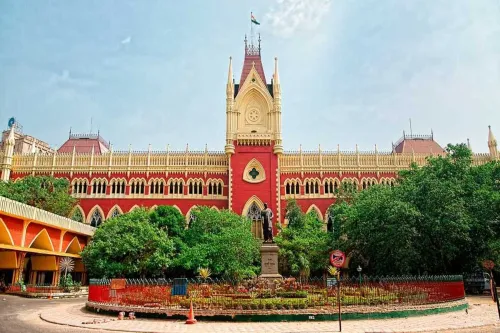
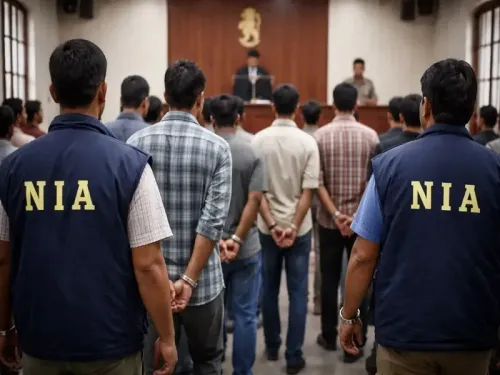
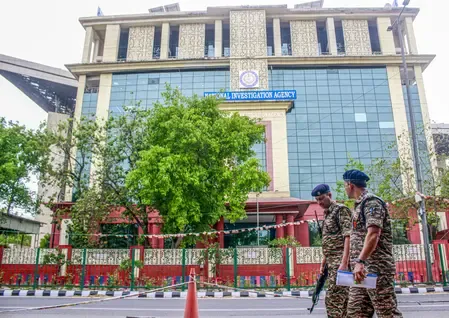
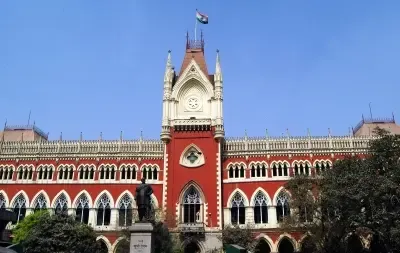
Kolkata, April 20 (NationPress) On Monday, the National Investigation Agency (NIA) filed a petition in the Calcutta High Court regarding the Beldanga violence incident, contesting the conditional bail given to 15 individuals by a lower court. The NIA claims that the bail was granted without adherence to the directives issued by the Supreme Court. They argued in the High Court that such bail cannot be awarded during an ongoing investigation.
The conditional bail for the 15 individuals was granted after the NIA did not submit a charge sheet within the required 90-day timeframe.
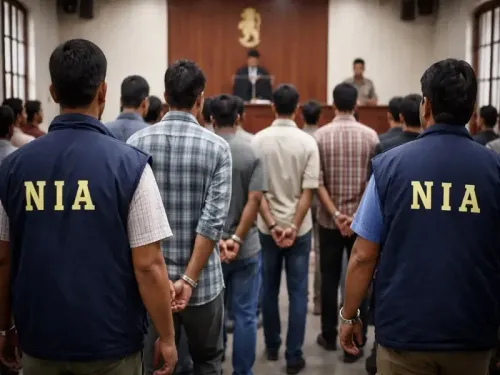
Legally, a charge sheet is supposed to be presented against arrested individuals within a specified duration. Despite this, the NIA was unable to file a complete charge sheet or provide a pertinent investigative report even after the 90 days had lapsed. Agency officials were also unable to respond to the court's queries regarding the investigation's status. Under these circumstances, the defense attorneys for the arrested individuals sought bail, which was granted by a special court on a bond of Rs 10,000, although with several conditions regarding their movements.
The case is scheduled for a hearing on Tuesday, which will determine whether the lower court's decision will stand or if the NIA will regain custody of the 15 individuals through the High Court's intervention.
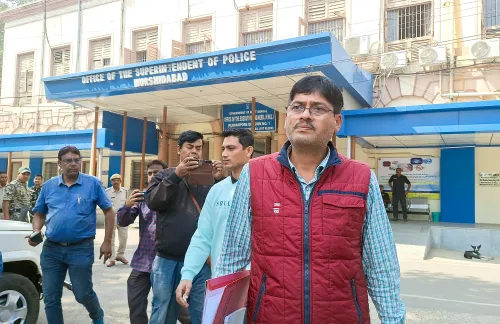
This past Saturday, a special NIA court had approved conditional bail for 15 out of the 35 individuals implicated in the unrest that erupted in Beldanga, located in West Bengal's Murshidabad district, earlier this year.
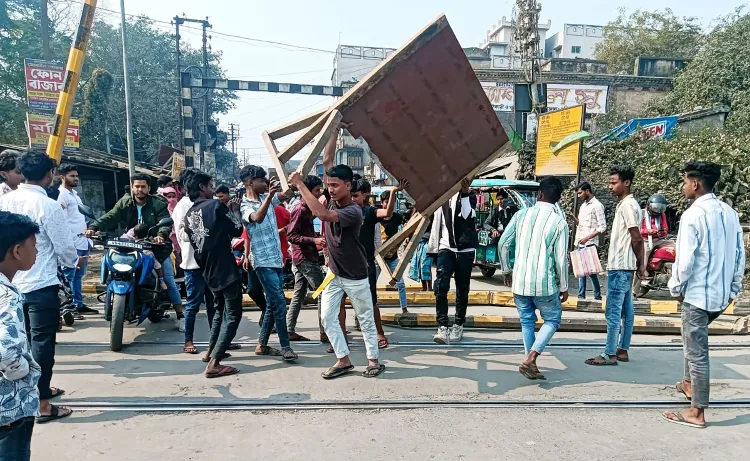
The violence was triggered in January over the death of a migrant worker from the neighboring state of Jharkhand. Tensions escalated when the body of the migrant worker was brought back to Beldanga.
Local demonstrators alleged that the migrant was lynched in Jharkhand due to religious and linguistic reasons. Protests ensued, leading to blockades on railways and roads in Beldanga.
When law enforcement attempted to clear the blockades, protesters ambushed security forces, resulting in injuries to several journalists.
Subsequently, the Jharkhand Police released a statement indicating that, according to the post-mortem report, the migrant worker's death was classified as a suicide.
Yusuf Pathan, a cricketer-turned-politician and local Trinamool Congress MP, faced backlash for his absence during the turmoil.
In response, Suvendu Adhikari, the Leader of Opposition in the West Bengal Assembly, submitted a petition to the Calcutta High Court requesting the deployment of Central Armed Police Forces (CAPF) in Beldanga and the transfer of the investigation to the NIA.
The case eventually reached the Supreme Court, which concurred with the Calcutta High Court, suggesting that if deemed necessary by the Union Home Minister, the NIA could be directed to initiate an investigation into the matter.
Ultimately, the NIA commenced its investigation into the case.
Point of View
The unfolding Beldanga violence case highlights critical legal and societal issues. The NIA's challenge against the lower court's bail decision underscores the tension between law enforcement and judicial processes in sensitive cases. This situation warrants careful attention as it reflects broader societal dynamics.
NationPress
18 Sept 2026
Frequently Asked Questions
What is the current status of the Beldanga violence case?
The NIA has approached the Calcutta High Court to challenge the conditional bail granted to 15 accused individuals by a lower court.
Why did the NIA challenge the bail decision?
The NIA claims that the bail was granted in violation of Supreme Court directives while investigations are still ongoing.
What triggered the violence in Beldanga?
The unrest was sparked by the death of a migrant worker from Jharkhand, which local protesters alleged was due to religious and linguistic factors.
What are the implications of the NIA's appeal?
The outcome of the appeal may affect the custody of the accused and the ongoing investigation into the violence.
When is the next hearing for this case?
The matter is scheduled for hearing on Tuesday.