NITI Aayog report: Ease of doing biz key to unlocking India's tourism potential
Synopsis
NITI Aayog's new tourism report lands a pointed diagnosis: India's problem isn't a shortage of heritage sites or traveller interest — it's the regulatory maze that turns both into missed revenue. With foreign arrivals still below pre-pandemic levels and outbound spending 15 per cent above them, the leakage is measurable and the fix, the report argues, is squarely in the government's hands.
Key Takeaways
NITI Aayog released the 'Unlocking Growth in Tourism and Hospitality Sector' report on 30 June , calling for regulatory and visa reforms.
India's tourism sector contributed ₹15.73 lakh crore to GDP in FY 2023–24 , representing 5.22 per cent of the economy and 84.6 million jobs .
Domestic tourist visits hit 2.9 billion in 2024 , surpassing the pre-pandemic peak of 2.3 billion in 2019.
Foreign tourist arrivals stood at just 9.95 million in 2024 — below pre-pandemic levels and far behind Thailand , Malaysia , and Vietnam .
Indian outbound travel spending now exceeds pre-pandemic levels by 15 per cent , signalling demand leakage to foreign destinations.
Key recommendations include Visa-on-Arrival expansion, streamlined approvals, and risk-based compliance frameworks.
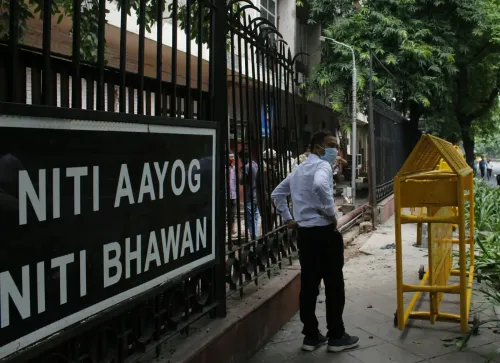
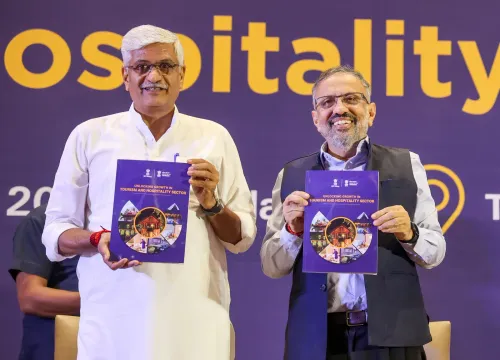
NITI Aayog on Tuesday, 30 June released a report titled 'Unlocking Growth in Tourism and Hospitality Sector', warning that despite strong fundamentals, India's tourism outcomes remain well below potential — and pinpointing regulatory complexity, fragmented approvals, and visa barriers as the primary drag on international arrivals and investment.
The Scale of India's Tourism Economy
The sector is far from marginal. In FY 2023–24, tourism contributed ₹15.73 lakh crore (approximately $170 billion) to India's GDP, accounting for 5.22 per cent of the total economy. It supported an estimated 84.6 million jobs — a 20 per cent increase over five years.
Domestic tourism has been a standout performer, with 2.9 billion domestic tourist visits recorded in 2024, surpassing the pre-pandemic peak of 2.3 billion in 2019. India also counts 44 UNESCO World Heritage Sites, 106 national parks, and 18 biosphere reserves among its tourism assets.
Where India Falls Short
International performance tells a different story. India recorded approximately 20.6 million total international tourist arrivals — including non-resident Indians — in 2024, generating international tourism receipts of roughly $35 billion, a 9 per cent rise from 2023. Yet India accounts for less than 1.5 per cent of global international tourist arrivals.
More starkly, foreign tourist arrivals — a purer measure of core tourism demand — stood at just 9.95 million in 2024, still below pre-pandemic levels and substantially lower than regional peers such as Thailand, Malaysia, and Vietnam, the report noted.
Outbound travel compounds the concern. Indian travellers' overseas spending has exceeded pre-pandemic levels by approximately 15 per cent, pointing to a structural leak: demand for travel is robust, but a significant share is being captured by foreign destinations rather than the domestic tourism ecosystem.
What the Report Recommends
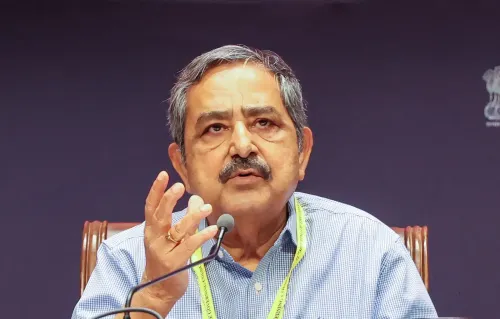
Rajiv Gauba, Member of NITI Aayog, said the core problem is not a lack of demand or resources. 'A central finding of the report is that India's tourism challenge lies not in demand or resource availability, but in enabling conditions. Despite strong domestic tourism and significant global interest, outcomes in terms of international arrivals, investment and value realization remain below potential. This gap is driven by regulatory complexity, fragmented institutional processes and procedural inefficiencies,' Gauba said.
The report's recommendations centre on rationalising regulatory requirements, removing redundancies, enabling risk-based compliance, and improving coordination across government levels. Specific measures include streamlining approval processes for tourism enterprises, reducing licensing burdens, improving permit regimes for tourist transport, and moving towards a more facilitative visa framework — including Visa-on-Arrival for select traveller segments.
Institutional Reform and Implementation
Beyond policy prescriptions, the report emphasises coordinated implementation through clearly defined institutional responsibilities and phased reform pathways. The objective, according to Gauba, is to create a 'more efficient and predictable regulatory environment, while maintaining necessary safeguards.'
This comes amid a broader push by the Centre to position tourism as a high-employment, high-forex sector. With outbound leakage rising and foreign arrivals still lagging pre-pandemic benchmarks, the pressure to convert India's unmatched heritage and wellness assets into realised economic outcomes has rarely been greater.
Point of View
But to its own bureaucratic friction. The 9.95 million foreign tourist arrivals figure — still below 2019 levels in 2024 — is the most damning data point, and it sits uncomfortably alongside a domestic travel boom that suggests Indians want to travel, just not necessarily within India. The outbound leakage number (15 per cent above pre-pandemic) is the real policy emergency here. Visa-on-Arrival expansion and approval rationalisation are the right levers, but India has announced similar reforms before without full follow-through. The report's value will be determined entirely by implementation timelines and institutional accountability — neither of which the document locks in.
NationPress
29 Sept 2026
Frequently Asked Questions
What did the NITI Aayog tourism report say?
The NITI Aayog report titled 'Unlocking Growth in Tourism and Hospitality Sector', released on 30 June, found that India's tourism outcomes remain below potential despite strong assets and domestic demand. It attributed the gap to regulatory complexity, fragmented approvals, and visa barriers, and recommended streamlining processes and expanding Visa-on-Arrival to boost international arrivals and investment.
How much does tourism contribute to India's GDP?
In FY 2023–24, India's tourism sector contributed ₹15.73 lakh crore — approximately $170 billion — to GDP, accounting for 5.22 per cent of the total economy. The sector also supported an estimated 84.6 million jobs, a 20 per cent increase over five years.
Why are India's foreign tourist arrivals still below pre-pandemic levels?
According to the NITI Aayog report, foreign tourist arrivals — at 9.95 million in 2024 — remain below pre-pandemic levels primarily due to regulatory complexity, fragmented institutional processes, and procedural inefficiencies rather than a lack of demand or tourism assets. The report also highlights visa facilitation as a critical gap.
What is Visa-on-Arrival and why is NITI Aayog recommending it?
Visa-on-Arrival allows eligible foreign nationals to obtain a visa at the port of entry rather than applying in advance, reducing friction for travellers. NITI Aayog recommends expanding it to select segments as part of a broader facilitative visa framework to convert global interest in India into actual tourist arrivals.
How does India compare to peers like Thailand and Malaysia on tourism?
India's foreign tourist arrivals of 9.95 million in 2024 are substantially lower than those of regional peers such as Thailand, Malaysia, and Vietnam, according to the report. India also accounts for less than 1.5 per cent of global international tourist arrivals, despite having 44 UNESCO World Heritage Sites and extensive natural and cultural assets.