Sambalpur cyber police bust fake SIM racket, arrest 3 in Odisha
Synopsis
Sambalpur cyber police have cracked a fake SIM operation with a direct alleged link to Jamtara — India's cybercrime capital. The seizure of 120 sealed blank Airtel SIM cards points to an organised supply chain feeding online fraudsters, not just a local opportunistic scam.
Key Takeaways
Sambalpur Cyber Police arrested three persons on 24 September 2026 for running a fake SIM card racket in Odisha.
The accused — Suraj Bag , Malati Oram alias Mala , and Papu alias Sheikh Parvez — allegedly misused customers' identity documents to generate multiple SIM cards per number.
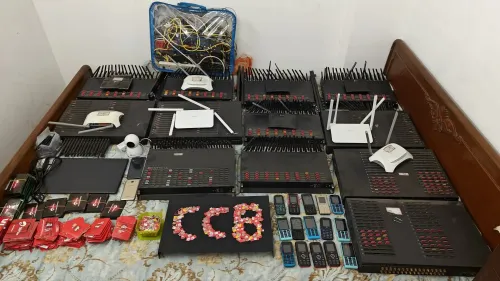
Police seized 120 sealed blank Airtel SIM cards , four mobile phones, bank passbooks, and a PhonePe QR code scanner, among other items.
Several fraudulent SIM cards were reportedly being used for cybercrimes in Jamtara, Jharkhand .
Investigation is continuing to map the full network, total SIM cards circulated, and money involved.
Sambalpur Cyber Police Station in Odisha has arrested three persons for allegedly preparing and selling fake SIM cards by misusing customers' identity documents, officials confirmed on Thursday, 24 September 2026. The bust follows an investigation into case number 34/26, registered at the cyber police station on 22 September 2026.
Who Was Arrested
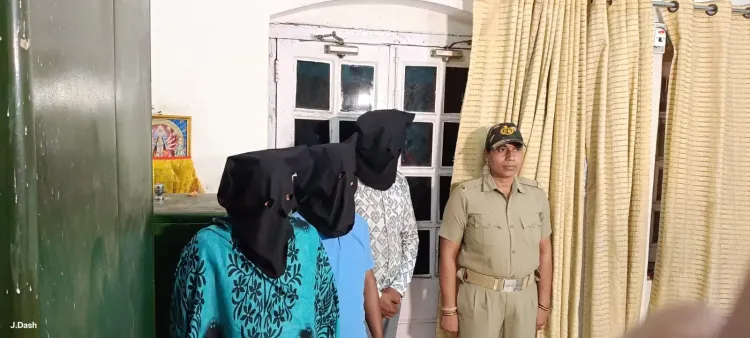
The three accused have been identified as Suraj Bag (24) of Panchput, Malati Oram alias Mala (29) of Sinapali, and Papu alias Sheikh Parvez (32) of Motijharan in Sambalpur. All three were arrested by Sambalpur district police as part of the ongoing crackdown on cybercrime-linked SIM fraud.
How the Racket Operated
According to police, the accused allegedly collected identity documents from customers seeking new SIM connections and used those documents to generate multiple SIM cards against a single number. While one SIM card was legitimately handed over to the customer, the remaining cards were retained and sold to third parties — a method that allows fraudsters to operate under borrowed identities and evade detection.
Investigations further revealed that several of these fraudulently obtained SIM cards were being actively used to commit cybercrimes in Jamtara, Jharkhand — a district that has gained national notoriety as a hub for online financial fraud. The racket also allegedly shared its proceeds among those involved.
Items Seized
Authorities recovered a significant haul of material evidence during the operation, including four mobile phones, four active SIM cards, 120 sealed blank Airtel SIM cards, three bank passbooks, a cheque book, an Aadhaar card, a PhonePe QR code scanner, four affidavits, a house rental agreement, 10 Airtel pamphlets, and four Airtel 5G Plus signboards. The presence of blank Airtel SIM cards in bulk points to a structured supply chain rather than an opportunistic individual-level fraud.
Investigation Continues
Police stated that the probe is ongoing and is focused on identifying additional persons involved in the network, the total number of SIM cards prepared and distributed, the identities of recipients, and the full quantum of money generated. The alleged Jamtara connection is also being examined closely, raising the possibility that this Sambalpur cell was a supplier node in a wider cybercrime ecosystem.
Officials noted that fake and fraudulently obtained SIM cards remain one of the most commonly exploited tools in cybercrime, enabling perpetrators to conduct financial fraud while concealing their true identities. The arrests signal a push by Odisha Police to target upstream enablers of cybercrime, not just front-end perpetrators.
Point of View
With Odisha providing SIM infrastructure and Jamtara deploying it. Telecom regulators and KYC enforcement remain the weakest links — as long as bulk SIM provisioning can be diverted with relative ease, these rackets will keep reappearing.
NationPress
25 Sept 2026
Frequently Asked Questions
What was the fake SIM card racket busted in Sambalpur, Odisha?
The racket involved three accused who allegedly used customers' identity documents to generate multiple SIM cards against a single registered number. While one SIM was given to the genuine customer, the rest were sold to third parties and allegedly used in cybercrimes.
Who were the three persons arrested by Sambalpur cyber police?
The arrested individuals are Suraj Bag (24) of Panchput, Malati Oram alias Mala (29) of Sinapali, and Papu alias Sheikh Parvez (32) of Motijharan — all from Sambalpur district in Odisha.
What items were seized in the Sambalpur SIM fraud bust?
Police seized 120 sealed blank Airtel SIM cards, four mobile phones, four active SIM cards, three bank passbooks, a cheque book, an Aadhaar card, a PhonePe QR code scanner, four affidavits, a house rental agreement, 10 Airtel pamphlets, and four Airtel 5G Plus signboards.
How is the Sambalpur SIM racket linked to Jamtara?
Investigators found that some of the fraudulently obtained SIM cards from the Sambalpur network were being used to commit cybercrimes in Jamtara, Jharkhand — a district notorious for organised online financial fraud. The Jamtara angle is a key focus of the continuing investigation.
Why are fake SIM cards a tool for cybercriminals?
Fake and fraudulently obtained SIM cards allow cybercriminals to operate under someone else's registered identity, making it significantly harder for law enforcement to trace calls, digital transactions, and fraud attempts back to the actual perpetrators.