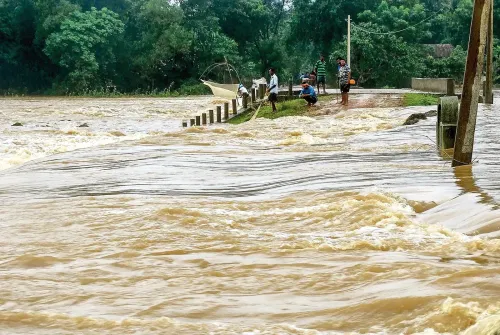
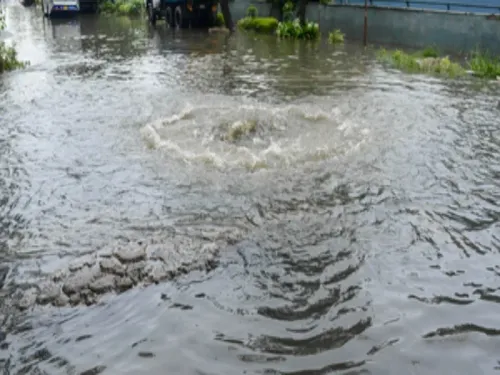
Odisha flood preparedness: Baitarani River under watch amid heavy rain

Synopsis
With the Baitarani River rising and continuous rainfall battering Odisha, the state government held a high-level review on 6 July — covering river levels, ODRAF deployment, crop damage surveys, and even post-flood snakebite preparedness. The administration has set a 24-hour deadline for farmer compensation once assessments are complete.
Key Takeaways
Minister Suresh Pujari declared on 6 July that Odisha's flood situation is fully under control despite rising Baitarani River levels.
Water levels at Anandapur and Akhuapada have risen slightly but remain well below the danger mark.
Six major rivers — Mahanadi, Devi, Jalaka, Kushabhadra, Rushikulya , and Ib — are all below danger levels.
Crop damage surveys ordered; farmer compensation to be disbursed within 24 hours of assessment completion.
ODRAF teams are on standby; hospitals instructed to stock adequate antivenom ahead of possible post-flood snakebite incidents.
A full review with all 30 district administrations is planned after Rath Yatra concludes.
Revenue and Disaster Management Minister Suresh Pujari on Monday, 6 July declared that the flood situation in Odisha is fully under control, even as rising water levels in the Baitarani River — driven by continuous rainfall in its catchment area — prompted a high-level state review. Officials say no significant loss of life or major property damage has been reported so far.
High-Level Review at SRC Office
A comprehensive review meeting was convened at the Office of the Special Relief Commissioner (SRC), Rajiv Bhawan, Bhubaneswar, chaired by Minister Pujari and attended by senior departmental officials. The session assessed current water levels in the Baitarani, likely affected areas and populations, evacuation and rescue arrangements, shelter home management, relief material availability, and ODRAF team deployment.
District administrations have been firmly instructed to ensure that any person requiring evacuation or assistance receives immediate support, the minister stated.
River Levels: Below Danger Mark
While the Baitarani River has recorded a slight rise at Anandapur and Akhuapada, it continues to remain well below the danger level. Crucially, water levels in the Mahanadi, Devi, Jalaka, Kushabhadra, Rushikulya, and Ib rivers are also below the danger mark, according to the department.
The Revenue and Disaster Management Department is maintaining round-the-clock vigil over all major river systems across the state.
Crop Damage Surveys and Farmer Compensation
Reports of crop damage have emerged from several areas affected by the prolonged rainfall. District administrations have been directed to conduct immediate surveys, assess the extent of agricultural loss, and submit reports to the Revenue and Disaster Management Department.
Minister Pujari issued clear instructions that compensation to affected farmers must be disbursed within 24 hours of the completion of damage assessments — a timeline that signals the administration's intent to move quickly on relief.
Post-Flood Snakebite Preparedness
In a notable precautionary step, the review meeting also addressed the risk of snakebite incidents that typically spike after floodwaters recede. Hospitals across vulnerable districts have been instructed to maintain adequate stocks of antivenom, with preventive measures already planned.
What Comes Next
Special Relief Commissioner Rajesh Prabhakar Patil confirmed that adequate stocks of polythene sheets and other relief materials are in place, and that ODRAF teams are fully prepared for rapid deployment. Regular early warning messages are being disseminated to residents in vulnerable areas.
Following the conclusion of Rath Yatra, a detailed review meeting with all 30 district administrations will be convened to assess preparedness and management strategies for all possible flood and rainfall-related disasters in the weeks ahead.
Point of View
A persistent bottleneck in past flood cycles. The inclusion of post-flood snakebite preparedness in a pre-flood review reflects institutional learning from previous disasters, which is a genuine positive signal. What the review did not publicly address is the state of embankments along the Baitarani — historically the weak link when water levels surge rapidly. With Rath Yatra underway and administrative bandwidth split, the window before the next major rainfall spell is narrow.
NationPress
5 Oct 2026
Frequently Asked Questions
Is Odisha facing a flood situation as of 6 July 2025?
The state government says the situation is under control as of 6 July. The Baitarani River has risen slightly at Anandapur and Akhuapada but remains below the danger level, and no significant loss of life or major property damage has been reported.
Which rivers in Odisha are being monitored for flood risk?
The Revenue and Disaster Management Department is monitoring the Baitarani, Mahanadi, Devi, Jalaka, Kushabhadra, Rushikulya, and Ib rivers. All are currently below danger levels, according to officials.
What relief measures has the Odisha government announced for flood-affected farmers?
District administrations have been directed to immediately survey crop damage and submit reports. Minister Suresh Pujari has instructed that compensation be disbursed to affected farmers within 24 hours of the damage assessment being completed.
What is ODRAF and is it deployed in Odisha?
ODRAF stands for Odisha Disaster Rapid Action Force, the state's specialised disaster response unit. Special Relief Commissioner Rajesh Prabhakar Patil confirmed that ODRAF teams are fully prepared and ready for deployment as of 6 July.
Why is the government preparing for snakebites during flood season?
Snakebite incidents typically rise after floodwaters recede, as displaced snakes enter human settlements. The review meeting specifically addressed this risk, and hospitals in vulnerable areas have been instructed to maintain adequate antivenom stocks as a precautionary measure.