Why Were Over 1500 Afghan Refugees Forcefully Deported from Pakistan and Iran in a Single Day?
Synopsis
Over 1,500 Afghan refugees were repatriated from Iran and Pakistan in a single day, raising concerns about their safety and living conditions. This significant event highlights ongoing challenges faced by Afghan migrants amid rising tensions and humanitarian concerns.
Key Takeaways
Over 1,500 Afghan refugees forcibly returned in a single day.
Refugees entered via various border crossings.
Humanitarian assistance provided to some families.
Record detentions of Afghan migrants reported by UNHCR .
Concerns about safety and stability in the region.
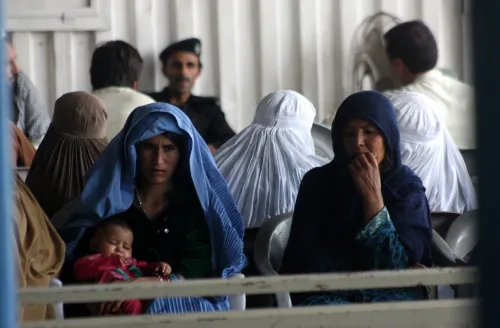
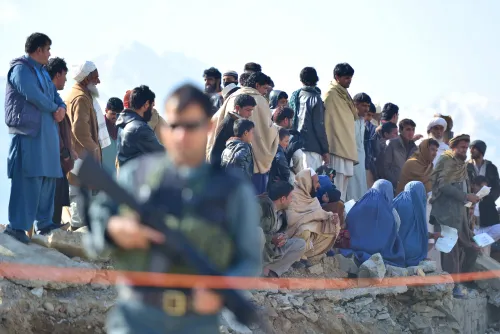
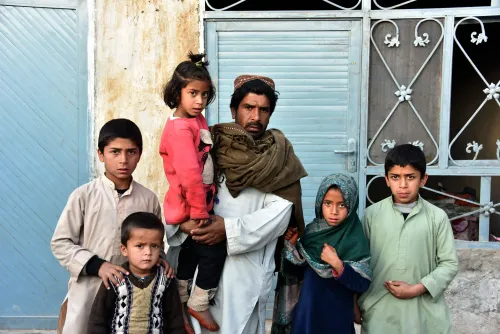
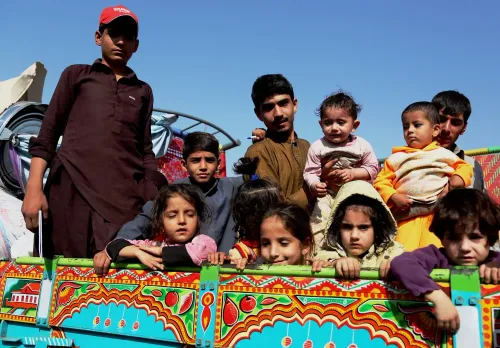
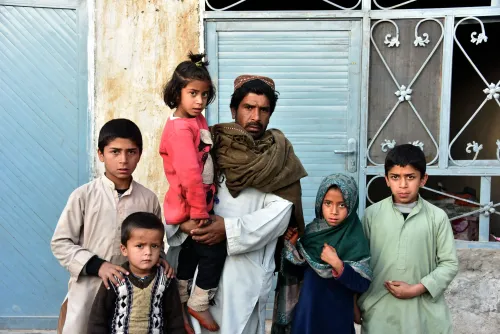
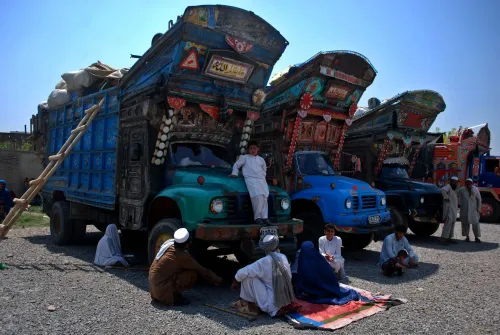
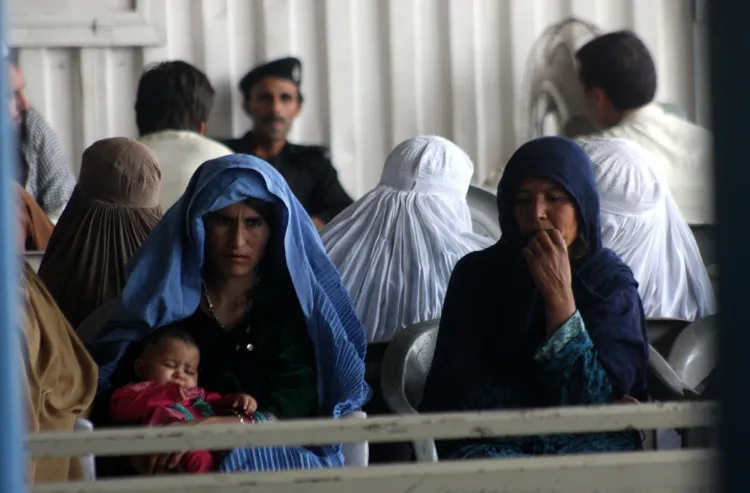
Kabul, Dec 9 (NationPress) In a shocking turn of events, more than 1,500 Afghan refugees were forcibly sent back to Afghanistan from both Iran and Pakistan in just one day, as reported by local media citing a Taliban official statement.
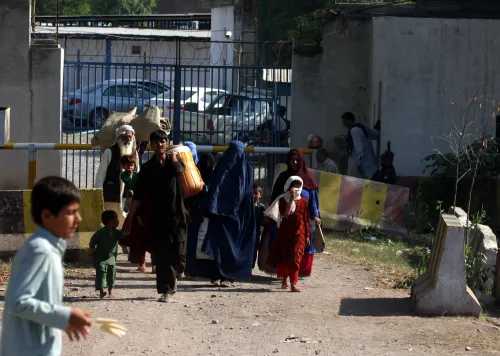
Hamdullah Fitrat, the deputy spokesman for the Taliban, disclosed details through a report issued by the High Commission for Addressing Migrants’ Issues on X. This report indicated that on Monday, 320 families, totaling 1,579 individuals, made their return to Afghanistan, according to Pajhwok Afghan News.
The refugees entered Afghanistan via various border crossings, including Bahramcha in Helmand, Pul-i-Abresham in Nimroz, Spin Boldak in Kandahar, Torkham in Nangarhar, and Islam Qala in Herat.
Fitrat further mentioned that 521 refugee families, equivalent to 2,610 people, were relocated to their original home areas, while humanitarian assistance was provided to 306 families. Additionally, telecommunication companies distributed 397 SIM cards to the returning Afghan refugees.
On a related note, Fitrat also reported that 2,349 Afghan refugees had been forcibly repatriated from both Pakistan and Iran just the day before, on Sunday.
In a previous update from November, the United Nations High Commissioner for Refugees (UNHCR) indicated that Pakistan had recorded an unprecedented number of Afghan migrants being detained in 2025, particularly in the provinces of Balochistan and Punjab.
According to the new UNHCR report, the majority of the arrests occurred in Chagai and Quetta districts of Balochistan, as well as Attock district in Punjab, as reported by Afghanistan's leading news outlet, Khaama Press.
From January 1 to mid-November 2025, Pakistani authorities apprehended 100,971 Afghans, marking a dramatic increase from approximately 9,000 arrests in 2024 and over 26,000 in 2023.
UNHCR reports indicated that 76 percent of those detained were either Afghan Citizen Card holders or undocumented migrants, with the remaining 24 percent possessing Proof of Registration cards.
This surge in detentions follows two government orders issued in 2025, which mandated the expulsion of Afghan migrants from Islamabad and Rawalpindi and permitted police to arrest PoR-card holders.
Numerous humanitarian organizations have called upon Pakistan to guarantee that all returns are voluntary and in accordance with international standards. They cautioned that large-scale expulsions could lead to instability along the Afghan border, where recently returned families frequently struggle with a lack of housing, jobs, and essential services.
Point of View
I acknowledge the seriousness of the situation surrounding Afghan refugees. The mass deportations highlight critical humanitarian concerns and the need for international cooperation to protect vulnerable populations. It’s essential to ensure that all returns are voluntary and uphold human rights, given the challenges many face upon their return.
NationPress
29 Sept 2026
Frequently Asked Questions
How many Afghan refugees were deported?
Over 1,500 Afghan refugees were forcibly repatriated from Iran and Pakistan in a single day.
What regions were affected by these deportations?
The deportations involved refugees returning through several crossings, including Helmand, Nimroz, Kandahar, Nangarhar, and Herat.
What assistance was provided to returning families?
Humanitarian assistance was given to 306 families, and telecommunication firms provided 397 SIM cards to refugees.
What has the UNHCR stated about Afghan detentions in Pakistan?
The UNHCR reported a record number of Afghan migrants detained in Pakistan, totaling 100,971 from January to mid-November 2025.
What are the implications of mass deportations?
Mass deportations can lead to instability along the Afghanistan border, and returning families often struggle with housing and basic services.