Pakistan's Struggles with Escalating Online Abuse: A Growing Crisis

Synopsis
The Digital Rights Foundation's latest report highlights an alarming rise in online abuse in Pakistan, revealing the state's inadequate response to this escalating crisis, particularly affecting children and women.
Key Takeaways
Online abuse in Pakistan is increasing rapidly.
Children and women are particularly vulnerable.
AI is transforming harassment into a more dangerous issue.
Access to justice remains uneven for victims.
Recommendations include enhancing law enforcement and digital literacy.
Islamabad, April 20 (NationPress) A recent annual report released by the Digital Rights Foundation has disclosed that the issue of online abuse in Pakistan is advancing at a pace that far exceeds the capabilities of existing systems meant to address it.
Artificial Intelligence stands out as a key factor, reshaping harassment into a form that is more expansive, anonymous, and significantly more challenging to trace. The most troubling outcome of this phenomenon is that children, some as young as six years old, are increasingly becoming part of a harmful ecosystem that the state is ill-equipped to tackle. Although the statistics are alarming, they fail to fully encompass the magnitude of the crisis. Notably, while 79 percent of cyber harassment incidents are reported to the National Cyber Crime Investigation Agency (NCCIA), access to justice remains inconsistent and often unattainable, as highlighted by an editorial in Pakistan's prominent publication, The News International.
For victims residing outside major urban areas, seeking justice can be a daunting task due to the need for travel, financial resources, and resilience—attributes that many simply lack. While younger children may represent a smaller segment of the complaints, the serious dangers they face, such as grooming, sexual exploitation, and AI-facilitated abuse, are considerable. Furthermore, women disproportionately bear the brunt of digital violence, as noted in the editorial.
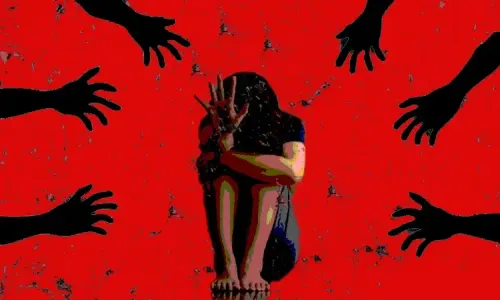
In a culture where women's presence is already scrutinized in physical environments, the digital realm has become an extension of this same oversight. Non-consensual image sharing, blackmail, and sextortion form a continuum of gendered harassment aimed at silencing, shaming, and intimidating women. Women journalists, in particular, are frequent targets, facing orchestrated abuse that aims to drive them out of public dialogue. Recent instances of online trolling related to seemingly trivial matters, like a woman’s clothing choices, illustrate how swiftly digital spaces can turn hostile.
According to The News International, private images are misused, altered, and disseminated to enforce a restrictive moral code. This represents a form of social control that highlights deeper concerns regarding independent and outspoken women. The challenges are compounded by a lack of awareness and support, as many victims are unaware of how to report cybercrimes or protect themselves online.
The DRF has suggested enhancing law enforcement capabilities, streamlining reporting processes, especially for minors, and incorporating psychological support services. It has also called for investments in digital literacy, enabling users—especially the youth—to navigate online risks more effectively. Additionally, technology companies are urged to become proactive, ensuring that AI moderation systems are attuned to local languages and contexts, while also giving more weight to trusted flaggers in identifying harmful content before it spreads uncontrollably.
Point of View
It is evident that the escalating issue of online abuse in Pakistan requires urgent attention. The Digital Rights Foundation's report sheds light on a crisis that extends beyond mere statistics, affecting the most vulnerable in our society. It is crucial that we prioritize solutions to protect our citizens and ensure equitable access to justice.
NationPress
19 Sept 2026
Frequently Asked Questions
What does the Digital Rights Foundation's report reveal?
The report indicates that online abuse in Pakistan is growing at a rate that outpaces the existing systems designed to combat it, particularly impacting children and women.
Who is primarily affected by online abuse in Pakistan?
Children, some as young as six, and women, especially journalists, are among the most vulnerable groups facing increased online harassment.
What measures have been recommended to address online abuse?
Recommendations include enhancing law enforcement capabilities, streamlining reporting processes, and increasing digital literacy to empower users against online risks.
How does AI contribute to online harassment?
AI facilitates a more scalable and anonymous form of harassment, making it harder to trace and combat.
What challenges do victims of online abuse face?
Victims often encounter barriers such as lack of resources, awareness of reporting processes, and the intimidating nature of seeking justice.