Pakistan's 26th and 27th Amendments gut judicial independence, Dawn warns

Synopsis
Pakistan's back-to-back constitutional amendments have done what critics feared most — created a parallel court above the Supreme Court and enabled punitive transfers of High Court judges. With Amnesty International calling it a 'sustained assault on judicial independence' and the Chief Justice himself warning of a 'dangerous precedent', Pakistan's constitutional order is under serious strain.
Key Takeaways
Pakistan's 26th and 27th Amendments (passed in 2024 and 2025 ) have been described by jurists as having "ended" constitutional supremacy .
The newly created Federal Constitutional Court (FCC) is seen as a parallel judicial body placed above the Supreme Court .
Three Islamabad High Court judges were transferred to provincial courts, a move Chief Justice Yahya Afridi called a "dangerous precedent" .
Amnesty International termed the 27th Amendment a "significant regression" that violates international human rights law and grants lifetime immunity to officials.
Legal experts and Dawn have called for live telecasting of hearings on petitions challenging the amendments.
Pakistan's 26th and 27th Constitutional Amendments have effectively "ended" the concept of constitutional supremacy in the country, according to leading jurists and an editorial in Pakistan's foremost English daily, Dawn. The creation of the Federal Constitutional Court (FCC) is being widely interpreted as the establishment of a parallel judicial body designed to strip the Supreme Court of its constitutional jurisdiction.
What the Amendments Changed
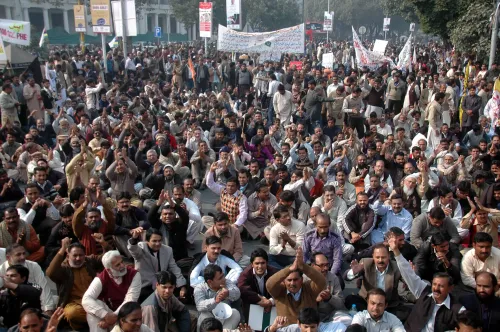
Passed in 2024 and 2025 respectively, the 26th and 27th Amendments have fundamentally altered Pakistan's constitutional architecture, according to jurists and members of the legal community who debated the changes at a lawyers' convention held recently in Karachi. The amendments introduced the FCC — positioned above the Supreme Court — and granted new powers related to the transfer of High Court judges. Legal experts at the convention concluded that the changes have dismantled the foundational principle of constitutional supremacy.
Judge Transfers Draw Sharp Criticism
The controversy deepened when three judges of the Islamabad High Court (IHC) were transferred to different provincial High Courts by a majority decision of the Judicial Commission of Pakistan. Chief Justice of Pakistan Yahya Afridi publicly opposed the move, warning that such transfers "could assume a punitive character" and would set a "dangerous precedent". Speakers at the Karachi convention echoed these concerns, alleging that the judges were being transferred specifically for exposing "intervention" in the judicial system.
What Dawn's Editorial Said
The Dawn editorial, published on Wednesday, called on both the judiciary and the executive to address what it described as legitimate constitutional grievances. It urged that hearings of petitions challenging the 26th and 27th Amendments be telecast live in the interest of transparency. "If changes that alter the spirit of the Constitution are bulldozed, and the independence of the judiciary is compromised, it will be very difficult to reverse these moves," the editorial warned, urging the state to engage seriously with expert criticism rather than dismiss it.
Amnesty International Flags Human Rights Violations
In January, human rights organisation Amnesty International described the 27th Constitutional Amendment — passed in November 2025 — as a "significant regression" and "part of a direct and sustained assault on judicial independence." The Amnesty International South Asia Regional Office stated in a post on X that the amendment "violates international human rights law, particularly undermining the independence of the judiciary and shielding officials from accountability through the provision of lifetime immunity."
Amnesty called for an urgent review of the amendment and urged Pakistani authorities to "immediately take all necessary measures to safeguard the impartiality, independence and safety of judges." It also demanded that authorities uphold their international human rights obligations, guarantee access to justice, and respect the separation of powers and the rule of law.
What Comes Next
Petitions challenging both amendments are reportedly pending before Pakistani courts, with legal experts pressing for live broadcasts of those hearings. With the FCC yet to be fully operationalised and judicial transfers already drawing institutional pushback, the structural battle over Pakistan's constitutional order is far from settled. How the state responds to mounting pressure from the legal community and international rights bodies will determine whether these amendments become entrenched or face meaningful rollback.
Point of View
Combined with the ability to transfer judges who expose interference, gives the executive near-complete leverage over the judiciary. The fact that Chief Justice Afridi himself has spoken out is extraordinary and signals how deep the rupture runs. Amnesty's invocation of 'lifetime immunity' for officials is the detail that deserves far more scrutiny: amendments that insulate power from accountability are not constitutional reform — they are constitutional capture.
NationPress
19 Sept 2026
Frequently Asked Questions
What are Pakistan's 26th and 27th Constitutional Amendments?
The 26th Amendment was passed in 2024 and the 27th in November 2025. Together, they created the Federal Constitutional Court (FCC), positioned above the Supreme Court, and expanded powers to transfer High Court judges — changes that jurists say have effectively ended constitutional supremacy in Pakistan.
What is the Federal Constitutional Court (FCC) in Pakistan?
The FCC is a new judicial body established under the 26th Amendment, widely seen by legal experts as a parallel court designed to curtail the Supreme Court's constitutional jurisdiction. Critics argue it undermines the existing judicial hierarchy and concentrates power outside traditional constitutional checks.
Why were Islamabad High Court judges transferred?
Three IHC judges were transferred to provincial High Courts by a majority decision of the Judicial Commission of Pakistan. Chief Justice Yahya Afridi opposed the move, saying it 'could assume a punitive character'. Legal experts alleged the transfers were aimed at penalising judges who had exposed interference in the judicial system.
What did Amnesty International say about Pakistan's 27th Amendment?
Amnesty International called the 27th Amendment a 'significant regression' and 'part of a direct and sustained assault on judicial independence'. It said the amendment violates international human rights law and shields officials from accountability through lifetime immunity, urging an urgent review and safeguards for judges.
What are legal experts demanding in response to these amendments?
Jurists and speakers at a lawyers' convention in Karachi have called for transparency in judicial restructuring and demanded that hearings on petitions challenging the 26th and 27th Amendments be telecast live. Dawn's editorial urged the state to engage with expert criticism rather than dismiss it.