PM Modi: NITI Aayog Now Central to India's Policy Reform Drive
Synopsis
PM Modi reconstituted NITI Aayog on April 25, appointing economist and former Chief Economic Adviser Ashok Kumar Lahiri as Vice Chairman. With five new full-time members including ex-Cabinet Secretary Rajiv Gauba, the revamped body is now positioned as the strategic nerve centre of India's ambitious Viksit Bharat 2047 vision.
Key Takeaways
PM Narendra Modi reconstituted NITI Aayog on April 25, 2025 , describing it as a vital pillar of India's policy-making architecture.
Ashok Kumar Lahiri , former 12th Chief Economic Adviser of India , has been appointed the new Vice Chairman of NITI Aayog .
Five new full-time members were inducted: Rajiv Gauba , Prof.
Gobardhan Das , Prof.
Abhay Karandikar , and Dr.
Lahiri has international experience with the World Bank and IMF , and academic ties to the Delhi School of Economics and Asian Development Bank .
The reconstitution is aligned with India's long-term Viksit Bharat 2047 vision of becoming a fully developed nation by the centenary of independence.
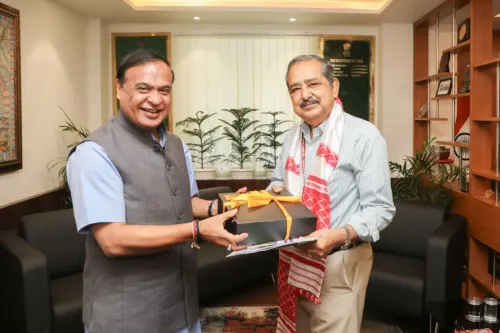
PM Modi personally met Lahiri to congratulate him, underscoring the political significance attached to the new NITI Aayog leadership.
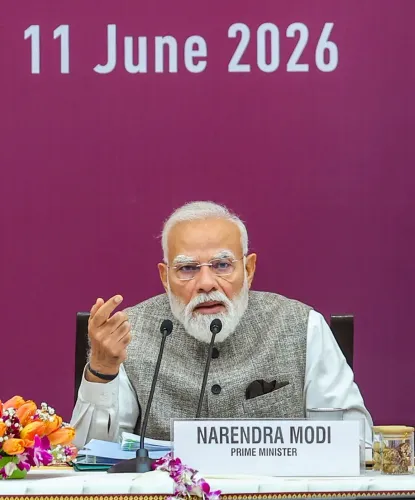
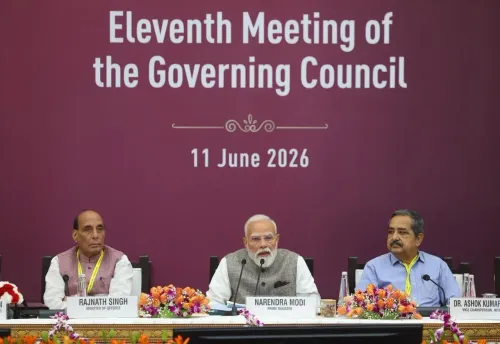
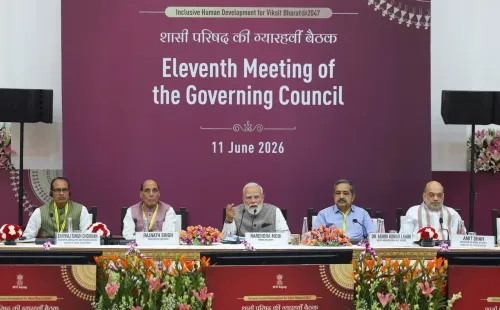
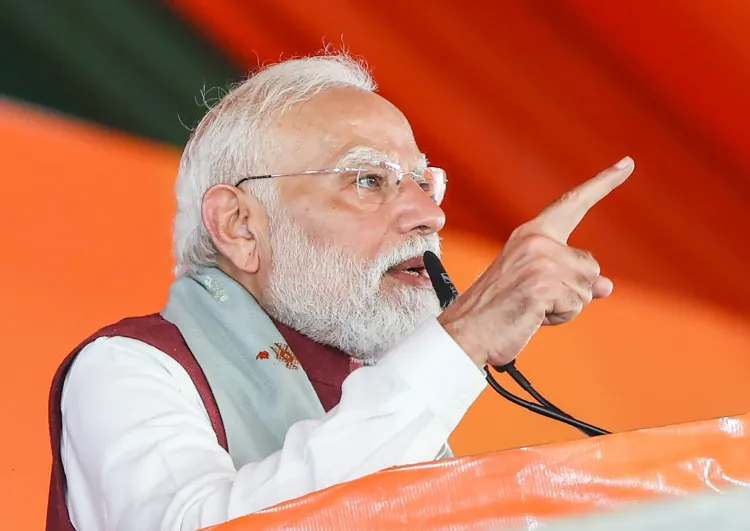
New Delhi, April 25: Prime Minister Narendra Modi on Saturday declared that NITI Aayog has firmly established itself as a cornerstone of India's policy-making architecture, playing a transformative role in advancing cooperative federalism, accelerating structural reforms, and improving the 'Ease of Living' for ordinary citizens. The announcement came as the government formally reconstituted the apex policy body with a new leadership team.
New Leadership Team Takes Charge
PM Modi extended his congratulations to Ashok Kumar Lahiri, who has been appointed as the new Vice Chairman of NITI Aayog, along with five newly inducted full-time members. The reconstituted body now includes Rajiv Gauba, Prof. K. V. Raju, Prof. Gobardhan Das, Prof. Abhay Karandikar, and Dr. M. Srinivas as full-time members.
Posting on social media platform X, the Prime Minister wrote: "Wishing all of them a productive and impactful tenure ahead." He also personally met Lahiri to congratulate him on his appointment, signalling the importance the government attaches to the reconstitution.
Who Is Ashok Kumar Lahiri
Ashok Kumar Lahiri brings an exceptionally distinguished career in economics and public policy to his new role. He previously served as India's 12th Chief Economic Adviser to the Government of India — one of the most influential technocratic positions in the country's fiscal establishment.
His academic and institutional footprint is wide: he has held positions at the Delhi School of Economics, the Asian Development Bank, Bandhan Bank, and the National Institute of Public Finance and Policy (NIPFP). On the global stage, he has worked with both the World Bank and the International Monetary Fund (IMF), giving him rare cross-jurisdictional expertise.
An alumnus of Presidency University, Kolkata, Lahiri currently represents the Balurghat constituency in the West Bengal Legislative Assembly, though he is not contesting the ongoing state elections.
PM Modi on Lahiri's Role in Viksit Bharat Vision
PM Modi expressed strong confidence in Lahiri's ability to deepen India's reform agenda. "His rich experience in economics and public policy will further strengthen the path of reforms in India and the journey towards becoming a 'Viksit Bharat'. I am confident that his efforts will make our country's policy-making even more dynamic," the Prime Minister stated.
The phrase 'Viksit Bharat' — or Developed India — is the government's flagship long-term vision targeting the transformation of India into a fully developed nation by 2047, the centenary of independence. NITI Aayog is expected to serve as the intellectual and strategic engine behind this mission.
NITI Aayog's Evolving Role in India's Governance
NITI Aayog, established in January 2015 to replace the Planning Commission, was designed to shift India's planning model from a top-down, centrally driven approach to a more collaborative, state-partnership-based framework. Over the past decade, it has published landmark reports on sectors ranging from electric vehicles and health infrastructure to artificial intelligence and agriculture.
The reconstitution comes at a critical juncture — India is navigating global economic headwinds, managing post-pandemic fiscal consolidation, and aggressively positioning itself as a manufacturing and technology hub. The inclusion of technocrats with international exposure like Lahiri suggests the government is doubling down on evidence-based, globally benchmarked policymaking.
Notably, the appointment of Rajiv Gauba, a former Cabinet Secretary and one of India's most senior IAS officers, alongside academic economists and sector specialists, reflects a deliberate blend of administrative muscle and intellectual depth in the new NITI Aayog composition.
What This Means for India's Policy Landscape
The reconstitution signals that the Modi government intends to use NITI Aayog more assertively in the run-up to 2047, particularly in driving state-level reforms through competitive and cooperative federalism. States that align with central reform priorities are increasingly receiving policy support, technical assistance, and visibility through NITI Aayog rankings and indices.
Critics have in the past argued that NITI Aayog lacks the financial teeth of the old Planning Commission, since it cannot directly allocate funds to states. However, its growing influence in shaping sectoral policies — from health and education to infrastructure and digital governance — has made it an increasingly consequential body in India's governance ecosystem.
With a new, high-calibre team now in place, all eyes will be on the body's upcoming strategic documents, including the next iteration of the Viksit Bharat roadmap and India's medium-term economic strategy, expected to be unveiled in the coming months.
Point of View
The government is hedging between reform vision and administrative execution. What bears watching, however, is whether NITI Aayog will be empowered beyond advisory influence — its lack of fiscal authority remains its most significant structural limitation. The real test will be whether this new team can bridge the gap between ambitious policy blueprints and ground-level delivery across India's 28 states.
NationPress
16 Sept 2026
Frequently Asked Questions
Who has been appointed as the new Vice Chairman of NITI Aayog?
Ashok Kumar Lahiri has been appointed as the new Vice Chairman of NITI Aayog. He is a distinguished economist and former 12th Chief Economic Adviser to the Government of India, with experience at the World Bank and IMF.
Why did PM Modi reconstitute NITI Aayog in April 2025?
PM Modi reconstituted NITI Aayog to strengthen India's policy-making architecture and advance the Viksit Bharat 2047 vision. The new team brings a blend of global economic expertise and senior administrative experience to drive reforms.
Who are the new full-time members of NITI Aayog?
The five new full-time members of the reconstituted NITI Aayog are Rajiv Gauba, Prof. K. V. Raju, Prof. Gobardhan Das, Prof. Abhay Karandikar, and Dr. M. Srinivas. They were appointed alongside Vice Chairman Ashok Kumar Lahiri.
What is NITI Aayog and what does it do?
NITI Aayog is India's premier public policy think tank, established in January 2015 to replace the Planning Commission. It promotes cooperative federalism, drives long-term strategic planning, and provides policy recommendations across sectors including health, infrastructure, and technology.
What is Ashok Kumar Lahiri's background and experience?
Ashok Kumar Lahiri served as India's 12th Chief Economic Adviser and has held positions at the Delhi School of Economics, Asian Development Bank, Bandhan Bank, NIPFP, World Bank, and IMF. He is an alumnus of Presidency University, Kolkata, and currently represents Balurghat in the West Bengal Assembly.