Pranab Mukherjee called Modi India's first directly elected PM: Sharmistha
Synopsis
Sharmistha Mukherjee's Indian Express piece resurrects a private Rashtrapati Bhavan exchange in which her father, President Pranab Mukherjee, told Modi that 2014 was historically unique — the first Lok Sabha election where a declared PM candidate received a direct popular mandate. Coming from a Congress stalwart's daughter, the assessment carries unusual cross-partisan weight.
Key Takeaways
Sharmistha Mukherjee authored an article in The Indian Express recalling her father Pranab Mukherjee 's reading of the 2014 Lok Sabha election .
Pranab Mukherjee , then the 13th President of India , told PM Modi at Rashtrapati Bhavan that 2014 was unique as the first election with a publicly declared PM candidate who won a direct mandate.
Sharmistha Mukherjee described the 2014 result as a 'tectonic shift,' likening it to a 'presidential election' in terms of the direct popular mandate for Modi.
She contrasted Modi's mandate with predecessors — Dr Manmohan Singh was chosen by Sonia Gandhi ; P.V.
Narasimha Rao and H.D.
Deve Gowda were not MPs when they became PM.
2014 was Modi's first Lok Sabha election; he entered Parliament House directly as Prime Minister — described as 'unprecedented.' Sharmistha called Modi 'perhaps one of the strongest leaders the country has seen since Independence,' while noting that policy disagreement remains 'perfectly fine in a democracy.'
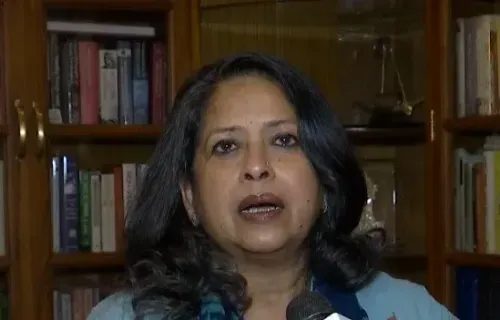
Sharmistha Mukherjee, daughter of former President Pranab Mukherjee and a published author, has recalled how her late father viewed the 2014 Lok Sabha election as a defining rupture in Indian electoral history — one in which Narendra Modi became, in his assessment, the country's first Prime Minister to receive a direct popular mandate. The recollection appeared in an article she authored for The Indian Express, titled 'How my father Pranab Mukherjee read 2014 and the PM.'
The Rashtrapati Bhavan Conversation
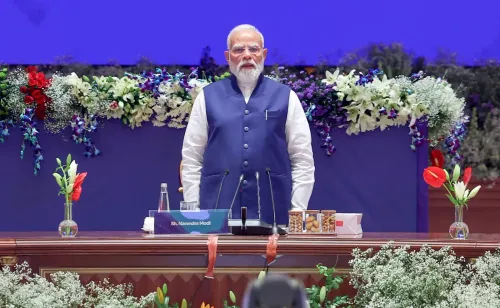
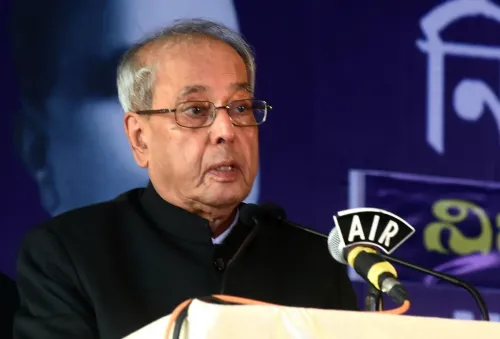
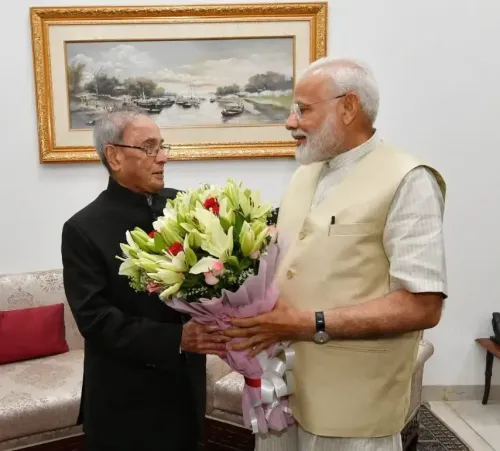
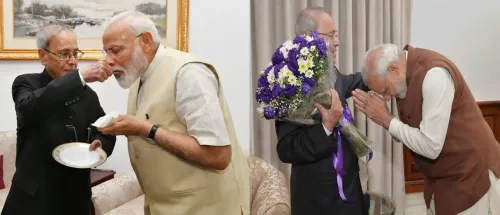
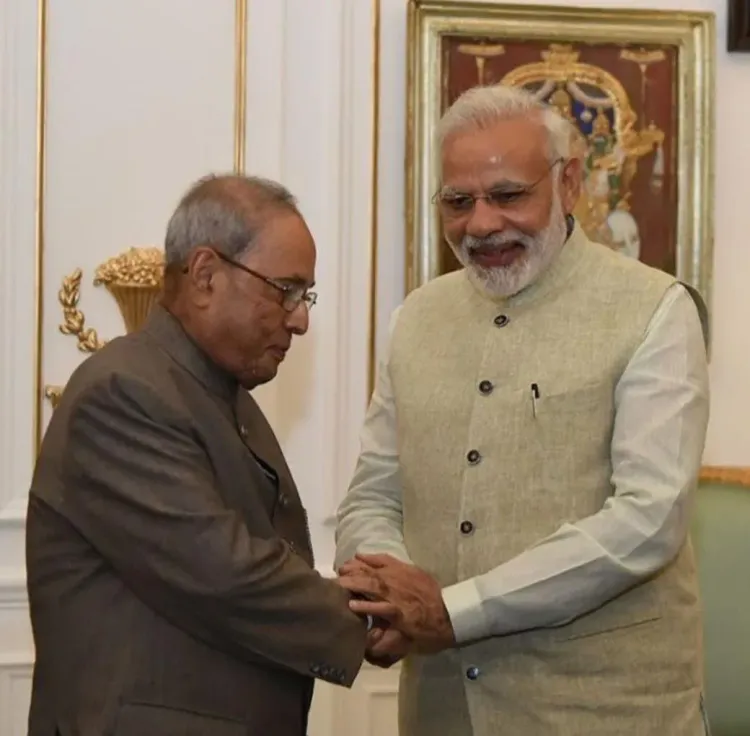
Sharmistha Mukherjee described a meeting between Prime Minister Modi and her father at Rashtrapati Bhavan shortly after the 2014 election results were declared. During the exchange, Pranab Mukherjee — then the 13th President of India — pressed Modi on his reading of the verdict.
'After the election results were out, Modiji came to meet Baba at Rashtrapati Bhavan. During the course of the conversation, Baba asked him about his analysis of the election. He replied that after three decades, a political party had achieved an absolute majority. Baba, then, in his typical professorial style, asked, "what else?" When Modiji kept quiet, Baba pointed out that 2014 was unique in the history of Lok Sabha elections, as it featured a declared new face as the prime ministerial candidate,' she wrote.
Sharmistha Mukherjee noted that her father and Modi came from 'different political ideologies' but shared 'an excellent rapport that, perhaps, is the hallmark of a true democracy.'
Why 2014 Was a Tectonic Shift
According to Sharmistha Mukherjee, the Bharatiya Janata Party (BJP)'s 2014 mandate was qualitatively different from previous general elections because the party had publicly declared Modi as its prime ministerial candidate before polling. She argued that the resulting victory amounted to a direct, people-driven choice — akin to a 'presidential election' — rather than a post-poll decision made by MPs or coalition partners.
She contrasted this with the tenures of Modi's predecessors. Dr Manmohan Singh, she wrote, 'was never a mass leader' and was chosen by then Congress President Sonia Gandhi. She also noted that two former Prime Ministers — P.V. Narasimha Rao and H.D. Deve Gowda — were not even Members of Parliament when they assumed office. 'Simply put, it was senior politicians choosing the Prime Minister,' she wrote.
Modi's Entry Into National Politics
Sharmistha Mukherjee also highlighted that 2014 was Modi's first Lok Sabha election, making his entry into Parliament House as Prime Minister 'unprecedented.' She recalled his gesture of doing pranam on the steps of the old Parliament building as 'an understandably emotional gesture that touched the hearts of millions of Indians.'
She added that, prior to 2014, Modi had built his reputation during his long tenure as Chief Minister of Gujarat but was relatively new to national politics.
The BJP's Electoral Machine and 'Brand Modi'
Reflecting on the party's continued success, Sharmistha Mukherjee wrote that no election victory is 'mono-causal.' She credited the BJP's grassroot organisation, community outreach, and willingness to course-correct as factors behind its electoral dominance. She described the party as 'an election-winning juggernaut — and currently, it seems unstoppable.'
She also shared an anecdote from West Bengal's recently concluded Assembly election, recounting that friends who intended to vote for the BJP would say they were voting for 'Modi' — even when reminded it was a state election. Their response, she wrote, was: 'oi ek-i byapar (it's the same thing).'
Sharmistha's Assessment of Modi's Legacy
Sharmistha Mukherjee described Prime Minister Modi as 'not only the longest continuously serving elected Prime Minister of India' but also 'perhaps, one of the strongest leaders the country has seen since Independence.' She attributed part of his appeal to his image as someone who 'rose from the ranks through sheer merit and hard work, without any trappings of dynastic entitlements.'
She concluded on a measured note: 'One may disagree with many of his policies or style of functioning, which is perfectly fine in a democracy, but one cannot simply deny his charisma, or his connection to the Indian electorate as an inspiration for an aspirational India.' The mandate, she wrote, was reaffirmed in 2019 and again in 2024 — and with it comes, in her words, 'greater responsibility.'
Point of View
And the 2014 mandate — however sweeping — was still a vote for the BJP, not a presidential ballot for Modi personally. Pranab Mukherjee's observation is analytically interesting, but conflating electoral personalisation with direct election risks muddying constitutional understanding. What the piece does illuminate, accurately, is how thoroughly Modi reshaped the grammar of Indian electoral politics — a shift whose full institutional consequences are still playing out.
NationPress
25 Sept 2026
Frequently Asked Questions
What did Pranab Mukherjee say about PM Modi and the 2014 election?
According to his daughter Sharmistha Mukherjee, former President Pranab Mukherjee told PM Modi at Rashtrapati Bhavan that the 2014 Lok Sabha election was historically unique because it featured a publicly declared prime ministerial candidate who received a direct popular mandate — making Modi, in his view, India's first 'directly elected' Prime Minister in the true sense.
Where did Sharmistha Mukherjee publish her recollections about her father?
Sharmistha Mukherjee published the article in The Indian Express under the title 'How my father Pranab Mukherjee read 2014 and the PM.' The piece appeared on 27 June.
How did Sharmistha Mukherjee compare Modi to previous Prime Ministers?
She noted that Dr Manmohan Singh was never a mass leader and was chosen by Congress President Sonia Gandhi, while P.V. Narasimha Rao and H.D. Deve Gowda were not even Members of Parliament when they became Prime Minister. By contrast, she argued, Modi's 2014 mandate came directly from voters who had been asked to choose him by name before polling.
What makes the 2014 Lok Sabha election historically significant according to this account?
According to Sharmistha Mukherjee's account of her father's analysis, 2014 was the first Lok Sabha election in which a party publicly declared a prime ministerial candidate before voting, and the resulting landslide was seen as a direct popular mandate for that individual — a departure from post-poll selections or coalition arithmetic that had determined previous PM choices.
How does Sharmistha Mukherjee assess Modi's political standing today?
She describes PM Modi as 'not only the longest continuously serving elected Prime Minister of India' but also 'perhaps, one of the strongest leaders the country has seen since Independence.' She adds that while policy disagreement is legitimate in a democracy, his charisma and connect with the electorate — reflected in 2019 and 2024 — cannot be denied.