Shekhawat Hails Modi as Longest-Serving Elected PM
Synopsis
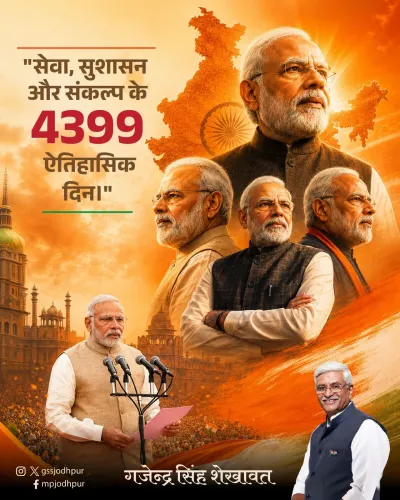
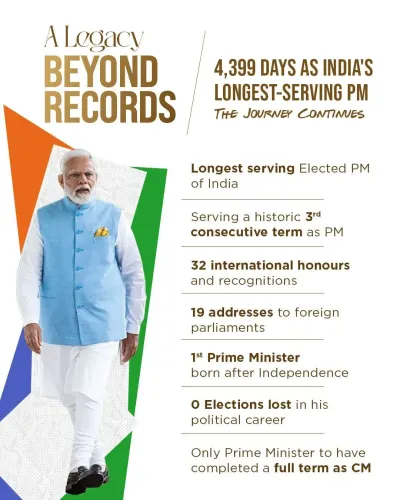
Union Culture and Tourism Minister Gajendra Singh Shekhawat praised Prime Minister Narendra Modi on 10 June 2026 for becoming India's longest-serving elected Prime Minister, calling it a matter of national pride and inspiration, as Modi completes over 12 years across three consecutive electoral mandates since 2014.
Key Takeaways
Gajendra Singh Shekhawat , Union Minister of Culture and Tourism, posted a tribute to PM Narendra Modi on 10 June 2026 .
The post describes Modi becoming India's 'longest-serving elected Prime Minister' as a matter of 'pride and inspiration.' Narendra Modi has served as Prime Minister continuously since May 2014 , winning general elections in 2014 , 2019 , and 2024 .
The tribute was part of a coordinated BJP social media push under the hashtag #LongestServingElectedPMModi .
Shekhawat is a senior BJP leader and Lok Sabha MP from Jodhpur, Rajasthan .
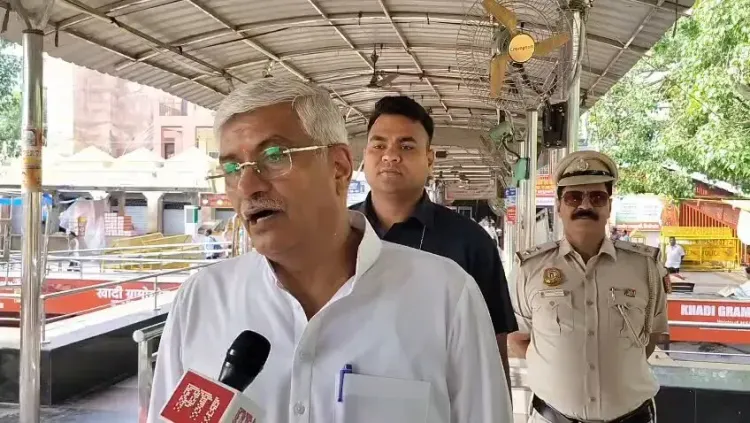
Union Culture and Tourism Minister Gajendra Singh Shekhawat on Wednesday, 10 June 2026, took to X to congratulate Prime Minister Narendra Modi on becoming India's longest-serving elected Prime Minister, calling the milestone a matter of 'pride and inspiration' for the nation.
Context
Shekhawat's post, written in Hindi, states: 'Mananiya Pradhan Mantri Shri Narendra Modi ji ka desh ke sabse lambe samay tak seva dene wale nirvachit Pradhan Mantri banna garv va prerana ka vishay hai' — ('It is a matter of pride and inspiration that honourable Prime Minister Shri Narendra Modi has become the longest-serving elected Prime Minister of the country.')
The tribute was accompanied by a video and carried the hashtag #LongestServingElectedPMModi, which was simultaneously trending among senior BJP leaders and party supporters on the platform.
Policy Backdrop
Narendra Modi first assumed office as Prime Minister in May 2014 following the BJP-led National Democratic Alliance's victory in the general election. He was re-elected for a second consecutive term in 2019 and a third term after the 2024 general election, making him the only Prime Minister in India's post-Independence history to win three successive Lok Sabha mandates.
The milestone of longest-serving elected Prime Minister distinguishes Modi's record from that of Jawaharlal Nehru, who served as the country's first Prime Minister for over 16 years but in a different constitutional and electoral context. The BJP has consistently framed Modi's consecutive electoral victories as a popular endorsement of stable, long-term governance.
Stakeholders and Impact
The tribute from Shekhawat, a senior BJP leader and Lok Sabha MP from Jodhpur, Rajasthan, reflects a coordinated messaging effort by the party's Union Cabinet members to amplify the milestone. Such public affirmations serve both as internal party consolidation signals and as outreach to the broader BJP voter base.
For BJP supporters and the wider Indian electorate, the occasion is being presented as a democratic achievement — a record built not through appointment or incumbency but through three successive popular mandates spanning more than a decade of continuous governance.
What's Next
Further statements from other Union Ministers and BJP state leaders are expected in the coming days as the party continues to mark the milestone across social media platforms and public events. Official communications around the completion of Modi's current term and associated governance reviews are also anticipated, which could provide additional context to the record being celebrated.
Point of View
Party-wide effort to cement the 'longest-serving elected PM' narrative as a democratic credential rather than a mere administrative statistic — distinguishing Modi's record on the basis of repeated popular mandates. The coordinated hashtag campaign signals that the BJP intends to deploy this milestone as a political asset heading into future electoral cycles. For a party that has built its identity around strong, centralised leadership, the record reinforces the core message of stability and continuity that has anchored BJP campaigns since 2014. The framing also subtly positions the opposition as unable to offer a comparable democratic track record at the national level.
NationPress
26 Oct 2026
Frequently Asked Questions
Why is Narendra Modi called the longest-serving elected Prime Minister of India?
Narendra Modi has served as Prime Minister continuously since May 2014, having won three successive general elections in 2014, 2019, and 2024, making him the longest-serving Prime Minister to have been elected to consecutive terms in India's post-Independence history.
What did Gajendra Singh Shekhawat say about PM Modi on 10 June 2026?
Shekhawat posted on X that PM Modi becoming the country's longest-serving elected Prime Minister is 'a matter of pride and inspiration,' joining a broader BJP tribute campaign under the hashtag #LongestServingElectedPMModi.
Who is Gajendra Singh Shekhawat?
Gajendra Singh Shekhawat is India's Union Minister of Culture and Tourism, a senior BJP leader, and the Lok Sabha Member of Parliament from Jodhpur, Rajasthan.
How many terms has Narendra Modi served as Prime Minister?
Narendra Modi has served three consecutive terms as Prime Minister of India, first elected in 2014, re-elected in 2019, and elected for a third term in 2024.
What is the significance of the hashtag #LongestServingElectedPMModi?
The hashtag was used by BJP leaders and supporters on 10 June 2026 to mark the milestone of PM Modi becoming India's longest-serving elected Prime Minister, reflecting a coordinated party messaging effort on social media.