Dr. Jitendra Singh Hails Modi as Longest-Serving Elected PM
Synopsis
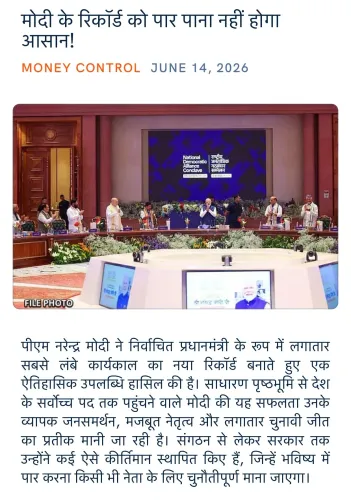
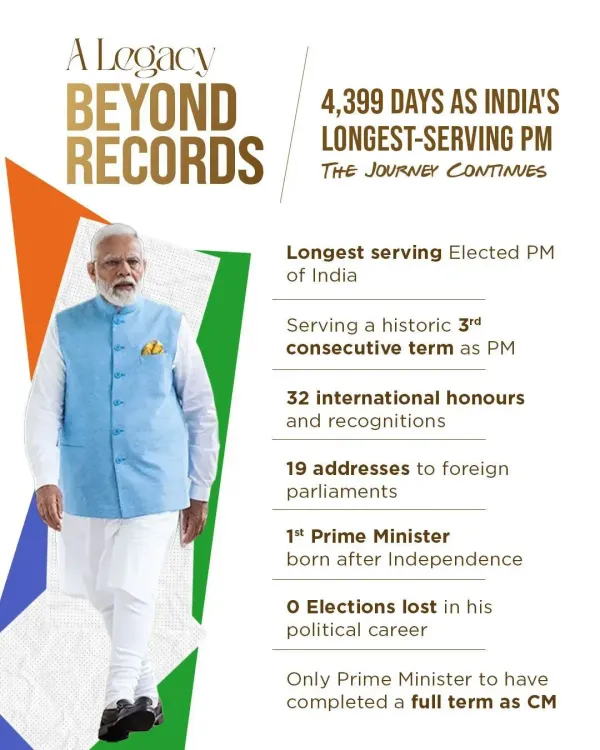
Union Minister Dr. Jitendra Singh on June 10, 2026, hailed PM Narendra Modi as India's longest-serving elected Prime Minister at 4,399 days, citing 12 years of governance spanning farmer welfare, MSME support, women's empowerment and the Viksit Bharat 2047 vision.
Key Takeaways
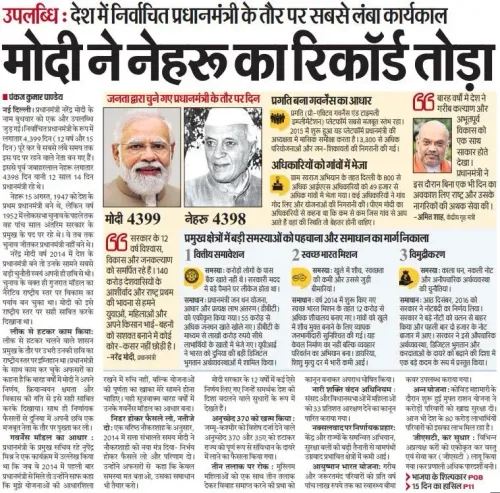
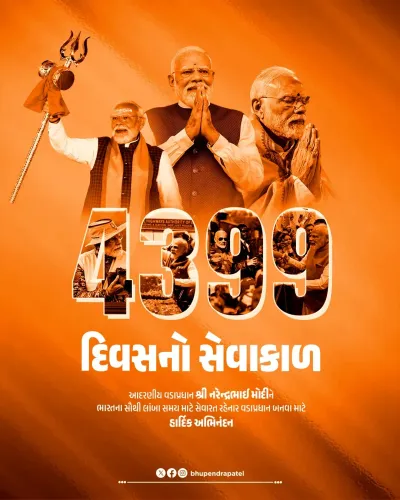
PM Narendra Modi has crossed 4,399 days in office, making him the longest-serving elected Prime Minister in post-independence India.
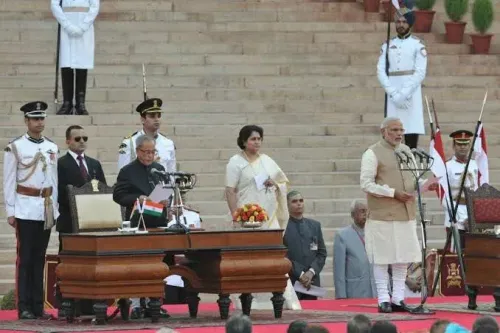
Modi was first sworn in on 26 May 2014 and has since won re-election in 2019 and 2024 .
Jitendra Singh attributed the milestone to transformative governance covering farmers, MSMEs, women, youth, and the middle class .
The tribute invoked the Viksit Bharat @2047 vision, the government's framework to achieve developed-nation status by India's independence centenary.
Outcome reports on schemes such as PM-KISAN , Startup India , and PM Mudra are expected to feature in the 2026-27 Budget cycle debates.
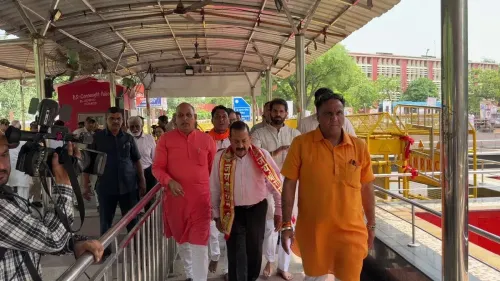
Union Science and Technology Minister Dr. Jitendra Singh on Wednesday, June 10, 2026, marked what he called a historic milestone, noting that Prime Minister Narendra Modi has become the longest-serving elected Prime Minister of India, with the count standing at 4,399 days and counting.
Context
Narendra Modi was first sworn in as Prime Minister on 26 May 2014, following the Bharatiya Janata Party's decisive general election victory. He was re-elected in 2019 and again in 2024, making his continuous tenure the longest among elected Prime Ministers in post-independence India. Dr. Jitendra Singh's post described this as '12 years of transformative governance,' highlighting a sustained period of uninterrupted leadership under a single elected leader.
The milestone distinguishes Modi from his predecessors in that his tenure represents consecutive elected terms rather than a cumulative count across non-consecutive periods. Earlier Prime Ministers such as Jawaharlal Nehru served longer in absolute years, but Nehru's tenure began in the pre-republic era and spanned a different constitutional context.
Policy Backdrop
Dr. Singh's post anchored the tribute in a set of policy priorities — 'empowering farmers, boosting entrepreneurs, uplifting women, strengthening MSMEs, and creating opportunities for youth and the middle class' — that broadly correspond to flagship programmes introduced after 2014. These include PM-KISAN for farmer income support, Startup India and PM Mudra for entrepreneurship, and a range of women-centric welfare delivery platforms.
The post also invoked the #ViksitBharat2047 hashtag, referencing the government's long-horizon vision to achieve developed-nation status by 2047, the centenary of India's independence. The Viksit Bharat @2047 framework was formally articulated in the 2022 Independence Day address and has since been embedded in planning documents across ministries. Modi's extended tenure is being presented by his government as a period of policy continuity that underpins this multi-decade ambition.
Stakeholders and Impact
The constituencies cited in Dr. Singh's tribute — farmers, women, MSMEs, youth, and the middle class — collectively represent the broadest cross-section of India's electorate and workforce. Government data on schemes such as PM-KISAN, which targets over 11 crore farmer beneficiaries, and PM Mudra, which has disbursed loans to small entrepreneurs across the country, are expected to be central to the narrative of outcomes in the ongoing 2026-27 Union Budget cycle.
The reference to 'global recognition' in the post points to India's elevated international profile during this period, including its G20 Presidency in 2023 and growing engagement in multilateral forums. For the science and technology portfolio that Dr. Singh himself oversees, the decade has seen increased public investment in space, deep-tech, and the National Research Foundation.
What's Next
With the 2026-27 Budget cycle underway, outcome reports on flagship welfare and economic schemes are expected to be released and debated in Parliament. The government is also expected to advance the next phase of Viksit Bharat implementation roadmaps, which will serve as benchmarks for measuring the policy legacy attributed to this tenure. Parliamentary debates on scheme delivery, fiscal consolidation, and human-capital targets are likely to intensify as the 2047 horizon draws closer scrutiny from opposition benches and independent policy analysts.
Point of View
Making any future change of leadership implicitly a disruption to that arc. The framing of constituencies — farmers, MSMEs, women, youth — mirrors the electoral coalition the BJP has sought to consolidate since 2014, suggesting this tribute serves both commemorative and political-communication functions. Coming from a minister who sits in the PMO, the post also signals internal government cohesion ahead of what is expected to be a politically active budget and parliamentary season.
NationPress
24 Oct 2026
Frequently Asked Questions
Who is the longest-serving elected Prime Minister of India?
As of June 2026, Narendra Modi is the longest-serving elected Prime Minister of India, having served continuously since 26 May 2014 across three consecutive terms.
How many days has Narendra Modi been Prime Minister?
According to the post by Union Minister Dr. Jitendra Singh , PM Modi had completed 4,399 days in office as of June 10, 2026 .
What is Viksit Bharat 2047?
Viksit Bharat @2047 is the Indian government's vision to achieve developed-nation status by 2047 , the centenary of India's independence. It was formally articulated in the 2022 Independence Day address and spans targets in infrastructure, manufacturing and human-capital development.
What did Dr. Jitendra Singh say about PM Modi's tenure?
Dr. Jitendra Singh described Modi's tenure as ' 12 years of transformative governance ' that empowered farmers, boosted entrepreneurs, uplifted women, strengthened MSMEs and created opportunities for youth and the middle class.
When did Narendra Modi first become Prime Minister of India?
Narendra Modi was first sworn in as Prime Minister of India on 26 May 2014 , following the BJP's victory in the general elections that year.