Rajnath Singh hails Modi as India's longest-serving elected PM
Synopsis
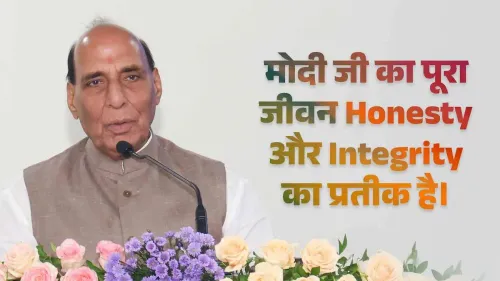
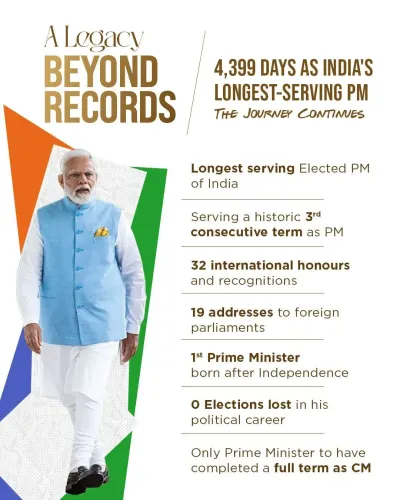
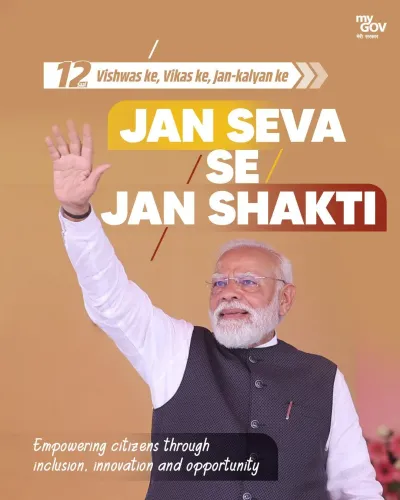
Union Defence Minister Rajnath Singh on June 10, 2026, hailed PM Narendra Modi for completing 4,399 days in office, calling him India's longest-serving elected Prime Minister and crediting his three consecutive terms with transformative governance and a civilisational reawakening.
Key Takeaways
Rajnath Singh congratulated PM Modi on June 10, 2026 , for completing 4,399 days as Prime Minister.
Modi is described as India's longest-serving elected Prime Minister, a record across three consecutive terms since May 2014 .
Singh characterised Modi as a 'tireless Karmayogi' guided by a 'Nation First' principle.
The tribute frames the milestone as evidence of sustained public trust and inclusive development.
The Viksit Bharat vision — a developed India by 2047 — is cited as the forward-looking policy anchor of Modi 's continued leadership.
Modi is the first Prime Minister since Jawaharlal Nehru to serve three back-to-back terms.
Union Defence Minister Rajnath Singh on Wednesday, June 10, 2026, congratulated Prime Minister Narendra Modi on completing 4,399 days in office, describing the milestone as making him the longest-serving elected Prime Minister in India's history.
Context
Narendra Modi was first sworn in as Prime Minister on 26 May 2014 after the BJP-led NDA secured a majority in the Lok Sabha elections that year. He was re-elected for a second term in May 2019 and began a third consecutive term in June 2024 — the first Prime Minister to achieve three back-to-back terms since Jawaharlal Nehru. The accumulation of those three terms has now crossed the milestone that Rajnath Singh marked in his post.
In his message, Singh described Modi as 'a tireless Karmayogi guided by the principle of Nation First,' crediting his tenure with 'unwavering dedication to India, steadfast commitment to the welfare of its people, and transformative leadership in service of the nation.'
Policy Backdrop
Across his three terms, PM Modi has anchored governance around a set of recurring themes: digital public infrastructure, defence indigenisation, and an assertive foreign policy that has sought to raise India's profile in multilateral forums. The Viksit Bharat vision — a national goal of achieving developed-nation status by 2047 — has become the overarching framework under which current policy priorities are articulated.
Rajnath Singh, himself a senior figure in the BJP and a former Union Home Minister and former Chief Minister of Uttar Pradesh, noted that 'over the past twelve years, India has made remarkable progress in development and global leadership, while also experiencing a civilisational reawakening that has made the nation more confident, self-assured, and rooted in its heritage.' The framing ties governance outcomes to a broader cultural narrative that the party has consistently advanced.
Stakeholders and Impact
The tribute reflects the BJP's recurring practice of marking leadership milestones as public referendums on its governance model. Singh characterised the achievement as 'a testament to the enduring trust reposed in his leadership by the people of India and his relentless pursuit of inclusive development and good governance.'
For ordinary citizens, the milestone lands amid ongoing implementation of flagship schemes spanning rural infrastructure, housing, and manufacturing incentives — all positioned under the Viksit Bharat umbrella. For the BJP's political base, longevity in office is presented as validation of the party's development agenda across successive electoral mandates.
What's Next
With India on a trajectory toward the 2047 centenary of independence, the Viksit Bharat roadmap will increasingly shape Union Budget priorities and scheme rollouts. State assembly elections scheduled through 2027 are likely to see the party deploy the longevity milestone as a central campaign argument. Whether fresh policy announcements are tied to this occasion remains to be seen, but the messaging signals that the BJP intends to keep the narrative of sustained, mandate-backed governance at the centre of its political communication.
Point of View
The BJP signals that it intends to campaign on governance longevity as an asset ahead of state elections through 2027. The invocation of 'Viksit Bharat' ties the backward-looking milestone to a forward-looking policy promise, giving the tribute an agenda-setting dimension beyond mere celebration. For a party that has made leadership personality central to its electoral identity, marking 4,399 days in office reinforces the argument that continuity itself is a form of policy delivery.
NationPress
26 Oct 2026
Frequently Asked Questions
How many days has Narendra Modi served as Prime Minister of India?
As of June 10, 2026, Narendra Modi has completed 4,399 days as Prime Minister, making him the longest-serving elected Prime Minister in India's history according to Rajnath Singh's post.
Who is India's longest-serving elected Prime Minister?
Narendra Modi is described as India's longest-serving elected Prime Minister, having served three consecutive terms beginning in May 2014, surpassing the record previously associated with Jawaharlal Nehru.
What is Viksit Bharat?
Viksit Bharat is PM Modi's national vision for India to achieve developed-nation status by 2047, the centenary of independence, encompassing economic, social and technological goals.
Why did Rajnath Singh congratulate Narendra Modi in June 2026?
Rajnath Singh congratulated Modi on completing 4,399 days in office, a milestone that makes him the longest-serving elected Prime Minister in India's history across three consecutive terms.
Has any other Indian Prime Minister served three consecutive terms?
Jawaharlal Nehru is the only other Prime Minister to have served multiple consecutive terms; Modi is the first since Nehru to achieve three back-to-back terms following the 2024 general elections.