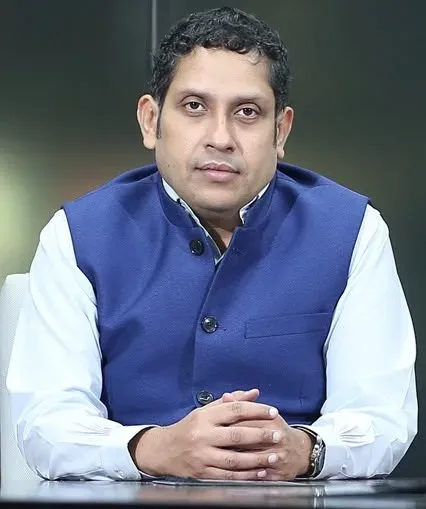
Praveen Chakravarty set for unopposed Rajya Sabha win from Tamil Nadu
Synopsis
In a telling sign of Tamil Nadu's new political order, Congress candidate Praveen Chakravarty is headed to the Rajya Sabha unopposed — a seat the ruling TVK could have claimed for itself but chose to yield. The move cements the Congress-TVK axis and gives the national party its most significant dual foothold in Tamil Nadu in decades: two Cabinet ministers and now an Upper House MP.
Key Takeaways
Praveen Chakravarty is set to be elected unopposed to the Rajya Sabha from Tamil Nadu on 18 June .
All 13 independent rivals face likely rejection at scrutiny on 9 June for lacking Legislative Assembly proposers.
The withdrawal deadline is 11 June , after which Chakravarty is expected to be formally declared elected.
TVK , though entitled to the seat, yielded it to Congress as a coalition-building gesture under Chief Minister C.
Congress already holds two Cabinet posts in the Vijay government — its first executive role in Tamil Nadu in several decades.
The development marks Congress's most consequential dual presence — state Cabinet and Upper House — in Tamil Nadu in recent memory.
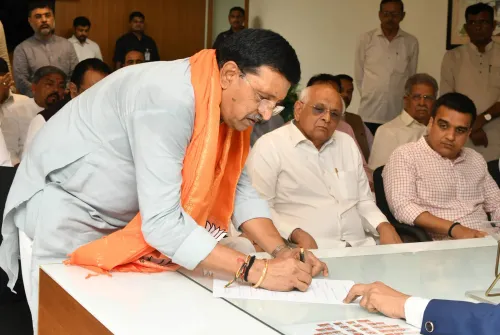
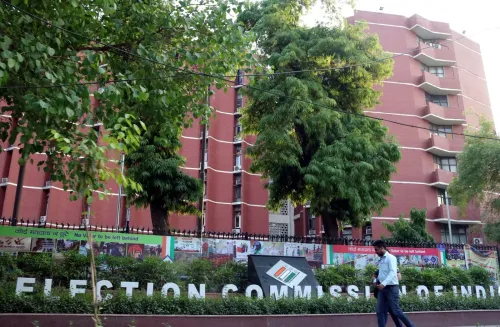
Congress candidate Praveen Chakravarty is set to be elected unopposed to the Rajya Sabha from Tamil Nadu, in what marks a significant consolidation of the party's political standing in the state following a sweeping post-election realignment. The Election Commission of India (ECI) had scheduled a by-election to the vacant Upper House seat for 18 June, with the nomination window running from 1 June and closing on Monday, 8 June.
A total of 14 candidates filed nomination papers, with Chakravarty being the only nominee backed by the ruling alliance. The remaining 13 aspirants entered the contest as independents.
Why the Independents Are Unlikely to Survive Scrutiny
Election officials indicated that the nominations of all 13 independent candidates are unlikely to clear scrutiny, as none was proposed by a sitting member of the Tamil Nadu Legislative Assembly — a mandatory procedural requirement for Rajya Sabha elections. Scrutiny of nominations was scheduled for Tuesday, 9 June. Once scrutiny concludes and the withdrawal deadline of 11 June passes, Chakravarty is expected to be formally declared elected unopposed.
A Dramatic Alliance Shift Behind the Seat
The political significance of this development extends well beyond a routine Upper House election. Following the Tamil Nadu Assembly elections, the Indian National Congress (INC) ended its decades-long alliance with the Dravida Munnetra Kazhagam (DMK) and aligned with Chief Minister C. Joseph Vijay's Tamilaga Vettri Kazhagam (TVK)-led government. As part of the new arrangement, Congress secured two ministerial berths in the Vijay Cabinet — its first direct role in Tamil Nadu's state administration in several decades.
Senior Congress leaders S. Rajesh Kumar and P. Viswanathan were inducted into the Cabinet under this agreement.
TVK's Gesture to Strengthen the Coalition
The Rajya Sabha seat had become available after the TVK, despite being entitled to nominate a candidate of its own, chose to cede the berth to Congress. The move was widely interpreted as a deliberate gesture by Chief Minister Vijay to deepen cooperation with the national party and cement the coalition's cohesion ahead of future electoral contests.
What This Means for Congress in Tamil Nadu
With Chakravarty's imminent election, the Congress will hold a dual foothold in Tamil Nadu's political structure — representation in the state Cabinet through two ministers and a voice in Parliament's Upper House through the Rajya Sabha seat. This dual presence considerably enhances the party's leverage within the ruling alliance and marks its most consequential return to Tamil Nadu politics in recent memory. Notably, this is the first time Congress will hold both executive and legislative upper-house representation in the state simultaneously in several decades.
All eyes now turn to the formal declaration of results following the 11 June withdrawal deadline, which is expected to confirm Chakravarty's election without a contest.
Point of View
This is a rare instance of gaining ground without a direct electoral contest — a product of alliance arithmetic, not vote share. The deeper question is whether this dual foothold translates into organisational revival in Tamil Nadu or remains a top-down arrangement contingent on TVK's goodwill. Congress's history in the state suggests the latter risk is real.
NationPress
24 Sept 2026
Frequently Asked Questions
Who is Praveen Chakravarty and why is he set to enter the Rajya Sabha?
Praveen Chakravarty is a Congress candidate nominated for the vacant Rajya Sabha seat from Tamil Nadu. He is set to be elected unopposed on 18 June because all 13 independent rivals who filed nominations lack the mandatory Legislative Assembly proposer, making their nominations likely to be rejected at scrutiny.
Why did TVK give up the Rajya Sabha seat to Congress?
The Tamilaga Vettri Kazhagam (TVK), though entitled to nominate its own candidate, chose to cede the seat to Congress as a coalition-building gesture. The move was seen as Chief Minister C. Joseph Vijay's effort to deepen cooperation with Congress following the formation of their coalition government.
How has Congress's position in Tamil Nadu changed after the Assembly elections?
Congress ended its decades-long alliance with the DMK and joined the TVK-led government after the Assembly elections. It secured two Cabinet ministerial berths — held by S. Rajesh Kumar and P. Viswanathan — marking its return to direct executive power in Tamil Nadu for the first time in several decades.
When will Praveen Chakravarty be officially declared elected?
The scrutiny of nominations is scheduled for 9 June, and the deadline for withdrawal of nominations is 11 June. Chakravarty is expected to be formally declared elected unopposed after that date, ahead of the notified by-election date of 18 June.
What is the significance of Congress holding both Cabinet posts and a Rajya Sabha seat in Tamil Nadu?
It gives Congress a dual foothold in Tamil Nadu's political structure for the first time in several decades — direct executive influence through two Cabinet ministers and a legislative voice in Parliament's Upper House. This significantly enhances the party's leverage within the TVK-led ruling alliance.