Is the Rajasthan Refinery Agreement Beneficial to the State?
Synopsis
In a heated exchange, Minister Jogaram Patel challenges Ashok Gehlot's remarks on the Rajasthan Refinery project, asserting that the Congress-era agreement was detrimental while the BJP’s revision is beneficial. As tensions rise, the fate of the refinery and its impact on Rajasthan's economy hangs in the balance.
Key Takeaways
Revised agreement under BJP aims to safeguard Rajasthan's interests.
Former CM Gehlot claims the project symbolizes state development.
The refinery's costs have escalated significantly since its inception.
Nearly 85% of the project was completed between 2018 and 2023.
Calls for inauguration to commence commercial production are growing.
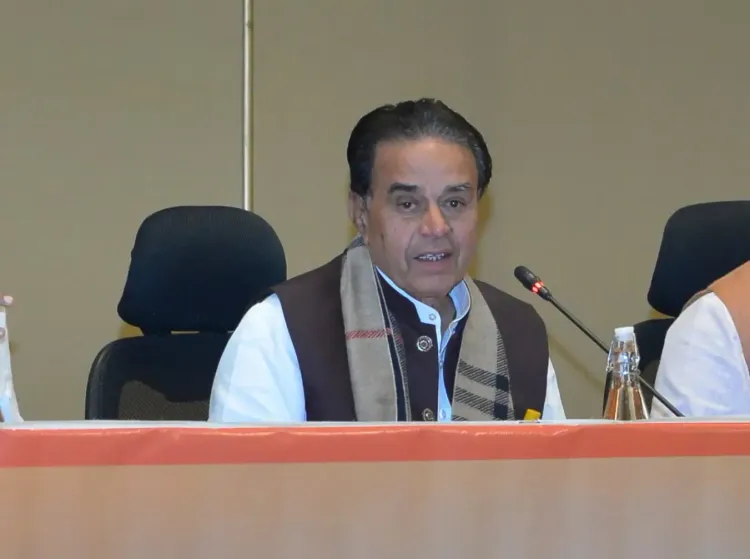
Jaipur, Dec 30 (NationPress) In a recent statement, Parliamentary Affairs Minister Jogaram Patel responded to comments made by former Chief Minister Ashok Gehlot regarding the Rajasthan Refinery project. Patel asserted that the agreement established during the Congress administration was detrimental to the state's interests, whereas the updated agreement under the BJP regime has effectively protected Rajasthan's rights and advantages.
During a press conference, Patel contended that Gehlot's remarks were merely attempts to attract media attention. He emphasized that if the original agreement with Hindustan Petroleum Corporation Limited (HPCL) had remained intact, the refinery would not have been established, nor would Rajasthan have reaped any significant rewards from it.
“Although land, water, and crude oil are assets of Rajasthan, the conditions of the previous agreement would have offered the state virtually no benefit,” Patel stated.
He explained that after a thorough review of the agreement in 2017, the then BJP-led government renegotiated a new Memorandum of Understanding with HPCL, ensuring the economic and strategic interests of Rajasthan were upheld.
Patel urged Gehlot to juxtapose the Congress-era MoU with the revised agreement before publicly commenting.
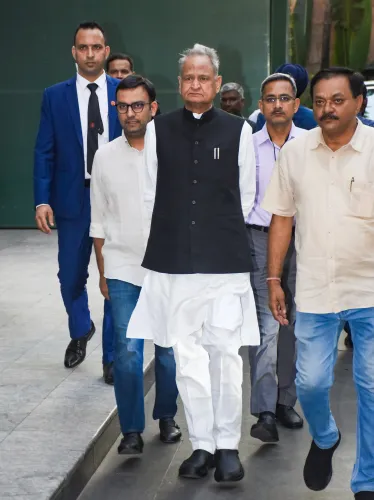
Previously, Gehlot had hailed the Pachpadra Refinery as a testament to Rajasthan’s growth and economic prospects. He mentioned that during his second term as Chief Minister, the Congress government made significant efforts to bring the refinery project to fruition.
Gehlot noted that HPCL was initially hesitant to establish the refinery, but after intervention from then Prime Minister Manmohan Singh and UPA Chairperson Sonia Gandhi, Rajasthan secured the project. He reminisced that the foundation stone was laid in Pachpadra in 2013, with Sonia Gandhi and then Union Petroleum Minister Veerappa Moily in attendance.
Gehlot accused the BJP of delaying the refinery project for nearly five years post-2013, resulting in a drastic increase in costs from an estimated Rs 37,000 crore to nearly Rs 1 lakh crore.
He stated that upon the Congress party regaining power in 2018, work on the refinery accelerated, with nearly 85% of the project completed between 2018 and 2023, despite challenges like the COVID-19 pandemic.
During a review meeting in Pachpadra in May 2023, HPCL had assured that commercial production would commence by December 2024, but this target was not met after the BJP returned to power. He also highlighted that the 2025 budget anticipated operational status by August, a deadline that has since been missed.
With reports indicating that the project is nearing completion, Gehlot has called on the state government to inaugurate the refinery soon so that commercial production can begin.
Point of View
The ongoing debate surrounding the Rajasthan Refinery project highlights a critical intersection of politics and economic development. The contrasting narratives from both the BJP and Congress underscore the significance of strategic agreements and their long-term impact on state prosperity. An unbiased view indicates that the truth lies in the balance of interests at play, making it imperative for stakeholders to prioritize the state's welfare over political rivalries.
NationPress
1 Oct 2026
Frequently Asked Questions
What is the Rajasthan Refinery project?
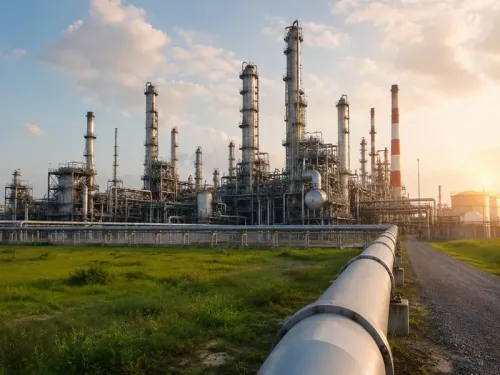
The Rajasthan Refinery project aims to establish a major oil refinery in Pachpadra, Rajasthan, to enhance the state's economic development and energy independence.
Why is there controversy over the refinery agreement?
The controversy stems from differing views between the BJP and Congress regarding the terms of the agreements signed during their respective tenures, with allegations of one being more beneficial than the other.
How has the BJP responded to the Congress government's agreement?
The BJP has criticized the original agreement signed by the Congress government, claiming it was not in Rajasthan's best interests and has since revised it to better protect the state's rights.
What are the expected benefits of the refinery for Rajasthan?
The refinery is expected to create jobs, boost local economies, and enhance energy security for the state through increased oil processing capabilities.
When is commercial production expected to begin?
According to HPCL, commercial production was initially expected to start by December 2024, but the timeline has faced delays.