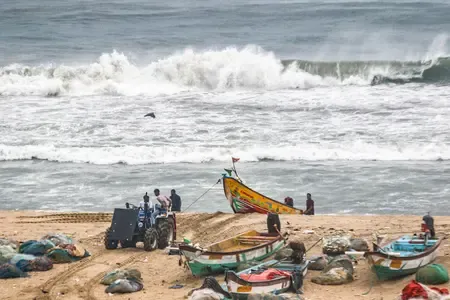
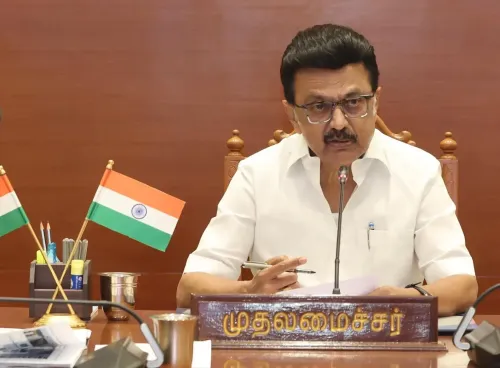
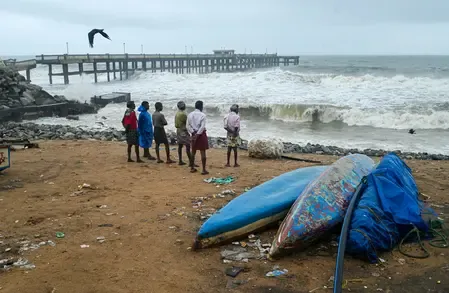
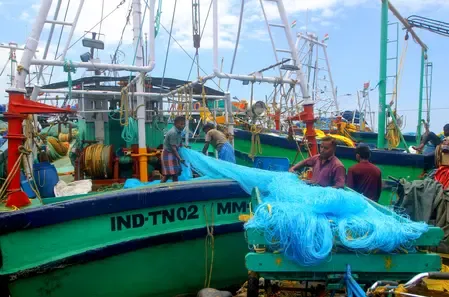
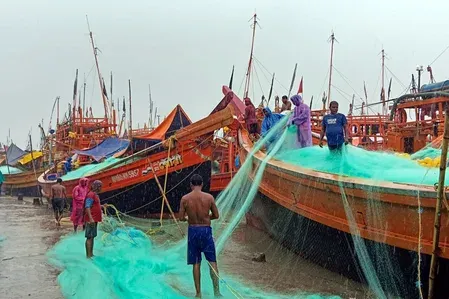
Rameswaram fishermen strike from Aug 31 over Sri Lanka arrests, boat seizures
Synopsis
Rameswaram's mechanised boat fishermen have set a 31 August deadline for Union and Tamil Nadu government action on Indian fishermen jailed in Sri Lanka — and threatened a hunger strike from 1 September if ignored. With boats seized, livelihoods lost, and no bilateral framework in sight, this decades-old Palk Bay dispute is once again heading toward a flashpoint.
Key Takeaways
Rameswaram mechanised boat fishermen have announced an indefinite strike from 31 August .
A continuous hunger strike at Thangachimadam is threatened from 1 September if governments do not act.
Key demands include the release of all Indian fishermen in Sri Lankan prisons and return of confiscated mechanised boats.
Fishermen also want compensation for boats not returned and resumption of India-Sri Lanka fishing community talks.
Thousands of workers in ancillary fishing activities face livelihood disruption if the strike proceeds.
Associations have urged the Union government to pursue diplomatic channels and the Tamil Nadu government to provide financial and legal support.
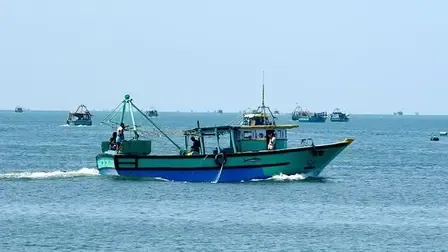
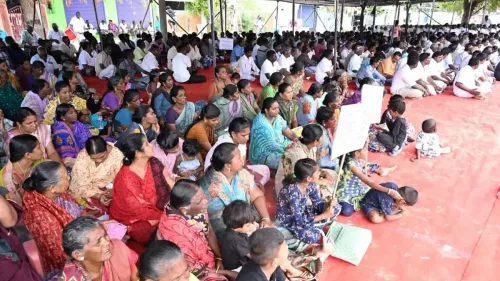
Mechanised boat fishermen in Rameswaram have announced an indefinite strike beginning 31 August, demanding urgent intervention from both the Union government and the Tamil Nadu government to secure the release of Indian fishermen held in Sri Lankan prisons and to resolve the long-running fishing dispute in the Palk Bay. Fishermen's associations warned that a continuous hunger strike will follow at Thangachimadam from 1 September if authorities fail to act.
Key Demands
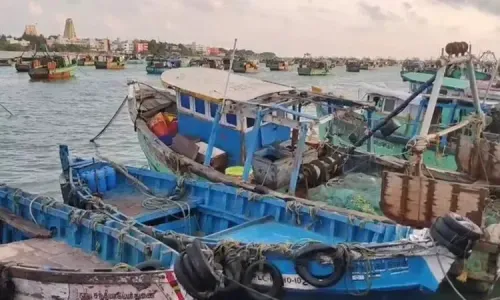
Sagayam, a representative of the Rameswaram Mechanised Boat Fishermen's Association, said the primary demand is the immediate release of all Indian fishermen currently lodged in Sri Lankan prisons. Associations have also called for the return of mechanised boats confiscated by Sri Lankan authorities during previous arrests, many of which have reportedly remained in custody for prolonged periods, leaving owners without a source of income.
Where vessel recovery is not possible, fishermen urged both governments to provide adequate compensation to affected boat owners. The associations further demanded the resumption of direct talks between Indian and Sri Lankan fishing communities, backed by diplomatic support from both governments.
The Palk Bay Dispute
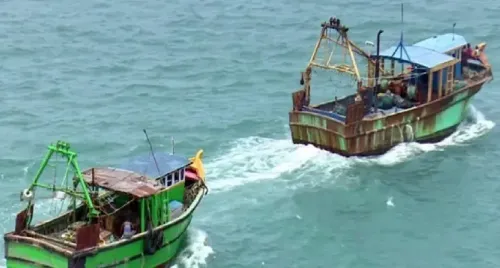
Fishermen from Rameswaram and other coastal districts of Tamil Nadu regularly face detention by the Sri Lankan Navy on allegations of crossing the International Maritime Boundary Line (IMBL) while fishing. The arrests are a recurring flashpoint in India-Sri Lanka relations, with coastal families bearing the economic and emotional brunt of each detention cycle.
This is not the first time Rameswaram fishermen have resorted to strikes to press for government action — similar protests have punctuated the dispute for over two decades, underscoring the absence of a durable bilateral resolution.
Impact on the Coastal Economy
Suspending mechanised fishing operations would ripple well beyond boat owners. Thousands of workers employed on mechanised vessels and in ancillary activities — fish processing, transport, and trade — depend on uninterrupted fishing for their livelihoods. Association representatives said repeated disruptions have pushed many coastal households into financial distress.
'Our families depend on this income to meet our daily needs and support our children's education,' fishermen said, according to association representatives, adding that the cumulative toll of repeated arrests and boat seizures has become unsustainable.
What the Governments Are Being Asked to Do
The associations urged the Union government to raise the matter with Sri Lanka through formal diplomatic channels and press for a bilateral framework that prevents further arrests. The Tamil Nadu government has been asked to extend financial and legal assistance to affected families in the interim.
Representatives stressed that only sustained bilateral negotiations — not ad hoc interventions — can provide lasting protection to fishermen operating out of Tamil Nadu's coastal districts. With the strike deadline approaching, the pressure is now on both New Delhi and Chennai to respond before 31 August.
Point of View
The absence of a bilateral fisheries agreement that both countries enforce consistently, remains unresolved after decades. Each arrest cycle extracts a disproportionate cost from some of India's most economically vulnerable coastal communities. The real question is not whether governments will intervene before 31 August, but whether that intervention will be diplomatic theatre or the start of a verifiable, time-bound negotiation framework with Sri Lanka.
NationPress
3 Oct 2026
Frequently Asked Questions
Why are Rameswaram fishermen going on strike from 31 August?
Rameswaram mechanised boat fishermen are striking from 31 August to demand the release of Indian fishermen imprisoned in Sri Lanka and the return of boats seized by Sri Lankan authorities. They are also pressing both the Union and Tamil Nadu governments to resume bilateral talks to resolve the long-running Palk Bay fishing dispute.
What is the Palk Bay fishing dispute between India and Sri Lanka?
The Palk Bay dispute centres on Indian fishermen — mainly from Tamil Nadu — who are regularly arrested by the Sri Lankan Navy for allegedly crossing the International Maritime Boundary Line while fishing. The arrests, which have recurred for decades, have led to fishermen being jailed and their boats confiscated, severely affecting coastal livelihoods.
What happens if the government does not respond before 31 August?
Fishermen's associations have warned that a continuous hunger strike will begin at Thangachimadam on 1 September if the Union and Tamil Nadu governments fail to initiate concrete measures. The indefinite work stoppage would also suspend mechanised fishing operations from Rameswaram.
Who is affected by the strike and the Sri Lanka arrests?
Directly affected are Indian fishermen in Sri Lankan custody, their families, and boat owners whose vessels have been confiscated. More broadly, thousands of workers in ancillary activities — fish processing, transport, and trade — dependent on mechanised fishing operations from Rameswaram also face income loss.
What are fishermen asking the Union and Tamil Nadu governments to do?
Fishermen want the Union government to raise the issue with Sri Lanka through diplomatic channels and push for a bilateral framework to prevent further arrests. They are asking the Tamil Nadu government to provide financial and legal assistance to affected families until a lasting resolution is reached.