Challenges Mount in Rawalpindi as Markets Remain Closed
Synopsis
Residents of Rawalpindi face mounting challenges as local markets remain closed due to security measures surrounding US-Iran negotiations. With essential goods scarce, the community struggles to meet daily needs.
Key Takeaways
Markets in Rawalpindi are closed due to security measures.
Residents are struggling to find essential goods.
Public transport is limited, leading to higher fares.
US-Iran negotiations did not yield an agreement.
Local business owners are adhering to district administration directives.
Islamabad, April 12 (NationPress) Residents in Rawalpindi, Pakistan, are grappling with numerous challenges, from acquiring food items to essential daily supplies, as local markets have been closed under directives from the district administration, according to reports from local media this Sunday.
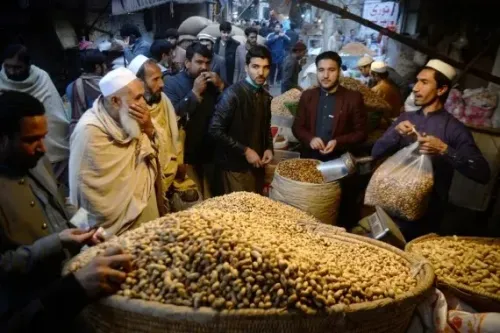
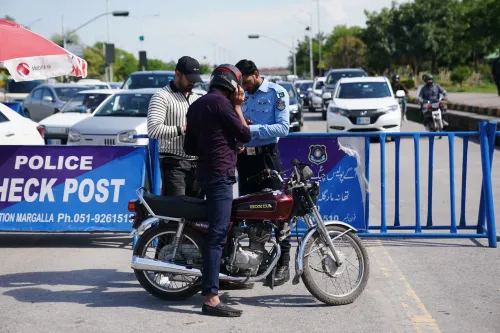
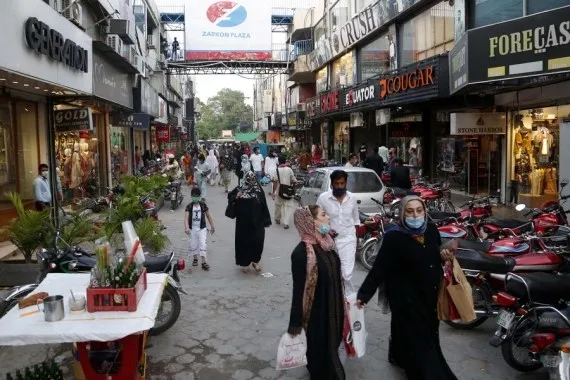
The closure of markets in Rawalpindi is attributed to security concerns arising from discussions between the US and Iran taking place in Islamabad. The areas most affected include Peshawar Road, Murree Road, and regions adjacent to Islamabad, as reported by Pakistan's prominent newspaper, Dawn. All businesses, including grocery stores, tandoors, and dairy shops, have been shuttered, with the primary grain market in Raja Bazaar also closed.
Shahid Ghafoor Paracha, a leader of the Rawalpindi Traders Association, indicated that shop owners were instructed to keep their establishments closed over the weekend in accordance with the instructions from the district administration.
Consequently, locals are struggling to purchase food as milk vendors and bakeries are closed. Resident Mohammad Qamar shared, "I had to find roti from the back lanes of Raja Bazaar since the tandoor was not open."
Another resident, Mohammad Riaz, noted that many vegetable stalls were also closed, making it difficult to prepare chapati at home due to low gas pressure affecting numerous areas in the city, as reported by Dawn.
Sajid Mehmood, a local, expressed frustration over the ongoing closure of shops, stating that it has become challenging to find vegetables and milk.
Moreover, residents are encountering difficulties with transportation, as public transport options are scarce. One passenger remarked, "Taxi and rickshaw drivers are taking advantage of the situation by charging exorbitant fares."
The market closures are a precautionary measure mandated by authorities, who have advised traders against opening shops due to security issues surrounding the US-Iran negotiations, which unfortunately did not lead to any agreement.
US Vice President J.D. Vance announced that the negotiations with Iran did not yield a consensus after more than 20 hours of discussions in Islamabad, stating that Tehran’s unwillingness to accept Washington’s terms poses more significant implications for Iran than for the United States.
“We have been negotiating for 21 hours and have engaged in several substantive discussions with Iranian representatives. However, the unfortunate news is that we have not reached an agreement,” Vance informed reporters during an early Sunday press conference.
He further clarified that US negotiators had explicitly outlined their stance, but Tehran rejected the proposed terms.
“We have made our red lines clear, outlining what we can accommodate and what we cannot. Despite our efforts to communicate this clearly, they have opted not to accept our demands,” he added.
Vance underscored that the primary goal of the US remains to prevent Iran from acquiring nuclear weapon capabilities.
“It is essential that we receive a definitive commitment from them to refrain from pursuing nuclear weapons and the means to quickly achieve such capabilities,” he emphasized.
He also mentioned that Washington seeks long-term guarantees from Tehran rather than temporary promises.
Point of View
The ongoing market closures in Rawalpindi highlight the intersection of local governance and international diplomacy, emphasizing the need for a balanced approach to security while considering the welfare of citizens.
NationPress
19 Sept 2026
Frequently Asked Questions
Why are the markets in Rawalpindi closed?
The markets in Rawalpindi are closed due to security concerns linked to ongoing negotiations between the US and Iran.
How long have the markets been shut?
The markets have been closed for the past two days as per the district administration's directives.
What essential goods are affected by the closures?
Essential goods such as milk, bread, and vegetables are particularly affected by the market closures.
Are public transport services operating normally?
Public transport services are limited, making it difficult for residents to commute.
What was the outcome of the US-Iran negotiations?
The negotiations between the US and Iran did not result in an agreement after extensive discussions.