Resilience of Indian Equities Amid Global Conflicts: A 15-Year Overview

Synopsis
Despite global conflicts, Indian equities have shown impressive resilience for the past 15 years. This report delves into how historical patterns reveal the stock market's recovery and the importance of staying invested during geopolitical tensions.
Key Takeaways
Indian equities have shown remarkable resilience over 15 years.
Market corrections occur during geopolitical tensions but are generally temporary.
Long-term growth is driven by fundamentals, not short-term volatility.
Diversification and staying invested are crucial strategies.
Historical patterns suggest recovery often follows downturns.
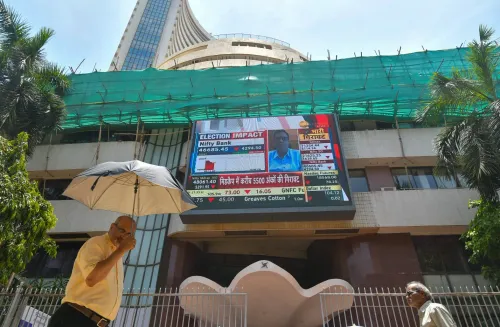
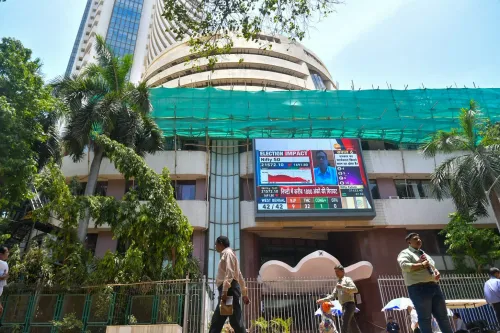
New Delhi, March 2 (NationPress) A recent report highlights that despite facing significant global conflicts, Indian equities have demonstrated remarkable resilience over the last 15 years. Historically, periods of heightened geopolitical tension lead to abrupt corrections in domestic equity indices — evident during events like Operation Sindoor and the 2011 unrest in the Middle East.
Even with notable downturns in the Indian stock market during these crises, Indian equities have repeatedly shown an ability to recover and maintain their strength following major global conflicts or wars, as noted in a report by Axis Asset Management.
Investors tend to panic and sell their stocks amidst ongoing conflicts, such as the current US–Israel–Iran tensions. However, it is crucial for them to recognize the historical performance of the Indian stock market during these geopolitical challenges.
In the wake of the US–Israel–Iran conflict, global equity markets have faced declines due to missile strikes. This trend has been consistent over the past 15 years; while wars and geopolitical strife often lead to short-lived market volatility, they do not typically cause prolonged underperformance in equities, especially when conflicts remain localized, according to the report.
The observed pattern reveals that downturns initiated by conflicts are generally brief and shallow, with long-term returns primarily driven by earnings growth, liquidity, and domestic demand.
It’s important to note that while the US–Israel–Iran conflict is a significant geopolitical occurrence, it is not an unprecedented situation for Indian investors.
“In the past 15 years, every major conflict has assessed market sentiment, and time and again, Indian equities have proven their resilience. Although markets may dip, currencies may falter, and oil prices might soar, fundamentals eventually prevail. For long-term investors, the most dependable approach during geopolitical turmoil remains consistent: stay invested, diversify wisely, and utilize downturns as opportunities to enhance existing holdings,” stated Ashish Gupta, CIO of Axis Mutual Fund.
Furthermore, investors who withdrew from equities during previous conflict-induced sell-offs often missed the subsequent recoveries, which frequently occur within a relatively brief timeframe.
Point of View
It's clear that the strength of Indian equities in the face of global conflicts reflects not only resilience but also the underlying fundamentals of the economy. Investors must remain focused on long-term growth rather than succumbing to short-term market fluctuations driven by geopolitical issues.
NationPress
4 Oct 2026
Frequently Asked Questions
How have Indian equities performed during global conflicts?
Indian equities have consistently shown resilience, rebounding after significant declines during global conflicts over the past 15 years.
What should investors do during geopolitical tensions?
Investors are advised to stay invested, diversify their portfolios, and use market downturns as opportunities to enhance their holdings.
What are the historical patterns of the Indian stock market during conflicts?
The market typically experiences short-term volatility but does not exhibit prolonged underperformance, especially in regional conflicts.
Who provided the insights on Indian equities' resilience?
The insights were provided by Axis Asset Management in their recent report.
What is the key takeaway for long-term investors?
The key takeaway is to remain focused on fundamentals and resist the urge to sell during times of geopolitical stress.