Rijiju hits back at Rahul Gandhi's 'smash patriarchy' remark

Synopsis
Kiren Rijiju turned Rahul Gandhi's 'smash patriarchy' call into a counter-offensive, demanding to know why Congress stays silent on Triple Talaq and minority women. The exchange lays bare a deeper BJP-Congress fault line: who gets to define women's empowerment in India, and on whose terms.
Key Takeaways
Kiren Rijiju on 24 August publicly challenged Rahul Gandhi 's 'smash patriarchy' statement via a post on X .
Rijiju accused the Congress of selectively targeting Hindu society while ignoring challenges faced by minority women, including Triple Talaq .
Gandhi had described India's 70 crore women as the country's biggest asset and criticised rigid patriarchal control in a recent address.
Rijiju cited ISRO , fighter pilots, Olympic medallists, Lakhpati Didis , and Drone Didis as proof of women's advancement under the current government.
The exchange is part of a recurring pattern of sharp political clashes between the two leaders on women's empowerment and social justice.
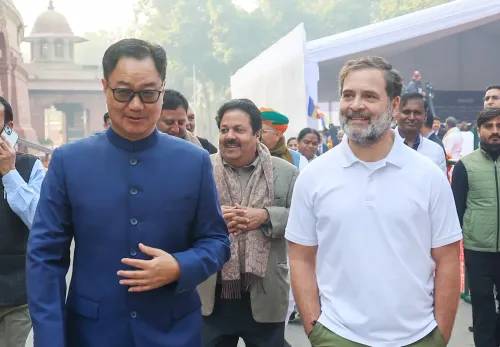
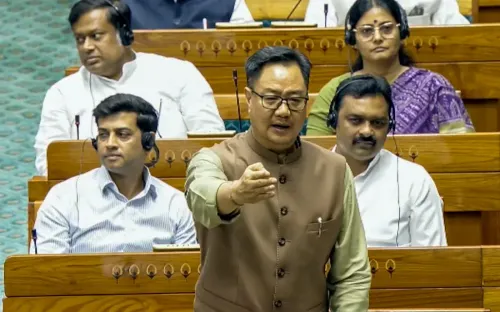
Union Parliamentary Affairs Minister Kiren Rijiju on Monday, 24 August launched a sharp counter to Leader of the Opposition Rahul Gandhi's call to 'smash patriarchy,' accusing the Indian National Congress (INC) of selectively targeting Hindu society while staying silent on challenges faced by women in minority communities. The exchange marks the latest flashpoint in an ongoing political battle over women's empowerment between the Bharatiya Janata Party (BJP) and the Congress.
What Rijiju Said
Reacting via a post on his X handle, Rijiju questioned the Congress's framing. “Congress says, ‘Smash patriarchy.’ Why always target only Hindus? What about minority women? What about Triple Talaq? Are Muslim girls not our sisters and betis?” he wrote.
The minister insisted that any credible stand for women must be universal. “If you truly stand with women, stand with every woman, every community, every time,” Rijiju said, arguing that selective campaigns risk fracturing society rather than uniting it.
Rijiju's Counter-Narrative on Women's Progress
Rijiju pointed to Indian women's achievements in elite fields as evidence of progress under the current dispensation. “Our Indian betis are leading in ISRO, flying fighter jets and winning medals at the Olympics,” he noted. He also cited government-backed initiatives — including Lakhpati Didis and Drone Didis — as concrete expressions of what he called Nari Shakti, or women's empowerment.
The minister cautioned against what he characterised as politically motivated narratives. “Do not undermine Indian betis to divide Indian society,” Rijiju wrote, framing the Congress's rhetoric as potentially divisive rather than constructive.
What Gandhi Had Said
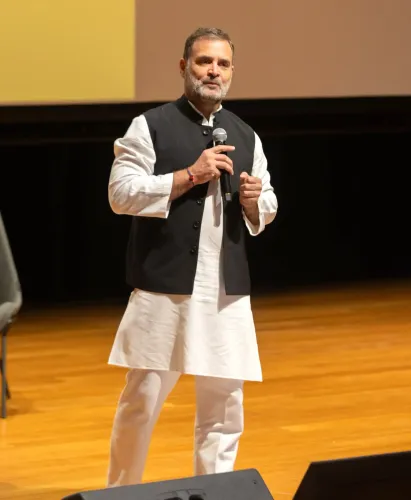
The remarks that triggered Rijiju's response came when Rahul Gandhi addressed a largely female audience, describing India's 70 crore women as the country's biggest asset. Gandhi criticised what he called rigid patriarchal control that, in his view, limits women's freedom of expression and opportunity — using the phrase 'smash patriarchy' as his rallying call.
A Pattern of Sharp Exchanges
Rijiju's rebuttal is not an isolated incident. The two leaders have traded pointed remarks previously on issues spanning women's reservation, social justice, and the framing of empowerment. This time, the BJP's counter-argument rests on the charge of selective outrage — a line the party has deployed consistently against the Congress on minority-related issues, including the now-abolished practice of Triple Talaq.
The debate is unlikely to cool quickly. With the Monsoon Session of Parliament concluded and political parties calibrating their messaging ahead of upcoming state polls, both sides have strong incentives to keep the women's empowerment narrative in the public eye — each on their own terms.
Point of View
But it lands because the Congress has rarely found a convincing answer to it. Gandhi's 'smash patriarchy' framing was aimed at mobilising women voters, yet by not pre-empting the minority-women question, it handed the BJP an easy deflection. The deeper issue — that patriarchal structures cut across all communities — gets lost in the political point-scoring. Neither side is engaging with the structural data on gender gaps in employment, safety, or political representation. That silence, from both benches, is the real story.
NationPress
10 Oct 2026
Frequently Asked Questions
What did Rahul Gandhi say about patriarchy?
Rahul Gandhi used the phrase 'smash patriarchy' while addressing a largely female audience, describing India's 70 crore women as the country's biggest asset and criticising rigid patriarchal control that he argued limits women's freedom and opportunity.
How did Kiren Rijiju respond to Rahul Gandhi's remark?
Rijiju posted on X accusing the Congress of targeting only Hindu society while ignoring issues such as Triple Talaq and the rights of minority women. He said genuine support for women must be inclusive of every community, not selective.
What is Triple Talaq and why did Rijiju raise it?
Triple Talaq was an Islamic divorce practice that allowed Muslim men to instantly dissolve a marriage by uttering 'talaq' three times; it was criminalised by the Modi government in 2019. Rijiju raised it to argue that the BJP — not the Congress — took concrete action for Muslim women.
What women's empowerment initiatives did Rijiju highlight?
Rijiju pointed to Indian women's roles at ISRO, in fighter aviation, and at the Olympics, and cited government programmes including Lakhpati Didis and Drone Didis as evidence of Nari Shakti under the current administration.
Is this the first time Rijiju and Gandhi have clashed on this issue?
No. The two leaders have exchanged sharp remarks previously on women's reservation, social justice, and empowerment framing. This latest exchange continues a recurring pattern of political confrontation between them on gender-related policy debates.