RSS Chief's Washington Address: India's Vision for Global Harmony
Synopsis
RSS General Secretary Dattatreya Hosabale told a Washington audience that India's ancient philosophy of oneness, ecological balance, and non-aggression offers a ready-made blueprint for a fractured world — a bold civilisational pitch that aligns with India's G20 Vasudhaiva Kutumbakam doctrine and its rising global soft power.
Key Takeaways
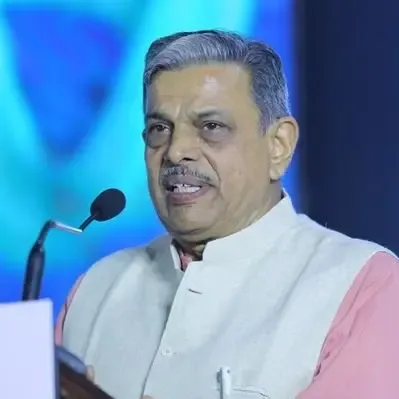
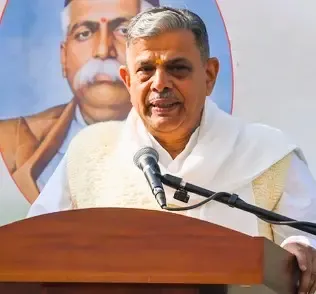
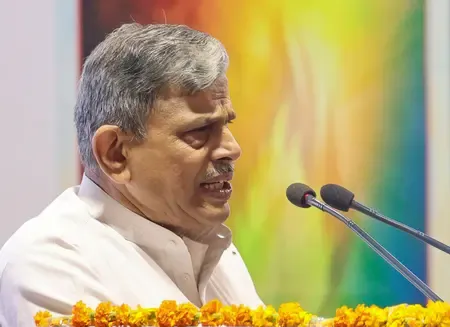
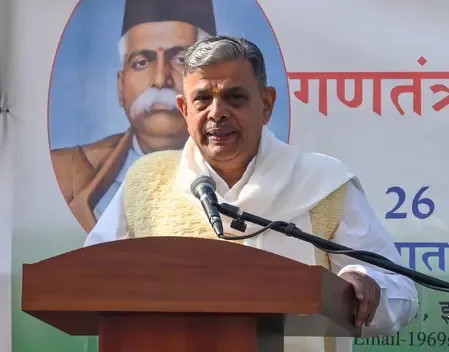
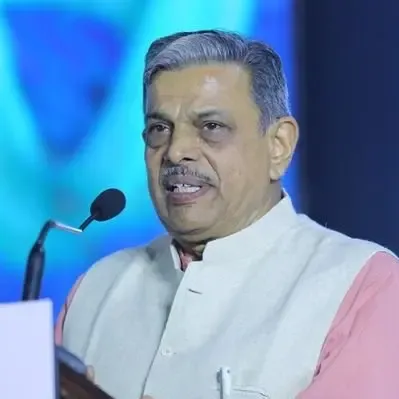
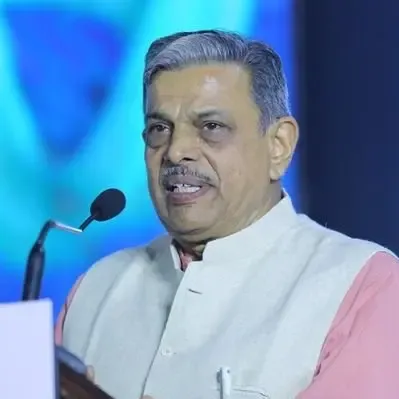
RSS General Secretary Dattatreya Hosabale addressed an exclusive dinner reception on India's Global Vision and Role in the Emerging World in the Washington area on April 24 .
Hosabale argued that India's philosophy of oneness, ecological balance, and pluralism offers a framework to address global challenges including social fragmentation and environmental degradation.
Foreign policy scholar Walter Russell Mead stated that a strong, self-confident India is critically important for all of humanity and could reduce conflict risk in Asia.
Academic Walter Andersen , a decades-long RSS researcher, described the organisation as a stabilising influence in India, citing its patriotism and social adaptability.
Hosabale linked India's global soft power to traditions like yoga and the diplomatic doctrine of Vasudhaiva Kutumbakam , which India promoted during its G20 Presidency in 2023 .
He emphasised that India's global leadership role requires being a self-confident, prosperous society that balances modernity with civilisational values.
Washington, April 24 — Rashtriya Swayamsevak Sangh (RSS) General Secretary Dattatreya Hosabale delivered a compelling civilisational argument at an exclusive dinner reception in the Washington area, asserting that India's ancient philosophical traditions — rooted in unity, diversity, and ecological balance — uniquely position the country to lead a fractured world toward a more harmonious global order. The event, themed India's Global Vision and Role in the Emerging World, brought together scholars, policymakers, and community leaders to examine India's expanding influence on the world stage.
India's Philosophical Framework as a Global Blueprint
Hosabale opened his address by articulating a foundational principle of Indian thought: the oneness that permeates all existence. He positioned this worldview as a potential antidote to the deep social and environmental contradictions plaguing modern civilisation, stating that unity is present in all being, living and non-living.
He drew a sharp contrast between material advancement and moral stagnation, describing a paradoxical world with more knowledge but less judgment, and more experts but more problems. This critique resonates with a growing global discourse around the limitations of purely technocratic or materialist models of development.
Hosabale argued that India's distinguishing feature lies in its attempt to reconcile material progress with spiritual grounding. Invoking the Indian philosophical tradition that treats nature as a mother rather than a resource, he said India's ethos holds that the earth offers enough for human need but not to fulfil human greed — a direct echo of Mahatma Gandhi's famous dictum and one that aligns with contemporary global sustainability debates under frameworks like the United Nations Sustainable Development Goals.
Diversity as Strength, Not Division
Hosabale challenged the dominant global narrative that treats diversity as a source of tension, arguing that cultural uniqueness and broader human unity are not contradictory but complementary. This framing is particularly significant given rising ethno-nationalist tensions across Europe, the Americas, and parts of Asia.
He expanded this vision to encompass three dimensions of human relationship — human to human, human being and nature, and human being and the creator — suggesting that India's civilisational experience has historically navigated all three with a degree of equilibrium rare in world history. He invoked the pluralist spirit of the Rigveda, affirming that truth is one but approached through many paths.
India's Non-Expansionist Legacy and the Vasudhaiva Kutumbakam Doctrine
A central pillar of Hosabale's address was India's historical record as a non-aggressive civilisation. He stated that India has never invaded another nation or enslaved any people, contrasting India's civilisational footprint with that of colonial powers whose legacies continue to shape global inequalities.
He noted that the Indian diaspora abroad has consistently contributed to nation-building in host countries while maintaining social harmony — a soft-power argument increasingly relevant as India's diaspora, now among the world's largest, wields growing economic and political influence globally.
This framing aligns with New Delhi's recent diplomatic positioning. Under Prime Minister Narendra Modi, India has actively projected the concept of Vasudhaiva Kutumbakam — the world as one family — in multilateral forums, most notably during its G20 Presidency in 2023, where the phrase was enshrined in the New Delhi Leaders' Declaration.
Global Scholars Reinforce India's Strategic Importance
The evening's discourse was reinforced by prominent voices in foreign policy and South Asian studies. Foreign policy scholar Walter Russell Mead argued that a strong, fully developed, self-confident, outward-looking India could fundamentally reshape global geopolitics and reduce the risk of armed conflict, particularly across Asia. He called India's growth critically important for all of humanity.
Academic Walter Andersen, who has studied the RSS for several decades, described the organisation as a stabilising influence within India, citing its emphasis on patriotism and its demonstrated capacity to adapt to evolving social needs. These endorsements from Western scholars signal a shift in how India's civilisational discourse is being received in traditionally sceptical Western intellectual circles.
Internal Strength as a Prerequisite for Global Leadership
Hosabale was unambiguous that India's global aspirations must be grounded in domestic self-confidence and prosperity. He underlined the need to blend modernity with cultural ethos and civilisation values, framing this dual imperative as essential for India to fulfil its global role.
He also highlighted India's growing global appeal in health and lifestyle domains, noting that the world is increasingly turning to India on the ways of yoga and other holistic traditions that promote balance and wellbeing. The global yoga economy, now valued at over 80 billion dollars according to industry estimates, is one tangible marker of this soft-power reach.
As India navigates a complex geopolitical landscape — balancing ties with the United States, Russia, and the Global South — Hosabale's Washington address signals that civilisational arguments will play an increasingly prominent role in how India defines and projects its global identity. With multilateral negotiations on climate, trade, and security ongoing, the world will be watching whether India can translate this philosophical vision into concrete global leadership.
Point of View
India is positioning itself as the responsible, non-expansionist alternative. What the mainstream narrative misses is that the RSS — long portrayed in Western media as a parochial Hindu nationalist body — is now actively engaging elite American policy circles, reframing its ideology in universalist terms palatable to a global audience. Whether this philosophical outreach translates into concrete geopolitical dividends will depend on India's ability to match its civilisational rhetoric with domestic social cohesion and institutional accountability.
NationPress
18 Sept 2026
Frequently Asked Questions
What did RSS General Secretary Dattatreya Hosabale say in Washington?
Hosabale addressed an exclusive dinner reception in Washington, arguing that India's civilisational philosophy emphasising unity, diversity, and ecological balance can help the world address modern challenges like social fragmentation and environmental stress. He also stressed that India's rise must be anchored in internal strength and cultural confidence.
What is Vasudhaiva Kutumbakam and how does it relate to India's foreign policy?
Vasudhaiva Kutumbakam is a Sanskrit phrase meaning the world is one family, drawn from ancient Indian texts. India prominently featured it during its G20 Presidency in 2023, and it has since become a cornerstone of India's civilisational diplomacy in multilateral forums.
Who is Walter Russell Mead and what did he say about India?
Walter Russell Mead is a prominent American foreign policy scholar known for his work on US grand strategy. At the Washington event, he said a strong, fully developed, self-confident, outward-looking India could reshape global geopolitics and reduce conflict risk, calling India's growth critically important for all of humanity.
Why is the RSS engaging with American policymakers and scholars?
The RSS appears to be using platforms like this Washington dinner to build international legitimacy for India's civilisational worldview and counter negative perceptions of the organisation in Western intellectual circles. This engagement reflects a broader Indian strategy of projecting soft power through cultural and philosophical narratives.
How does India's civilisational philosophy address global sustainability concerns?
Hosabale invoked the Indian philosophical tradition that treats nature as a mother and recognises that the earth provides enough for human need but not to fulfil human greed — a principle aligned with contemporary sustainability frameworks like the UN SDGs. This framing positions India's ancient wisdom as a practical guide for modern ecological challenges.