Rupee may test 94.50 per dollar in near term, says SBI Research

Synopsis
SBI Research's warning that the rupee could slip to ₹94.50 per dollar is a rare public acknowledgement of near-term currency stress — even as it says reserves are adequate. The RBI is already acting: dollar supply windows, tighter CRR, ₹25,000 crore in OMO sales. But the report's real message is that monetary tools alone won't hold the line without structural fiscal reforms to pull capital inflows back in.
Key Takeaways
SBI Research warned on 12 October 2026 that the rupee could test ₹94.50 per dollar in the near term.
India's balance-of-payments surplus is estimated to thin to $55–$60 billion in FY27 .
The RBI has opened a direct dollar-supply window for three state-run oil marketing companies, diverting $10–$12 billion per month from the open spot market.
Daily CRR maintenance has been raised to 99 per cent and ₹25,000 crore in OMO sales announced.
The report stressed that long-term structural fiscal and tax measures are essential to revive capital inflows and provide durable currency support.
The Indian rupee could test the ₹94.50 per dollar level in the near term, even as the country's foreign exchange reserves remain more than adequate, according to a report by SBI Research released on Monday, 12 October 2026. The report cautioned, however, that long-term structural measures by the government are indispensable to revive capital inflows and provide durable support to the currency.
Balance of Payments Under Pressure
The SBI Research report flagged that India's balance-of-payments surplus looks thinner in FY27, estimated at around $55–$60 billion. Despite this compression, the report noted that foreign exchange reserves remain sufficient under even the most stressed scenarios to meet any contingencies, offering a near-term buffer against sharp currency depreciation.
RBI's Intervention Toolkit
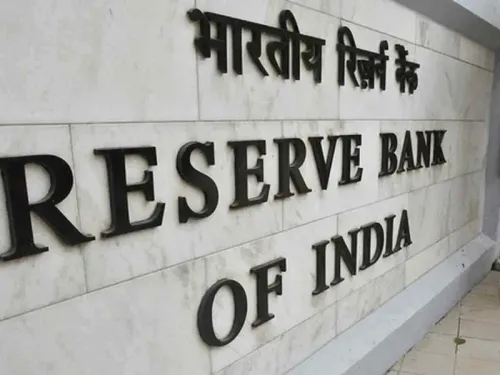
The Reserve Bank of India (RBI) has deployed a multi-pronged strategy to stabilise the rupee. A direct dollar-supply window has been opened for three state-run oil marketing companies, diverting roughly $10–$12 billion per month away from the open spot market. Additionally, the RBI raised daily cash reserve ratio (CRR) maintenance to 99 per cent and announced ₹25,000 crore in open market operation (OMO) sales.
The central bank also tightened documentation norms for foreign exchange hedging facilities to prevent misuse. Authorised Dealers are now required to obtain and retain undertakings from users entering into foreign exchange derivative contracts involving the rupee. As the RBI stated, this ensures that 'the same underlying exposure has not been hedged with any other Authorised Dealer.' Restrictions on the rebooking of cancelled foreign exchange derivative contracts were also imposed to ensure orderly market functioning.
Short-Term vs Long-Term Levers
The SBI Research report drew a clear distinction between short-term monetary and regulatory steps and the structural fiscal and tax measures the government should consider to anchor investor confidence over the longer run. On the monetary side, the report noted that a withdrawal of rupee liquidity — as currently being planned — would reduce rupee supply. An enhanced corridor on the upper side, achieved by increasing the Marginal Standing Facility (MSF) rate, would raise the cost of rupee borrowing and thereby support its value in the near term.
What This Means for Investors and Markets
A rupee at 94.50 against the dollar would represent a significant depreciation from current levels, amplifying import costs and potentially widening the current account deficit further. Sectors with large dollar-denominated import bills — particularly crude oil, edible oils, and electronics — stand most exposed. This comes amid a broader global environment of dollar strength and cautious foreign institutional investor flows into emerging markets. Notably, the RBI's proactive liquidity and hedging measures signal that the central bank is watching currency dynamics closely and is prepared to act pre-emptively rather than reactively.
The next major data points — India's current account figures and FII flow trends — will likely determine whether the rupee stabilises or tests the levels flagged by SBI Research.
Point of View
CRR tightening, OMO sales — is being deployed with unusual urgency, suggesting internal discomfort with current trajectory. The deeper problem, which the report correctly names but does not solve, is structural: India's capital account remains vulnerable to FII reversals, and no hedging documentation rule fixes that. If the government does not move on fiscal and tax incentives to attract longer-duration capital, the RBI will be fighting currency pressure with one hand tied behind its back.
NationPress
12 Oct 2026
Frequently Asked Questions
Why could the rupee test the 94.50 per dollar level?
According to SBI Research, the rupee may test ₹94.50 per dollar in the near term due to a thinner balance-of-payments surplus estimated at $55–$60 billion in FY27 and the need for structural measures to revive capital inflows. While foreign exchange reserves remain adequate, they provide a buffer rather than a long-term solution.
What steps has the RBI taken to support the rupee?
The RBI has opened a direct dollar-supply window for three state-run oil marketing companies, diverting $10–$12 billion per month from the open spot market. It has also raised daily CRR maintenance to 99 per cent, announced ₹25,000 crore in OMO sales, tightened foreign exchange hedging documentation rules, and restricted rebooking of cancelled forex derivative contracts.
What is the Marginal Standing Facility rate and how does it help the rupee?
The Marginal Standing Facility (MSF) rate is the rate at which banks can borrow overnight funds from the RBI against government securities. Increasing the MSF rate raises the cost of rupee borrowing, effectively tightening rupee liquidity and supporting the currency's value in the short term, according to the SBI Research report.
What long-term measures does SBI Research recommend?
SBI Research called for fiscal and tax measures by the government to anchor investor confidence and revive capital inflows on a structural basis. The report argued that monetary and regulatory steps alone are insufficient for durable currency support without complementary government action.
Are India's foreign exchange reserves adequate to handle currency stress?
Yes, according to SBI Research, India's foreign exchange reserves remain more than adequate to meet contingencies even under the most stressed scenarios in FY27. However, the report noted the BoP surplus is thinning, making structural reforms important to reduce reliance on reserve drawdowns.