Did Talks Between S. Korea and US End Without a Tariff Agreement?
Synopsis
In a significant development, Industry Minister Kim Jung-kwan and US Commerce Secretary Howard Lutnick concluded their first day of discussions without reaching a tariff agreement. As tensions rise over proposed tariff increases, both parties are set to reconvene, raising questions about the future of US-South Korea trade relations.
Key Takeaways
First day of talks ended without agreement.
Both parties are scheduled to reconvene.
Trump hinted at significant tariff increases.
South Korea pledges a substantial investment in the US.
Ongoing tensions signal potential economic implications.
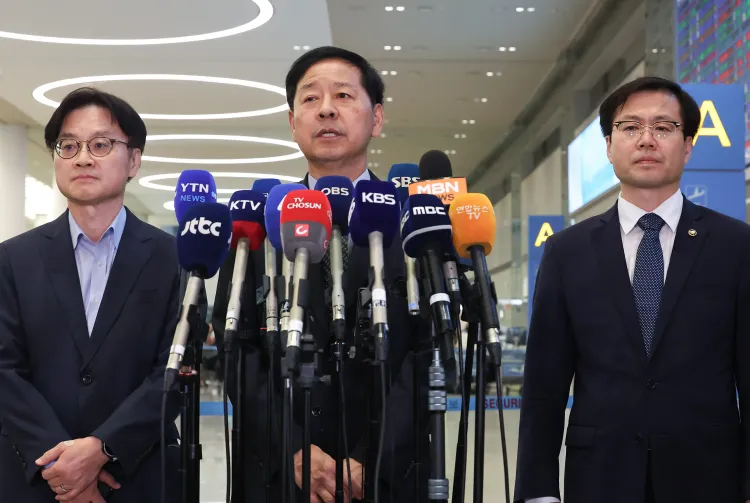
Washington, Jan 30 (NationPress) Industry Minister Kim Jung-kwan announced that he and US Commerce Secretary Howard Lutnick wrapped up their initial discussions regarding the renewed tariff disputes between the two nations without reaching a consensus; however, they have slated another meeting for the following day.
The meeting took place in Washington just three days after Trump hinted at raising reciprocal tariffs and duties on autos, lumber, and pharmaceuticals from South Korea to 25% from 15%, citing delays in Seoul's legislative processes concerning the trade agreement, as reported by Yonhap news agency.
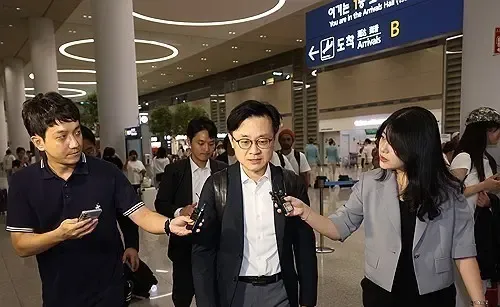
"We had comprehensive discussions and have agreed to reconvene tomorrow morning," Kim told the press post-meeting. "We have not yet reached a conclusion," he added.
When questioned about his success in averting tariff increases by the Trump administration on South Korea, he responded, "(We were) not at the point of stating whether it was prevented or not prevented."
Kim is anticipated to emphasize Seoul's dedication to meeting its investment commitments under a bilateral trade agreement initially established in late July and finalized months later.
As part of this deal, South Korea has pledged to invest US$350 billion in the United States, among other commitments, in exchange for the US reducing reciprocal tariffs on South Korea.
During his tenure in Washington, Kim also intends to engage with other senior officials from the Trump administration, including Energy Secretary Chris Wright.
US President Donald Trump earlier stated that his administration would figure out a resolution with South Korea following his threats this week to elevate "reciprocal" tariffs and other levies on the Asian ally.
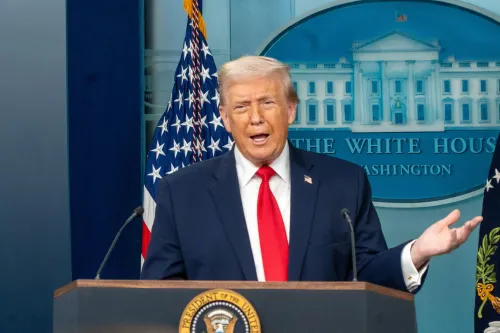
"We will work something out with South Korea," he mentioned during a press conference at the White House, in response to inquiries on whether he would escalate tariffs on the country.
On Monday, Trump made an unexpected announcement regarding plans to increase "reciprocal" tariffs and duties on autos, lumber, and pharmaceuticals on South Korea to 25% from 15%, addressing delays in Seoul's legislative measures supporting the trade agreement.
Point of View
It's vital to monitor the ongoing trade discussions between South Korea and the US. The absence of an agreement signals potential economic implications for both nations. The commitment from South Korea to invest significantly in the US could be a game-changer, but it remains to be seen how the current tariff tensions will unfold.
NationPress
29 Sept 2026
Frequently Asked Questions
What was discussed in the talks between South Korea and the US?
The talks focused on tariff tensions, with South Korea aiming to prevent an increase in reciprocal tariffs proposed by the US.
What is the current tariff rate on South Korean goods?
Currently, the tariff rate on South Korean goods is 15%, with a potential increase to 25% under discussion.
What commitment did South Korea make under the trade agreement?
South Korea committed to investing US$350 billion in the United States as part of the bilateral trade agreement.
When will the next meeting take place?
Both parties have agreed to meet again the following morning to continue discussions.
What was Trump's stance on the tariffs?
Trump indicated a willingness to work something out with South Korea amid the tariff discussions.