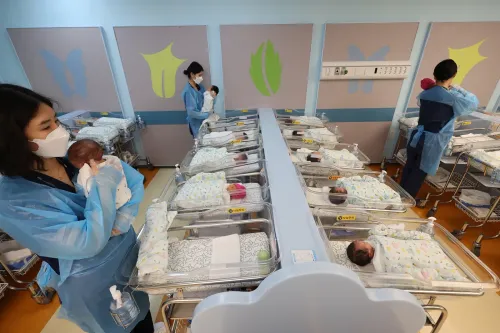
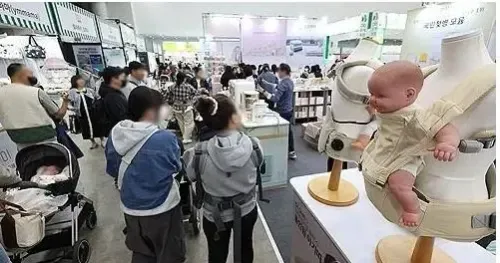
South Korea births rise 15.6% in June, 24th straight month of growth
Synopsis
South Korea's birth count rose 15.6% in June — the fastest growth rate since records began in 1981 and the 24th straight month of gains. But with a fertility rate of just 0.88 against a replacement level of 2.1, and deaths still outnumbering births by 4,683 in a single month, the country's population crisis is easing, not ending.
Key Takeaways
23,111 babies were born in South Korea in June 2025 , up 15.6 per cent from a year earlier.
This marks the 24th consecutive month of on-year birth growth — the highest growth rate since records began in 1981 .
The total fertility rate rose to 0.88 in June, still well below the 2.1 replacement level.
Over January–June 2025 , 1,45,804 births were recorded — the highest first-half total since 2019 .
Deaths exceeded births by 4,683 in June, meaning South Korea's population is still declining naturally.
Marriages rose 14 per cent on-year to 21,075 in June, identified as a key driver of the birth recovery.
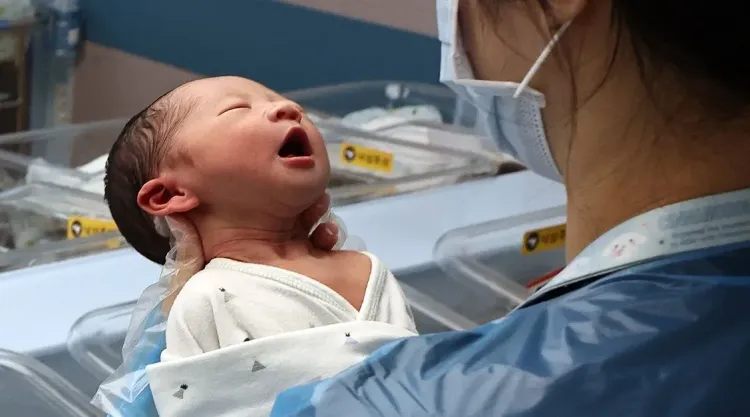
South Korea recorded 23,111 births in June 2025, a 15.6 per cent rise from the same month a year earlier — the 24th consecutive month of on-year growth, according to data released Wednesday by the Ministry of Data and Statistics. The growth rate was the highest since the government began compiling birth data in 1981.
Key Figures
The absolute increase of 3,115 births — up from 19,996 in June 2024 to 23,111 — was the largest single-month addition since 1992, when births rose by 3,666. Over the January–June 2025 period, a total of 1,45,804 babies were born, up 15.4 per cent from the same period a year earlier — the highest first-half total since 2019, and both the largest absolute increase and the fastest growth rate on record for a half-year period.
Fertility Rate Still Below Replacement Level
The country's total fertility rate — the average number of children a woman is expected to have over her lifetime — edged up 0.11 points to 0.88 in June. While the uptick is notable, the figure remains far below the 2.1 births per woman required to maintain a stable population without immigration. A government official noted that, given births tend to skew higher in the second half of the year, the annual rate could reach 0.9 in 2025 — though cautioned that a wait-and-see approach remains warranted.
What Is Driving the Recovery
Experts attribute the sustained rise to a rebound in marriages following the end of the pandemic, combined with shifting attitudes toward parenthood. 'The increase in births came as the number of marriages has been recovering since May 2023 following the end of the pandemic, with an increase in the number of women in their 30s,' a ministry official said. Marriages in June jumped 14 per cent on-year to 21,075, reinforcing the link between nuptial trends and birth rates.
Deaths, Divorces, and Natural Population Decline
Despite the birth uptick, South Korea continues to record a natural population decline. Deaths rose 2 per cent on-year to 27,794 in June, resulting in a net natural decline of 4,683 people. Divorces also increased, climbing 13.5 per cent to 7,688 — a figure that analysts say warrants monitoring alongside the marriage recovery data.
What Comes Next
The birth trend has held positive since July 2024, offering the first sustained demographic signal in years that South Korea's population crisis may be stabilising — if not yet reversing. Policymakers and demographers will watch second-half 2025 data closely to determine whether the recovery has structural staying power or remains vulnerable to economic headwinds.
Point of View
Against a replacement level of 2.1, means the country is recovering from a catastrophic low, not approaching stability. The marriage rebound driving births is itself post-pandemic catch-up, and it is not clear the structural disincentives — housing costs, education expenses, gender inequality in caregiving — have shifted meaningfully. A single year of improving numbers does not a demographic recovery make; the real test will come when the post-pandemic marriage cohort ages out of peak childbearing years.
NationPress
10 Oct 2026
Frequently Asked Questions
How many babies were born in South Korea in June 2025?
A total of 23,111 babies were born in South Korea in June 2025, up 3,115 from 19,996 in the same month the previous year. This represents a 15.6 per cent on-year increase — the highest growth rate since the government began compiling birth data in 1981.
What is South Korea's current total fertility rate?
South Korea's total fertility rate rose 0.11 points to 0.88 in June 2025. This remains far below the 2.1 births per woman needed to maintain a stable population without immigration.
Why are births increasing in South Korea?
Experts attribute the rise primarily to a rebound in marriages since May 2023 following the end of the Covid-19 pandemic, along with increasingly positive public attitudes toward having children. A rise in the number of women in their 30s entering the marriage and childbearing cohort has also been cited as a contributing factor.
Is South Korea's population still declining despite rising births?
Yes. Deaths outnumbered births by 4,683 in June 2025, as 27,794 deaths were recorded against 23,111 births. South Korea continues to experience natural population decline even as birth numbers improve.
Could South Korea's fertility rate reach 0.9 in 2025?
A government official indicated it is possible, noting that births have historically been higher in the second half of the year. However, the official cautioned that a wait-and-see approach is still necessary, and 0.9 would remain well below the 2.1 replacement-level threshold.