South Korea hunts 9 missing in Nepal floods on Day 4, expands river search

Synopsis
Nine South Korean workers — from Doosan Enerbility and Korea South-East Power — remain missing four days after Nepal's catastrophic Himalayan floods, with rescue teams grounded by Nepali access restrictions and deteriorating weather. As the national death toll nears 600 and barrier lakes threaten secondary floods, Seoul is reinforcing its on-ground team and expanding the search downstream along the Trishuli River.
Key Takeaways
Nine South Korean nationals — six from Doosan Enerbility and three from Korea South-East Power — remain missing in Rasuwa district, Nepal on the fourth day of search operations.
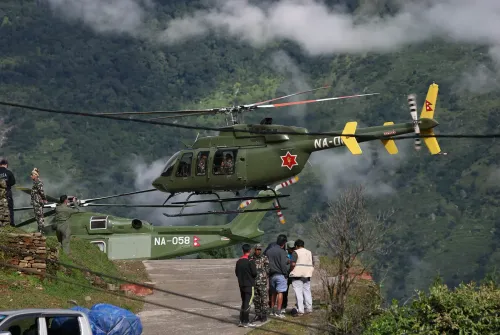
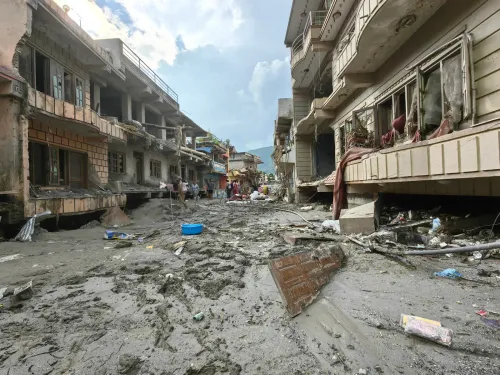
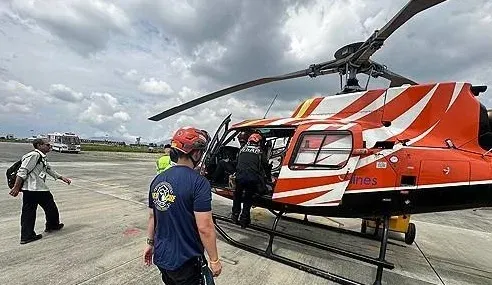
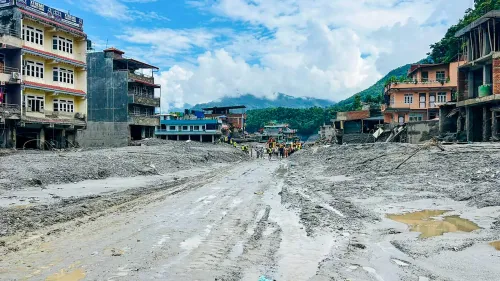
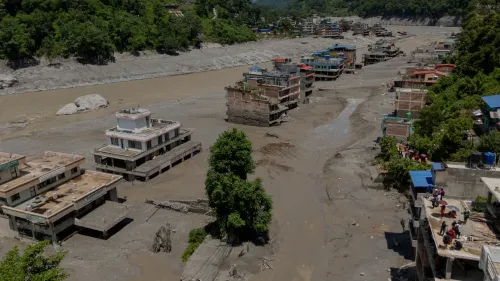
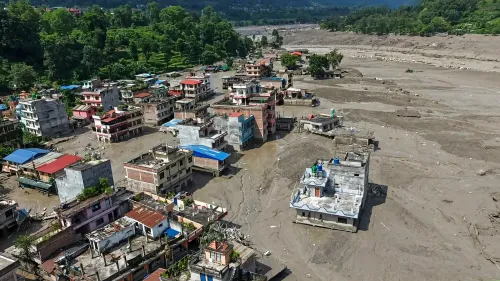
Rescue teams are using six rented helicopters and drones; roads and bridges in the area have been destroyed by the floods.
Nepali authorities have reportedly restricted foreign-led helicopter searches, citing unpredictable weather and secondary flood risks.
South Korea is sending nine additional rescue personnel , including firefighters, to reinforce its 11-member team already in Nepal.
The broader Nepal flood disaster has killed nearly 600 people , with close to 2,500 still unaccounted for.
Barrier lakes formed by a collapsed Himalayan glacier are overflowing, raising fears of secondary flooding .
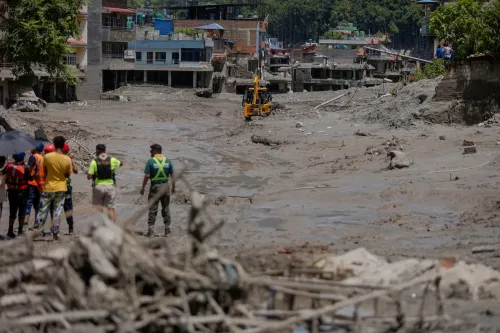
South Korean rescue teams in Nepal pressed on with their search on Saturday, 31 August for nine nationals still unaccounted for after catastrophic flash floods struck the country's north-central Himalayan border region four days ago. Helicopters and drones were deployed to comb through the Rasuwa district, where the workers were stationed at a hydroelectric power plant construction site when the floods hit on Wednesday.
Who Is Missing and Where
Six employees of Doosan Enerbility Co. and three workers of Korea South-East Power Co. remain missing, now entering a fourth day without contact. The workers were engaged in construction at a hydroelectric project in Rasuwa district when the floods inundated the area. Separately, ten other Doosan workers who had been stranded at a different location were successfully evacuated to safety.
Search Operations: Helicopters, Drones, and Restricted Access
Korea South-East Power conducted a brief helicopter sweep on Friday after receiving late clearance from local authorities just before sunset, but the search yielded no sightings of the missing personnel. The company confirmed it would resume the helicopter operation on Saturday. Doosan also received clearance and planned to deploy drones to scan potential shelter locations where the missing employees may be taking refuge.
The government-led South Korean response team, however, has yet to secure authorisation for its own helicopter searches. According to Seoul officials, Nepali authorities have reportedly restricted foreign access to search and rescue operations, citing unpredictable weather conditions and the risk of secondary flooding. The government and corporate teams have collectively rented six helicopters to navigate a landscape where roads and bridges have been destroyed.
What the Government Said
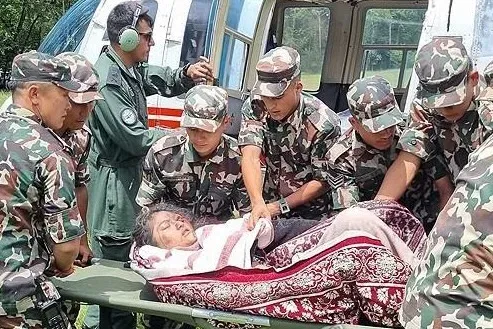
Lim Sang-woo, head of the South Korean government's rapid response team, told reporters in Kathmandu on Friday evening that all-out efforts were being made to locate the missing workers. 'We made search attempts for the nine missing individuals with the Nepali military mobilising their assets, but unfortunately, we need to keep searching,' Lim said. The Nepali military conducted searches using coordinates provided by the response team but found no signs of the missing individuals, Seoul officials confirmed.
South Korea's Foreign Ministry announced on Saturday that an additional team of nine personnel — including firefighters — would be dispatched to reinforce the existing 11-member response team already on the ground in Nepal. Foreign Minister Cho Hyun separately held a meeting with family members of the missing workers in Seoul.
Expanding the Search Downstream
With ground access blocked and aerial searches constrained, rescue coordinators are now considering extending the search along the Trishuli River, covering downstream areas — a contingency that accounts for the possibility that the missing workers may have been swept away by floodwaters. A company official noted that safety protocols direct evacuees to higher ground, and searchers were prioritising base camp locations accordingly: 'We believe they could be at the base camp, as safety protocols direct evacuees to higher ground. If we get to fly the helicopter, we will thoroughly search that area,' the official said.
Wider Disaster: Nearly 600 Dead, 2,500 Missing
The scale of the catastrophe extends far beyond the missing Korean workers. The death toll from Nepal's flash floods has climbed to nearly 600, with close to 2,500 others still unaccounted for, according to foreign media reports. Concerns are mounting over secondary flooding, as barrier lakes — formed by debris from a collapsed Himalayan glacier that triggered the initial disaster — have begun to overflow, raising the prospect of further devastation in already battered communities.
Return plans for the 10 rescued South Korean workers remain undecided. A foreign ministry official said the priority is rest and health assessment: 'Having been through extreme circumstances, what they need most right now is rest. We also need to see if their health conditions are stable enough for them to travel by air.'
Point of View
Where nearly 2,500 people remain unaccounted for and a death toll approaching 600 is almost certainly undercounted given the terrain. The access restrictions placed on foreign search teams — however procedurally justified — are costing critical hours in a rescue window that narrows by the day. The more troubling signal is the overflowing barrier lakes: if secondary flooding materialises at scale, the current disaster could be dwarfed by what follows, and the international response infrastructure is already stretched thin.
NationPress
13 Oct 2026
Frequently Asked Questions
Who are the nine South Koreans missing in Nepal?
The nine missing individuals are employees of two South Korean firms: six work for Doosan Enerbility Co. and three for Korea South-East Power Co. They were stationed at a hydroelectric power plant construction site in Nepal's Rasuwa district when flash floods struck on Wednesday.
What caused the Nepal floods that triggered the crisis?
The floods were triggered by the collapse of a Himalayan glacier in Nepal's north-central border region, which unleashed catastrophic flash floods on Wednesday. Debris from the collapse has since formed barrier lakes that are now beginning to overflow, raising fears of secondary flooding.
Why is the search operation facing delays?
Nepali authorities have reportedly restricted foreign-led helicopter search operations, citing unpredictable weather and the risk of further flooding. Roads and bridges in the Rasuwa district have been destroyed, making ground access impossible and forcing teams to rely on helicopters and drones.
What is South Korea doing to find the missing workers?
South Korea has deployed an 11-member government response team and is sending nine additional personnel, including firefighters. Rescue coordinators have rented six helicopters and are deploying drones to search potential shelter sites. They are also considering expanding the search downstream along the Trishuli River.
How severe is the overall Nepal flood disaster?
The death toll from the Nepal floods has reached nearly 600, with close to 2,500 people still unaccounted for, according to foreign media reports. Secondary flooding is now feared as barrier lakes formed by glacial debris have begun to overflow.