Why Have 4 Out of 10 South Korean Conglomerates Not Established Investment Plans for 2026?
Synopsis
In an alarming industry survey, four out of ten South Korean conglomerates have not yet set their investment plans for 2026. With rising uncertainties affecting the business climate, this situation raises significant concerns about the future economic landscape. Discover the factors contributing to this trend and what it means for the South Korean economy.
Key Takeaways
43.6% of surveyed conglomerates have no investment plans for 2026.
15.5% do not plan to invest at all.
Uncertainties in the business environment are a major concern.
Many firms will invest similarly to this year.
36.4% are considering AI-related investments.
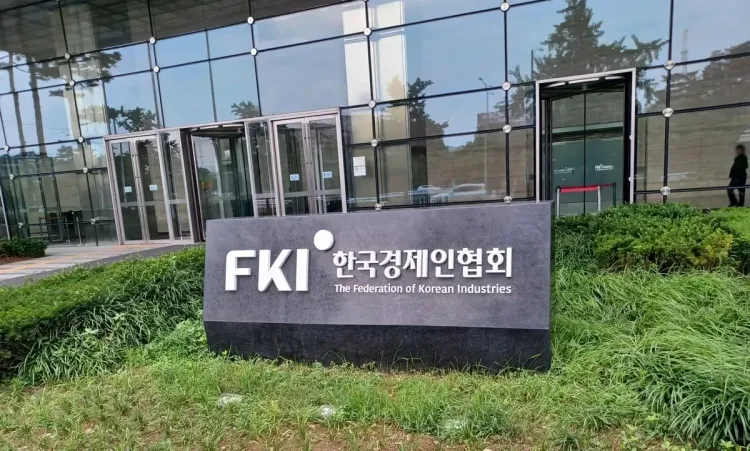
Seoul, December 8 (NationPress) Nearly 40% of South Korean conglomerates have yet to finalize their investment strategies for 2026, primarily due to increasing uncertainties in the business landscape, according to a recent industry survey. The Federation of Korean Industries (FKI), a key business lobbying group in South Korea, engaged pollster Mono Research to assess the investment outlook of the nation’s top 500 firms, as reported by Yonhap news agency.
Out of 110 companies that participated in the survey, 43.6% indicated they have not drafted any investment plans for 2026, while 15.5% stated they possess no investment intentions at all. Only 40.9% confirmed they have completed their strategies, as noted in the FKI's press release.
Those companies that have not yet outlined their investment intentions for 2026 cited reasons such as business restructuring, the necessity to evaluate both internal and external risks, and unpredictable economic conditions at home and abroad. More than half of the firms that have finalized their plans indicated they will match their investment levels with this year's figures.
Moreover, survey findings highlighted that adverse business conditions, including ongoing trade risks and the depreciating w Korean won against the U.S. dollar, have intensified the investment burden for numerous companies.
At the same time, 36.4% of those surveyed reported that they have either established or are contemplating investment strategies in artificial intelligence (AI).
When queried about the major obstacles for the upcoming year, companies pointed to the proliferation of protectionist policies, such as tariffs, increasing supply chain disruptions, economic slowdowns in notable nations like the United States and China, and the robust U.S. dollar.
In other news, South Korean shares reduced losses late Monday morning but still traded lower as investors adopted a wait-and-see stance regarding a potential interest rate cut by the U.S. Federal Reserve this week.
The benchmark Korea Composite Stock Price Index (KOSPI) declined by 1.54 points, or 0.04%, settling at 4,098.51 as of 11:20 a.m.
The two-day Federal Open Market Committee meeting is scheduled to commence on Tuesday (U.S. time), with market analysts widely expecting a 0.25 percentage point reduction.
Point of View
We recognize the significant implications of these findings for the South Korean economy. The hesitance of major conglomerates to finalize investment plans highlights a broader uncertainty within the business landscape. It's crucial for stakeholders to closely monitor these trends and adapt strategies accordingly to navigate through potential challenges ahead.
NationPress
21 Sept 2026
Frequently Asked Questions
Why haven't South Korean conglomerates set their 2026 investment plans?
The primary reasons include business reorganization, the need to assess internal and external risks, and uncertain economic conditions both domestically and internationally.
What percentage of companies have finalized their investment plans for 2026?
Only 40.9% of the surveyed companies reported that they have finalized their investment plans for 2026.
Are companies investing in artificial intelligence?
36.4% of the surveyed companies indicated they have either established or are considering investment plans related to artificial intelligence (AI).
How are economic conditions affecting investments?
Adverse business conditions, including ongoing trade risks and the weakening of the Korean won against the U.S. dollar, have increased the investment burden for many companies.
What challenges do companies foresee for the coming year?
Companies have highlighted protectionist measures, supply chain instability, economic slowdowns in major countries, and the strength of the U.S. dollar as significant challenges.