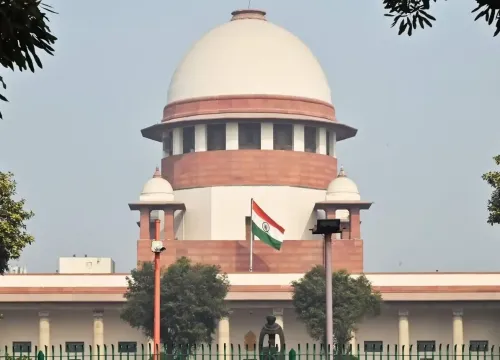
Supreme Court Affirms Voting and Election Contest Rights as Statutory, Not Fundamental
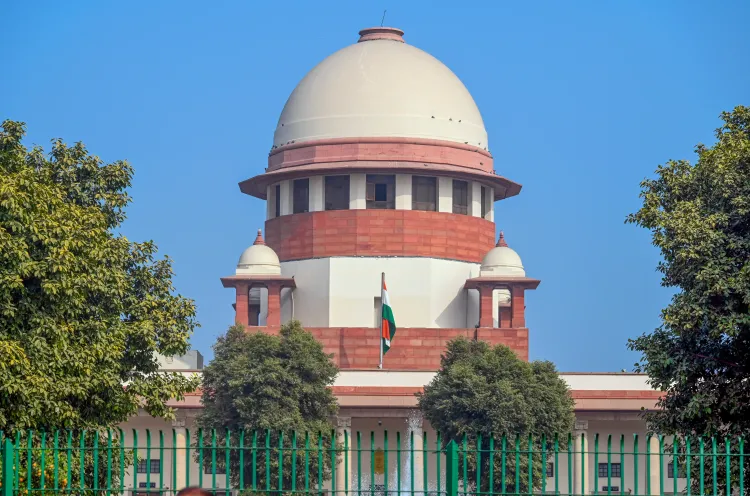
Synopsis
In a significant ruling, the Supreme Court has clarified that the rights to vote and contest elections are statutory rights governed by law, and can be regulated accordingly. This decision has far-reaching implications for electoral processes in cooperative sectors.
Key Takeaways
The Supreme Court has clarified the nature of voting and contesting rights.
These rights are statutory , not fundamental.
Eligibility conditions can be imposed by law.
Regulations do not infringe upon the right to vote.
The ruling impacts electoral processes in cooperative sectors .
New Delhi, April 11 (NationPress) The Supreme Court has clarified that the right to vote and the right to contest elections are not classified as fundamental rights but are instead statutory rights established by law, making them subject to regulation and restriction through legal frameworks.
In a case concerning eligibility criteria for candidates contesting elections to cooperative dairy organizations in Rajasthan, a bench comprising Justices R. Mahadevan and Sanjay Karol stated, "neither the right to vote nor the right to contest an election constitutes a fundamental right," emphasizing that these rights are only available within the limits set by statute.
The apex court drew a distinct line between the two rights, asserting that the right to vote and the right to campaign for elections function in separate realms and should not be viewed as synonymous.
“The right to vote entails participating in the electoral process through exercising one's franchise; on the other hand, the right to contest is a separate and supplementary right,” the bench led by Justice Mahadevan remarked, noting that the latter can be legitimately subjected to various “qualifications, eligibility conditions, and disqualifications.”
This ruling emerged from a dispute over the bye-laws established by Rajasthan’s District Milk Producers’ Cooperative Unions, which mandated conditions such as minimum milk supply thresholds and operational performance metrics for candidates aiming for election to the Board of Directors.
By overturning the prior decision that annulled these bye-laws, the Supreme Court found that the Rajasthan High Court made a mistake by conflating the eligibility requirements for candidates with restrictions on voting rights.
“The High Court, in equating the regulation of eligibility to contest elections with a limitation on the right to vote, merged two distinct statutory rights,” the bench led by Justice Mahadevan stated.
Furthermore, the court determined that the bye-laws in question merely governed the eligibility to run for office and did not infringe on members’ voting privileges. “The bye-laws solely affect the domain of candidature and office-holding, without impacting the right to exercise one's franchise,” the Supreme Court clarified.
The court noted that statutory rights, unlike fundamental rights, may be shaped, restricted, or regulated by legislation to promote efficient governance and uphold institutional integrity.
“The right to contest and the right to vote may always be limited or abridged if legislation, rules, or regulations provide for such measures,” the Supreme Court concluded.
Affirming that the eligibility criteria were legitimate and aligned with the statutory framework governing cooperative societies, the Supreme Court upheld the appeal and reinstated the contested bye-laws.
Point of View
The Supreme Court's ruling underscores the legal framework surrounding electoral rights, emphasizing the importance of statutory provisions in regulating democratic processes. This decision reinforces the balance between individual rights and institutional integrity.
NationPress
19 Sept 2026
Frequently Asked Questions
What did the Supreme Court say about voting rights?
The Supreme Court clarified that the right to vote and the right to contest elections are not fundamental rights but statutory rights that can be regulated by law.
Are the rights to vote and contest elections interchangeable?
No, the Supreme Court stated that these rights operate in distinct fields and should not be treated as synonymous.
What implications does this ruling have for cooperative societies?
The ruling allows cooperative societies to impose eligibility conditions for candidates without infringing on voting rights, thus clarifying the governance of such bodies.
Can statutory rights be regulated?
Yes, the Supreme Court emphasized that statutory rights can be shaped, limited, or regulated by legislation to ensure effective governance.
What was the context of this Supreme Court ruling?
The ruling arose from a dispute over bye-laws concerning eligibility criteria for candidates in cooperative dairy elections in Rajasthan.