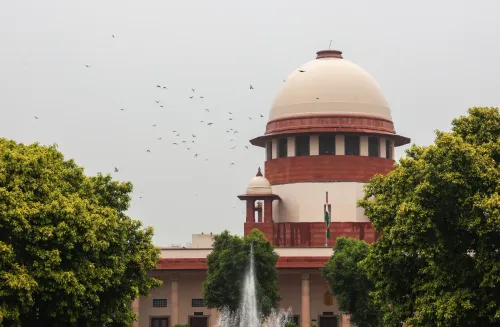
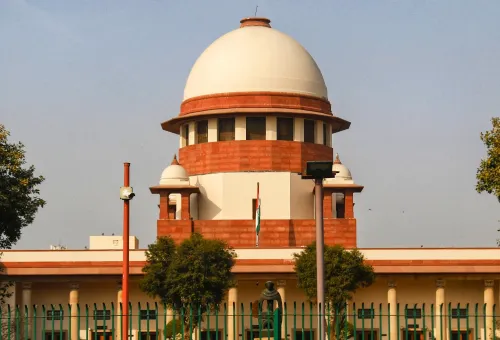
SC rejects Anita Advani's widow plea in Rajesh Khanna case
Synopsis
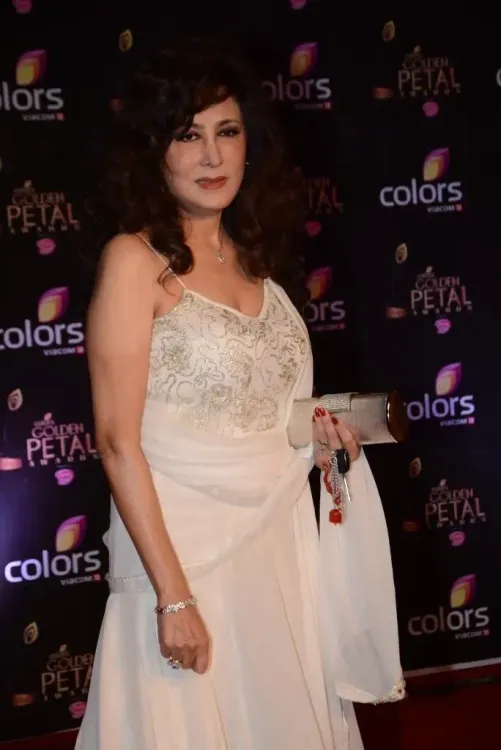
The Supreme Court has shut the door on Anita Advani's decade-long legal bid to be recognised as Rajesh Khanna's widow, calling her plea 'luxury litigation'. The ruling reaffirms that a live-in relationship cannot be equated with marriage when a valid, subsisting marriage — here, Khanna's with Dimple Kapadia — was never dissolved.
Key Takeaways
The Supreme Court on 29 October 2026 refused to entertain Anita Advani 's plea seeking widow recognition in the Rajesh Khanna estate case.
A bench of Justices M.M.
Sundresh and Prasanna B.
Varale termed the petition 'luxury litigation' and found no grounds to admit it.
The Bombay High Court had on 1 April upheld dismissal of Advani's suit, ruling that Khanna's marriage to Dimple Kapadia was subsisting and never dissolved.
Courts applied the D.
Patchaiammal test, which requires both parties to a live-in relationship to be legally eligible to marry for it to be recognised as marriage-like.
Advani had originally filed her suit in 2015 , naming Kapadia, Twinkle Khanna , Rinke Khanna , and Rajiv Bhatia as respondents.
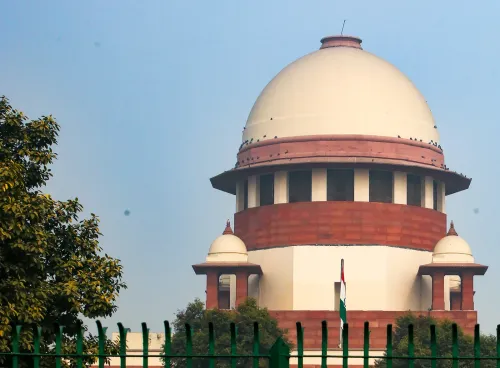
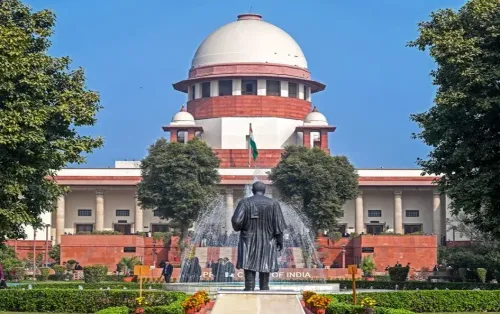
The Supreme Court on Thursday, 29 October 2026, refused to entertain a plea by former actor Anita Advani seeking judicial recognition of her relationship with the late actor Rajesh Khanna as one akin to marriage. A bench of Justices M.M. Sundresh and Prasanna B. Varale found no grounds to admit the petition, dismissing it as 'luxury litigation'.
Background to the Legal Battle
Advani had filed the plea after the Bombay High Court dismissed her appeal against a trial court order that had earlier rejected her suit. Her original suit, instituted in 2015, named Dimple Kapadia, their daughters Twinkle Khanna and Rinke Khanna, and son-in-law Rajiv Bhatia as respondents. She had sought a declaration that she was in a marriage-like relationship with Khanna and was therefore his widow.
What the Bombay High Court Ruled
In its judgment delivered on 1 April, a single-judge bench of Justice Sharmila U. Deshmukh upheld the trial court's dismissal of the suit. The High Court held that the claim was barred by law because Khanna's marriage with Kapadia was still subsisting at the time. Citing the Supreme Court's landmark ruling in D. Velusamy v. D. Patchaiammal, Justice Deshmukh observed that a relationship can be recognised as one akin to marriage only if both parties were legally eligible to marry — which requires, among other conditions, that they be unmarried.
'The tests formulated by the Hon'ble Apex Court would indicate that the declaration of this nature seeks equivalence with marriage and marital relationship and must therefore also satisfy the essential tests for valid marriage although not formally married,' the High Court noted in its judgment.
Why Advani's Claim Did Not Satisfy Legal Tests
The High Court concluded that Advani's claim failed the essential threshold because Khanna's marriage with Kapadia had never been dissolved. The court also rejected her argument that a claim for recognition of the relationship could be considered independently of the wider widow declaration. It ruled that the 'distinction between monogamous or polygamous live-in relationship cannot exclude the satisfaction of the tests laid down in D. Velusamy v. D. Patchaiammal.' The suit was rejected at the threshold under Order VII Rule 11 of the Code of Civil Procedure (CPC), meaning it was found legally untenable on its face before a full trial.
Advani's Contentions Before the Courts
Advani had argued that she and Khanna had lived together for several years, projected their relationship to society as marriage-like, shared a household, and celebrated festivals together. She maintained that these facts warranted a formal declaration of the relationship's nature, independent of the subsisting marriage question. Both the trial court and the High Court found these contentions insufficient to overcome the legal bar, and the Supreme Court's refusal to entertain the appeal has now conclusively closed that avenue.
Legal Significance of the Ruling
The case reaffirms the Supreme Court's D. Velusamy framework as a binding threshold for live-in relationship claims in India. Courts have consistently held that such relationships cannot be equated with marriage when a valid, subsisting marriage exists involving one of the parties. This is a significant marker for similar claims and sets a clear precedent for how courts will evaluate future petitions of this nature. The Supreme Court's characterisation of the petition as 'luxury litigation' also signals judicial impatience with claims that seek to relitigate settled legal questions at the highest level.
Point of View
While a landmark protection for genuine live-in partners, functions as an impenetrable bar when a subsisting marriage is in the picture. Advani's decade-long legal journey has, at every tier, run into the same wall: Khanna never divorced Kapadia, and without that dissolution, no court could treat Advani's claim as legally cognisable. The ruling does not comment on the personal realities of their relationship — it simply holds that the law as it stands does not accommodate the declaration she sought.
NationPress
29 Oct 2026
Frequently Asked Questions
Why did the Supreme Court reject Anita Advani's plea?
The Supreme Court found no legal grounds to entertain the petition and described it as 'luxury litigation'. The court's refusal followed the Bombay High Court's ruling that Advani's claim was barred by law because Rajesh Khanna's marriage with Dimple Kapadia was subsisting and had never been dissolved.
What is the D. Velusamy v. D. Patchaiammal ruling and why does it matter here?
D. Velusamy v. D. Patchaiammal is a Supreme Court precedent that lays down the conditions under which a live-in relationship can be legally recognised as akin to marriage. One key requirement is that both parties must be legally eligible to marry — meaning they must be unmarried. Since Khanna's marriage to Kapadia was never dissolved, Advani's claim could not satisfy this test.
When did Anita Advani first file her suit?
Advani filed her original suit in 2015, seeking a declaration that her relationship with Rajesh Khanna was marriage-like and that she was his widow. She named Dimple Kapadia, Twinkle Khanna, Rinke Khanna, and Rajiv Bhatia as respondents.
What did Anita Advani claim about her relationship with Rajesh Khanna?
Advani claimed that she and Khanna had lived together for several years, projected their relationship to society as akin to marriage, shared a household, and celebrated festivals together. Courts at every level found these facts insufficient to override the legal bar created by Khanna's subsisting marriage.
What broader legal precedent does this case set?
The ruling reaffirms that Indian courts will not recognise a live-in relationship as equivalent to marriage if one of the parties was in a valid, undissolved marriage at the relevant time. It reinforces the D. Velusamy framework as the binding threshold for all such claims and signals judicial reluctance to admit petitions that seek to relitigate settled legal questions.