Supreme Court: Head-on collision negligence needs balanced assessment, not one-sided blame
Synopsis
The Supreme Court has overturned over 15 years of adverse findings against a deceased accident victim's family, ruling that in head-on collisions, courts cannot simply pin all blame on one driver. The bench's sharp rebuke of both the MACT and the Punjab and Haryana High Court signals a significant course correction in how contributory negligence must be assessed in fatal road accident claims.
Key Takeaways
The Supreme Court ruled that negligence in motor accident claims must be assessed through a balanced, comparative analysis of all parties' conduct.
A three-judge bench of Justices Vikram Nath, Sandeep Mehta, and Vijay Bishnoi set aside dismissal of compensation claims in a 2009 fatal accident near Balambha Mor, Haryana .
Both the MACT and the Punjab and Haryana High Court were held to have erred in attributing entire blame to the deceased car driver Hari Om .
Bus driver Rajender's failure to enter the witness box was flagged as a material omission ignored by lower courts.
The matter has been remanded to MACT, Bhiwani , for fresh adjudication with due opportunity to all parties.
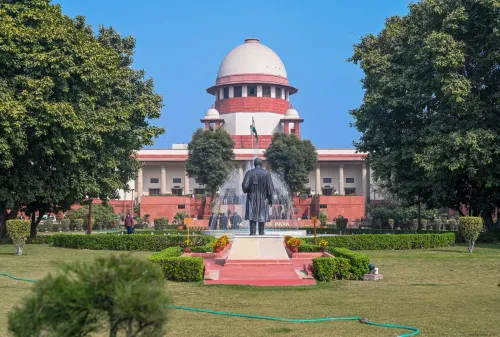
The Supreme Court of India has ruled that in motor accident compensation claims, negligence cannot be determined by mechanically attributing fault to one party alone — particularly in head-on collision cases where shared responsibility may arise. The apex court stressed that negligence must rest on a balanced, objective, and comparative assessment of the conduct of all parties involved.
Background: The 2009 Fatal Accident
The ruling arose from a January 13, 2009, accident near Balambha Mor, Haryana, in which Hari Om and Sher Singh died when their car collided head-on with a Haryana Roadways bus travelling from the opposite direction. Hari Om's widow, Parmila, and other legal heirs had approached the Supreme Court after their compensation plea was rejected by the Motor Accident Claims Tribunal (MACT), which held Hari Om solely negligent. The Punjab and Haryana High Court subsequently affirmed that finding.
What the Supreme Court Found
A three-judge bench comprising Justice Vikram Nath, Justice Sandeep Mehta, and Justice Vijay Bishnoi set aside the dismissal of compensation claims, holding that both the MACT and the High Court erred in attributing entire blame to the deceased car driver without properly examining the conduct of the Haryana Roadways bus driver, Rajender.
The bench expressed concern that the bus driver Rajender — a crucial witness who could have explained the manner of the accident — failed to enter the witness box, a material omission that the lower courts ignored entirely. The Supreme Court noted that this failure warranted an adverse inference, yet neither forum addressed it.
"The complete exclusion of contributory negligence on the part of one driver, especially in a head-on collision, ordinarily warrants a careful scrutiny of the surrounding circumstances, including the manner of driving, the point of impact, and other attendant factors," the Justice Vikram Nath-led bench observed, adding that neither the Tribunal nor the High Court conducted such an exercise.
Key Legal Principles Reaffirmed
The court reiterated that the determination of negligence in motor accident cases must be founded upon a thorough examination of all surrounding circumstances — including the manner of driving, the point of impact, and other attendant factors. The bench held that the approach adopted by the lower forums was "inconsistent with settled legal principles" governing negligence adjudication.
"The approach adopted by the courts below, in attributing the entirety of blame to one party without adequately examining the role and conduct of the other, does not align with the settled principles governing adjudication of negligence in motor accident cases," the bench held.
The court also expressed its "perplexity" at findings that completely absolved bus driver Rajender of even any contributory negligence.
What Happens Next
The Supreme Court remanded the matter to the MACT, Bhiwani, for fresh adjudication, directing it to reconsider the compensation claims after granting due opportunity to all parties and returning findings on all issues afresh. The case now offers an opportunity for the families of Hari Om and Sher Singh to pursue compensation that had been denied for over a decade and a half. The ruling is expected to set a broader precedent for how lower courts and tribunals approach negligence assessment in road accident cases involving vehicles from opposite directions.
Point of View
Institutional defendants like state road transport corporations often leverage procedural advantages that private claimants cannot match. The remand to MACT Bhiwani is a partial remedy at best — the families of Hari Om and Sher Singh have waited over 15 years for compensation, and a fresh trial means further delay. The deeper question is whether India's accident claims infrastructure, built around adversarial litigation, is structurally capable of delivering timely justice to road accident victims without Supreme Court intervention.
NationPress
19 Sept 2026
Frequently Asked Questions
What did the Supreme Court rule in this motor accident case?
The Supreme Court ruled that negligence in motor accident claims — especially head-on collisions — cannot be determined by mechanically blaming one party alone. It held that both the MACT and the Punjab and Haryana High Court erred in holding deceased car driver Hari Om solely responsible without examining the role of the Haryana Roadways bus driver.
What was the 2009 Haryana accident about?
On January 13, 2009, Hari Om and Sher Singh died when their car collided head-on with a Haryana Roadways bus near Balambha Mor in Haryana. Hari Om's widow Parmila and other legal heirs filed for compensation, which was denied by the MACT and later upheld by the Punjab and Haryana High Court before the Supreme Court intervened.
Why did the Supreme Court criticise the lower courts?
The Supreme Court expressed perplexity that the lower courts completely absolved bus driver Rajender of even contributory negligence, despite his failure to appear as a witness — a material omission the courts ignored. The bench held this approach was inconsistent with settled legal principles on negligence adjudication.
What is contributory negligence in motor accident cases?
Contributory negligence refers to a situation where more than one party's conduct contributed to causing an accident. In head-on collision cases, Indian courts are expected to examine the conduct of all drivers involved rather than assigning total fault to one side, according to the Supreme Court's ruling.
What happens next in this case?
The Supreme Court has remanded the matter to the MACT, Bhiwani, for fresh adjudication. The tribunal must now reconsider the compensation claims, grant due opportunity to all parties, and return fresh findings on all issues, including the role of bus driver Rajender in causing the accident.