Did the SC issue notices regarding provisional SIR for CAA-eligible migrants?
Synopsis
The Supreme Court's recent action highlights a pressing issue for many migrants seeking citizenship. As the December 9 hearing approaches, the stakes rise for those impacted by administrative delays. This case could redefine the citizenship landscape for religious minorities in India.
Key Takeaways
The Supreme Court is addressing a plea for provisional SIR for eligible migrants.
Many applications for citizenship remain unresolved due to administrative issues.
The CAA provides a pathway for specific religious minorities to apply for Indian citizenship.
The hearing is set for December 9, raising the urgency of the situation.
Provisional voter enrollment is sought to protect migrants from disenfranchisement.
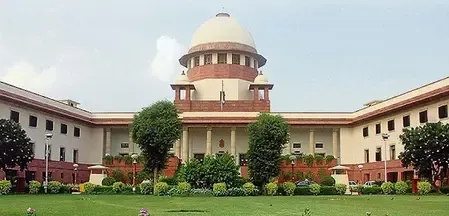
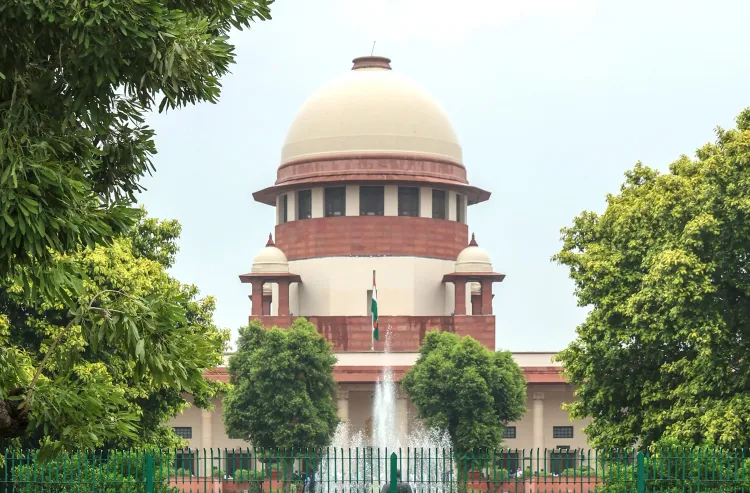
New Delhi, Dec 1 (NationPress) The Supreme Court on Monday issued notices to the Centre, the Election Commission of India (ECI), and the West Bengal government concerning a petition that seeks provisional Special Interim Revision (SIR) for Hindus, Buddhists, and Christians who migrated to the state from Bangladesh prior to 2014.
The bench, which included Chief Justice of India Surya Kant and Justice Joymalya Bagchi, acknowledged the petition submitted by the NGO Atmadeep and requested responses from the relevant authorities.
This issue is scheduled for a hearing on December 9.
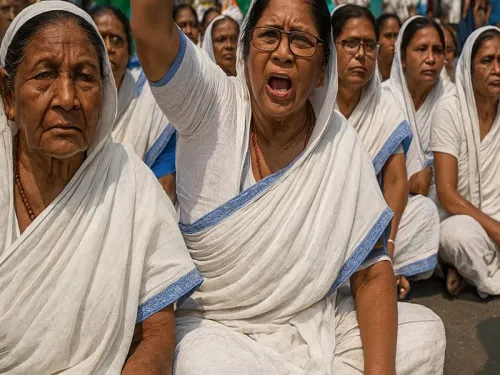
The petition asserts that despite applying for Indian citizenship before 2014, numerous migrants—who escaped religious persecution in Bangladesh—have not seen any movement or resolution regarding their applications.
According to the provisions of the Citizenship (Amendment) Act (CAA), these persecuted minorities are qualified to receive Indian citizenship.
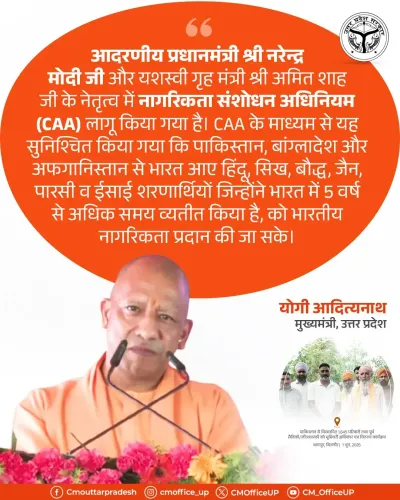
The CAA extends its provisions to Hindus, Sikhs, Buddhists, Jains, Parsis, and Christians from Afghanistan, Bangladesh, and Pakistan who entered India on or before December 31, 2014, and were exempted under the Passport (Entry into India) Act, 1920 or the Foreigners Act, 1946.
The amendment introduced in 2019 added a section allowing these groups to apply for registration or naturalization as Indian citizens.
The petition highlights that many applications for naturalization from qualified migrants remain unresolved due to administrative holdups.
It also noted that numerous individuals are still waiting for a chance to apply for citizenship under Section 6B through the online process established by the Citizenship (Amendment Rules), 2024.
Additionally, the NGO pointed out that a considerable number of these migrants have resided in India for years, with their names already listed on the 2025 electoral rolls.
To avert disenfranchisement during the ongoing Special Intensive Revision (SIR), the plea argues that these individuals should be granted provisional voter registration.
The petition calls upon the Supreme Court to issue directives ensuring the protection of such applicants until their citizenship process is finalized.
Point of View
It is essential to recognize the complexities surrounding citizenship applications for religious minorities in India. The Supreme Court's intervention signifies the judiciary's role in addressing grievances that arise from administrative inefficiencies. It is crucial to balance legal frameworks with humanitarian considerations, ensuring that those who fled persecution are granted the protections they seek.
NationPress
30 Sept 2026
Frequently Asked Questions
What is the purpose of the plea filed by Atmadeep?
The plea aims to seek provisional Special Interim Revision (SIR) for Hindus, Buddhists, and Christians who migrated from Bangladesh before 2014, ensuring their applications for Indian citizenship are processed.
When will the Supreme Court hear this case?
The Supreme Court is scheduled to hear the case on December 9.
Who are eligible for citizenship under the CAA?
The Citizenship (Amendment) Act (CAA) allows Hindus, Sikhs, Buddhists, Jains, Parsis, and Christians from Afghanistan, Bangladesh, and Pakistan who entered India before December 31, 2014, to apply for citizenship.
What issues are migrants facing regarding their citizenship applications?
Many eligible migrants experience administrative delays that prevent them from receiving resolutions on their citizenship applications.
Why is provisional voter enrollment important for these migrants?
Provisional voter enrollment is crucial to prevent disenfranchisement during the ongoing Special Intensive Revision (SIR) as many of these migrants have lived in India for years.