Did the SC Respond to Mamata's Plea Against SIR?
Synopsis
In a significant legal turn, the Supreme Court has taken notice of West Bengal CM Mamata Banerjee's plea against the Special Intensive Revision of electoral rolls, highlighting concerns over potential disenfranchisement of voters. As the court seeks ECI's response, the implications for the upcoming elections loom large.
Key Takeaways
The Supreme Court is addressing concerns regarding the electoral revision process in West Bengal.
Mamata Banerjee’s plea highlights potential disenfranchisement of voters.
The ECI is required to respond to the court’s notice promptly.
Minor discrepancies in voter names should not exclude legitimate voters.
Judicial oversight aims to maintain electoral integrity.
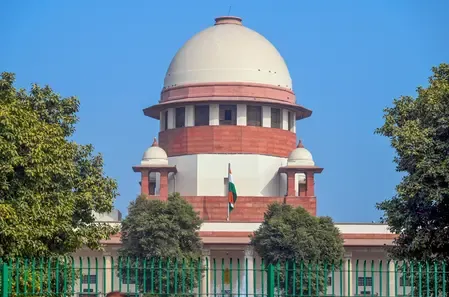
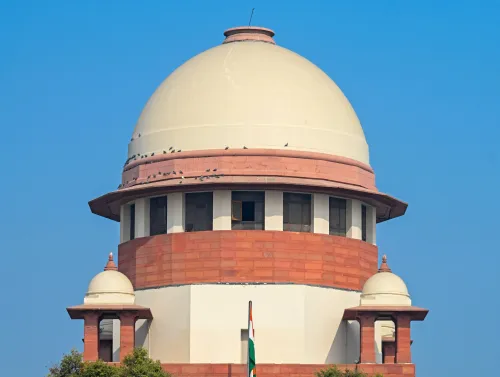
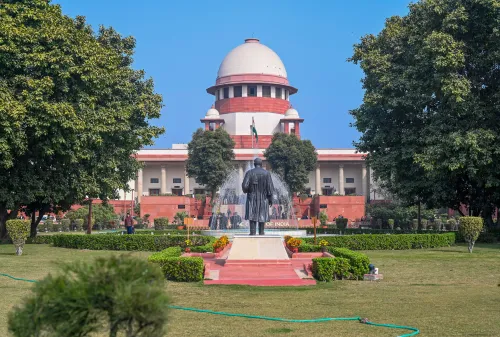
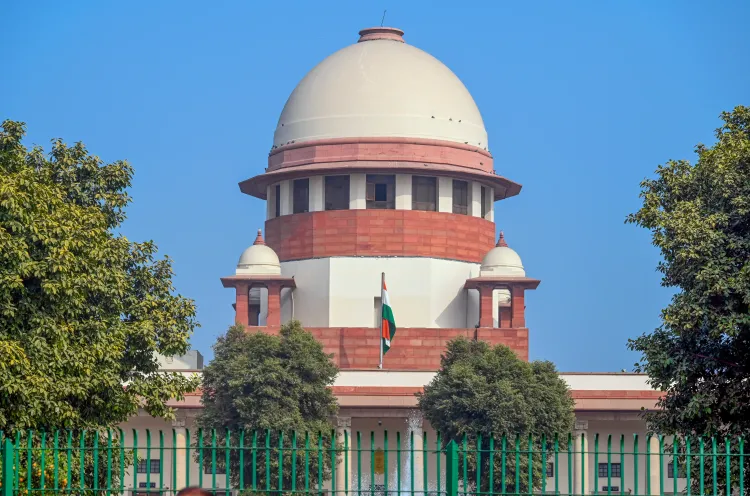
New Delhi, Feb 4 (NationPress) The Supreme Court on Wednesday responded to a petition from West Bengal Chief Minister Mamata Banerjee, challenging the current Special Intensive Revision (SIR) of the electoral rolls in the state ahead of the elections. She claims this process is leading to widespread disenfranchisement of legitimate voters.
A bench led by Chief Justice of India (CJI) Surya Kant, alongside Justices Joymalya Bagchi and Vipul M. Pancholi, has requested the Election Commission of India (ECI) to provide a response and has scheduled the next hearing for Monday.
In her plea, Banerjee is seeking immediate orders to prevent the ECI from removing the names of any voters during the SIR process, especially those categorized under “logical discrepancy,” while the court reviews the situation.
Senior advocate Shyam Divan, representing Banerjee, argued that this revision is being conducted in an alarming rush, with only 11 days left until the final electoral rolls are set to be published on February 14, and just four days available to address objections.
Divan noted that roughly 32 lakh voters are currently “unmapped,” and over 1.36 crore have been flagged for logical discrepancies. He further claimed that nearly 70 lakh notices were issued for minor spelling errors, a frequent issue when translating Bengali names into English.
He emphasized, “Documents like domicile certificates, Aadhaar, and OBC certificates are not being acknowledged. Citizens are waiting in line for hours, yet the reasons for flagging names are not disclosed.”
The CJI-led bench recognized that variations in spelling due to local dialects are a common challenge across India and should not serve as grounds for disenfranchising legitimate voters.
During the proceedings, Banerjee was allowed to personally address the apex court, stating, “I understand the problem well as I hail from this state.” She lamented the lack of responses to her repeated appeals to the ECI.
Banerjee expressed, “I come from a humble background and do not consider myself significant, but I am advocating for all.” She accused the SIR process of fostering discrimination and instilling fear, particularly affecting women who change surnames post-marriage and individuals who relocate.
She further alleged that West Bengal is being unfairly targeted before the elections, contrasting it with the absence of similar revisions in northeastern states like Assam. Additionally, she mentioned that over 100 Booth Level Officers (BLOs) have either fallen ill or died due to the stress caused by this process and accused the ECI of violating previous Supreme Court directives.
The CJI-led bench assured that the Supreme Court would work towards a “practical solution,” asserting that the rights of genuine voters would not be compromised.
“We will uphold our responsibility and ensure a resolution,” the top court stated, clarifying that the broader challenge to the legitimacy of the SIR process is under separate review.
Representing the ECI, senior advocate Rakesh Dwivedi explained that the commission had to appoint micro-observers due to the state government's failure to provide sufficient Class-B officers to serve as Electoral Registration Officers (EROs) despite multiple requests.
The bench suggested that if the state government could provide a list of officers available for SIR duties, the necessity for micro-observers could be reassessed. The Supreme Court also indicated it would direct the ECI to look into complaints regarding name discrepancies and to avoid issuing notices for minor spelling errors.
In conclusion, the apex court has issued a notice to the ECI regarding Banerjee’s petition and has instructed the poll body to submit its response by Monday, coinciding with the next hearing.
Point of View
The Supreme Court's engagement in this matter underscores the critical balance between electoral processes and the rights of voters. It is crucial that any revisions to electoral rolls maintain transparency and fairness to ensure that all eligible voters can exercise their right to vote, especially in a politically charged environment like West Bengal.
NationPress
23 Sept 2026
Frequently Asked Questions
What is the Special Intensive Revision (SIR)?
The SIR is a process undertaken by the Election Commission to update the electoral rolls, ensuring that all eligible voters are accurately represented.
Why is Mamata Banerjee challenging the SIR?
Mamata Banerjee argues that the SIR is leading to significant disenfranchisement of genuine voters, particularly those flagged for minor discrepancies.
What are the implications of the Supreme Court's notice to the ECI?
The notice signifies judicial scrutiny over the electoral process, potentially impacting how the SIR is conducted and ensuring voters' rights are upheld.
How many voters are affected by the SIR according to Banerjee?
Banerjee claims that approximately 32 lakh voters are 'unmapped' and over 1.36 crore have been placed in the logical discrepancy list.
What does the Supreme Court aim to achieve with this case?
The Supreme Court aims to ensure that no genuine voter is unfairly disenfranchised and that the electoral process remains fair and transparent.