Will the Supreme Court Hear Mamata Banerjee's Petition Against the SIR Process in Bengal?
Synopsis
The Supreme Court is set to hear Mamata Banerjee's petition against the Special Intensive Revision process in West Bengal. This case raises critical questions about electoral fairness, political bias, and the integrity of the democratic process in India. Stay tuned for updates on this developing story!
Key Takeaways
Mamata Banerjee has challenged the SIR process in the Supreme Court.
The Election Commission has been accused of political bias.
Potential disenfranchisement of voters is a concern.
The Supreme Court hearing is scheduled for February 4 .
Electoral integrity is at stake in this legal battle.
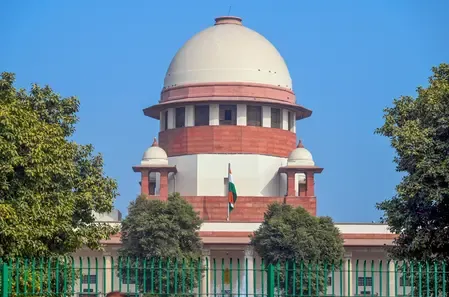
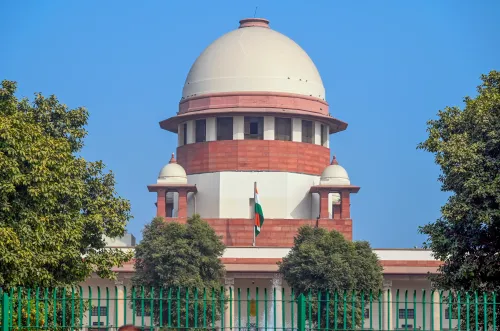
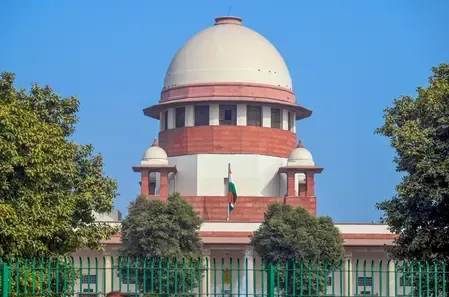
New Delhi, Feb 3 (NationPress) The Supreme Court is set to deliberate on a series of petitions on Wednesday that challenge the legitimacy of the Special Intensive Revision (SIR) of electoral rolls in West Bengal. This includes a petition from Chief Minister Mamata Banerjee, who accuses the Election Commission of India (ECI) of political favoritism and employing an authoritarian stance during the SIR process.
According to the court's published causelist, a bench led by Chief Justice of India (CJI) Surya Kant, along with Justices Joymalya Bagchi and Vipul M. Panchol, will review the case on February 4.
In her petition, CM Banerjee questions the SIR process's legality, arguing that its execution could disenfranchise millions of voters, especially from marginalized communities.
She criticizes the ECI for allegedly operating with political motives, declaring that the actions of a constitutional body, which is expected to uphold impartiality and democratic principles, have reached an “extremely concerning” level for any democratic nation.
Banerjee has requested the Supreme Court's direct involvement, seeking appropriate directives for the electoral body.
Previously, Trinamool Congress members, including Mahua Moitra and Derek O’Brien, also approached the apex court to contest the SIR proceedings in West Bengal.
This matter is significant as Banerjee had a meeting with Chief Election Commissioner Gyanesh Kumar at the ECI's headquarters in New Delhi on Monday, where she expressed her discontent regarding the SIR process.
Post-meeting, the Chief Minister made strong accusations against the CEC, labeling him as “arrogant” and asserting that he is targeting West Bengal under the influence of the Bharatiya Janata Party (BJP).
Banerjee has also claimed that numerous legitimate voters’ names have been erroneously removed from the draft electoral rolls and alleged that special electoral observers have been specifically appointed for West Bengal to oversee this revision.
In response, the ECI has dismissed these claims, stating that the CEC emphasized the necessity of upholding the rule of law and that any obstruction or interference in the SIR process will not be tolerated.
The ECI has also reported instances of alleged threats and vandalism against electoral officials during this ongoing revision.
Point of View
It's crucial to recognize the significance of Mamata Banerjee's petition against the SIR process. This case not only highlights the contentious political climate in West Bengal but also raises broader questions about the integrity of electoral processes across India. Upholding democratic values must remain paramount, and the Supreme Court's decision could have lasting implications.
NationPress
7 Oct 2026
Frequently Asked Questions
What is the Special Intensive Revision (SIR) process?
The SIR process involves the revision of electoral rolls to ensure that they are accurate and up-to-date, aimed at facilitating fair elections.
Why is Mamata Banerjee challenging the SIR process?
Banerjee alleges that the SIR process is politically biased and may lead to the disenfranchisement of voters, particularly from marginalized communities.
What actions has the Election Commission taken regarding the SIR process?
The Election Commission has stated that they are committed to upholding the rule of law and have rejected allegations of political bias in the SIR process.
When will the Supreme Court hear the petitions?
The Supreme Court is scheduled to hear the petitions on February 4.
What are the potential implications of this case?
The outcome of this case could influence the credibility of electoral processes in India and affect the democratic landscape in West Bengal.